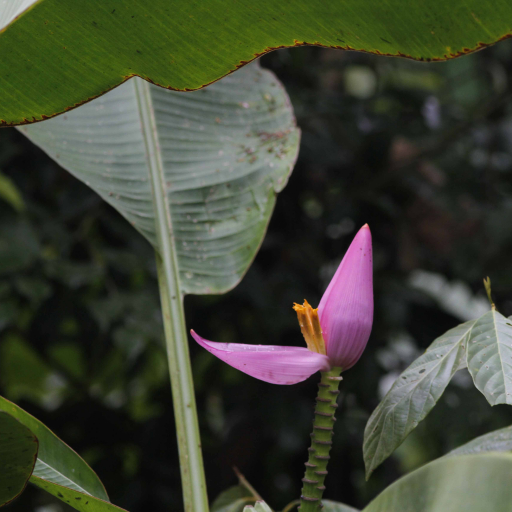
Plant Overview
Known famously as the Flowering Banana, Musa ornata is the show-stopper of the tropical garden. Unlike its supermarket cousins, this plant isn't grown for snacks, but for its breathtaking, neon-pink floral displays that look like something straight out of a botanical fairy tale. Originating from the lush regions of Southeast Asia, it brings an immediate "jungle vibe" to any patio or bright conservatory.
🔍 How to Identify
- 🌸 The Inflorescence: The most striking feature is the upright flower spike with vibrant pink to lilac bracts that peel back to reveal tiny orange-yellow flowers.
- 🍃 Paddle Leaves: It sports classic banana-style foliage—long, broad, and waxy green—often with a delicate purple-red midrib on younger leaves.
- 🍌 Ornamental Fruit: It produces small, velvety, greenish-yellow bananas. While they look cute, they are filled with hard black seeds and are generally not considered palatable.
🏡 In Your Garden
- 💧 Thirsty & Humid: Because of its broad leaves, it loses moisture quickly through transpiration. It thrives in high humidity; if the air is too dry, those beautiful leaf edges will turn brown and crispy.
- 🍴 Heavy Feeders: These are "hungry" plants. To keep those pink blooms coming, they require rich, organic soil and regular feeding during the growing season to support their rapid growth.
- 🛡️ Wind Protection: The large leaves are prone to shredding in high winds. Plant it in a sheltered spot to keep the foliage looking pristine and architectural rather than tattered.
⚠️ Safety & Toxicity
- ✅ Pet & Child Safe: Musa ornata is generally considered non-toxic to cats, dogs, and humans. It is a much safer tropical choice than many philodendrons or lilies.
- 🖐️ Sticky Sap: While not poisonous, the plant produces a clear, sticky sap when cut. This sap can cause mild skin irritation for those with sensitive skin and is notorious for staining clothes permanently.
✨ Fun Fact
Most bananas we eat are "triploid," meaning they have no seeds. However, Musa ornata is a wild-type banana, and its small fruits are so packed with pea-sized, rock-hard seeds that there is almost no room for any fruit pulp!

Detailed Care Instructions
To grow a Musa Ornata plant, also known as the pink banana plant, you can follow these steps:
- Obtain a healthy Musa Ornata plant: Purchase a young plant from a local nursery or online seller. Choose a plant with vibrant leaves and no signs of pests or diseases.
- Choose a suitable planting location: Pink banana plants thrive in warm and tropical climates. Select a spot in your garden that receives full to partial sunlight. Ensure the area has well-draining soil.
- Prepare the soil: Pink banana plants prefer slightly acidic soil with a pH of around 5.5 to 7.0. Amend the soil with organic matter such as compost or well-rotted manure to improve fertility and drainage.
- Dig a hole: Dig a hole that is twice the width and depth of the plant's root ball. Ensure the hole is deep enough to accommodate the entire root system without crowding.
- Plant the Musa Ornata: Gently remove the plant from its container and place it in the hole. Ensure the top of the root ball is level with the soil surface. Backfill the hole with soil, firming it gently around the roots to eliminate air pockets.
- Water thoroughly: After planting, give the Musa Ornata plant a thorough watering. Keep the soil moist but not waterlogged. Pink banana plants require consistent moisture, so make sure the soil doesn't dry out completely between waterings.
- Mulch the soil: Apply a layer of organic mulch, such as wood chips or straw, around the base of the plant. This will help retain soil moisture, prevent weed growth, and maintain a stable soil temperature.
- Provide regular care: As the Musa Ornata plant grows, it will benefit from regular feeding with a balanced fertilizer formulated for tropical plants. Follow the instructions on the fertilizer packaging and apply it to the soil every two to four weeks during the growing season.
- Protect from cold temperatures: If you live in a region with cold winters, consider protecting your Musa Ornata plant from freezing temperatures. This can be done by covering it with a frost blanket or moving it indoors during the colder months.
- Prune as necessary: Remove any dead or yellowing leaves as they appear. Pruning can also help maintain the plant's shape and encourage new growth.
By following these steps and providing the proper care, your Musa Ornata plant should thrive and grow into a beautiful pink banana plant.

Place in a bright room that is sun drenched almost all day. Or directly in a south-facing window.

Musa Ornata is a type of flowering plant that requires proper watering for healthy growth. To water this plant efficiently, first, you should identify the soil's moisture content by inserting your finger into the soil. If the soil feels dry, it's time to water the plant.
When watering, be sure to use soft water as hard water can harm the plant's growth. Use a watering can or a spray bottle to water the soil around the plant's base, making sure not to wet the leaves or flowers. It is important not to overwater the plant, as this can lead to root rot, which can be fatal to the plant.
The frequency of watering Musa Ornata depends on the environmental conditions. During the summer months, the plant needs to be watered regularly to keep the soil moist. In contrast, during the winter season, the plant may require less frequent watering as it enters its dormant phase.
In summary, watering Musa Ornata requires monitoring the soil's moisture content, using soft water, avoiding overwatering, and adjusting the frequency of watering according to the environmental conditions.
To fertilize this plant, use a balanced fertilizer with equal parts nitrogen, phosphorous, and potassium. Apply the fertilizer every three to four weeks during the growing season, but reduce the frequency to once a month during the winter. Water the plant thoroughly before and after fertilizing to prevent root burn. Also, be careful not to apply too much fertilizer as this can cause damage to the plant.
The recommended soil for Musa Ornata plant is a well-draining, rich soil that is amended with organic matter. The soil should have a pH level between 5.5 and 7.5, which is slightly acidic to neutral. The soil should also be able to hold moisture well, but not be waterlogged or soggy. It is recommended to use a mix of potting soil, peat moss, and perlite or sand to create a loose and porous soil that allows for drainage and aeration. Additionally, adding compost or organic fertilizers to the soil will provide the necessary nutrients for healthy growth. A soil that is too dense or lacks drainage may cause root rot and damage to the plant.
There are several ways to propagate Musa ornata plant. The first method is by using seeds. To do this, collect mature fruits and extract the seeds from them. Rinse the seeds in water and dry them off. Then, plant the seeds in a pot filled with moist potting mix. Water the soil regularly and keep it moist until the seedlings emerge.
Another method of propagation is through division. To do this, carefully remove the plant from its container and separate the offshoots growing around the base. Each offshoot should have its own roots and leaves. Plant each offshoot in a separate pot and keep the soil moist until new growth appears.
The third method is through tissue culture. This is a more complicated method that requires specialized equipment and skills. Tissue culture involves taking a small piece of tissue from the plant and growing it in a sterile nutrient solution. The tissue develops into a new plant that can be planted in soil once it has grown enough.
Regardless of the method used, it is important to keep the new plants in a warm and humid environment until they are established. This will help the plants grow strong roots and healthy foliage. Once established, Musa ornata plants are relatively easy to care for and can add a touch of tropical beauty to any indoor or outdoor space.








