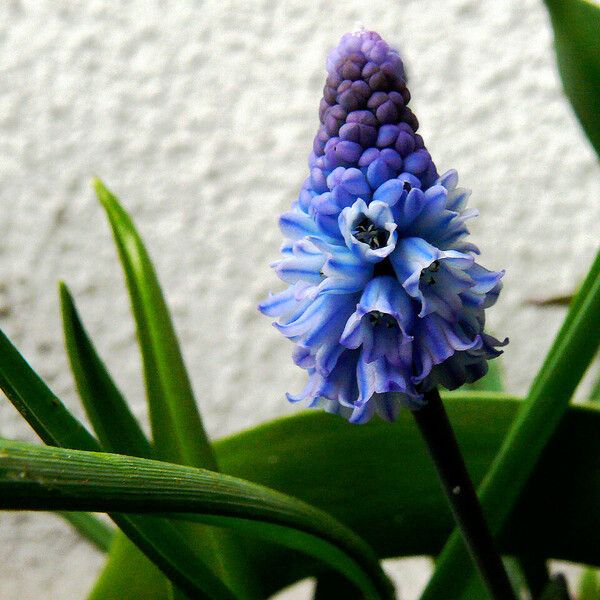
Plant Overview
Often called the Azure Grape Hyacinth, this Turkish native is a tiny spring herald that looks like a cluster of inverted bells dipped in the clearest sky-blue ink. Unlike its common dark-purple cousins, this species is prized for its open, flared petals and vibrant, electric-blue hue. It brings a touch of mountain-meadow magic to rock gardens and borders just as the winter frost begins to lift.
🔍 How to Identify
- 🩵 Flower Form: Dense, conical clusters of bell-shaped flowers. Unlike the common Muscari armeniacum, these bells are more "open" at the mouth, giving them a fringed appearance.
- 🍃 Foliage: Fleshy, strap-like leaves with a distinct grayish-green tint (glaucous) that emerge in a fountain-like clump.
- 📏 Stature: A miniature beauty, usually standing only 4 to 6 inches tall, making it a perfect "front-of-the-border" plant.
🏡 In Your Garden
- 🌱 Naturalizing: These bulbs are "set it and forget it" favorites. They naturalize beautifully, meaning they will slowly spread via offsets and seeds to create a dense, cerulean carpet over several years.
- 💤 Summer Dormancy: After the blooms fade in late spring, the foliage will yellow and die back completely. This is a vital part of its life cycle; the plant is retreating underground to store energy in the bulb, so avoid cutting the green leaves until they are totally brown.
- 💧 Winter Drainage: While they aren't fussy about soil type, they despise "wet feet" during their winter sleep. Planting them in well-draining soil prevents the bulbs from rotting during rainy seasons.
⚠️ Safety & Toxicity
- 🐾 Status: Mildly toxic to pets and humans.
- 🤢 Details: The bulbs contain alkaloids and calcium oxalate crystals. If ingested by dogs, cats, or curious children, it can cause mouth irritation, drooling, or digestive upset. It is best enjoyed visually rather than as a garnish!
✨ Fun Fact
The genus name Muscari comes from the Greek word muschos, meaning "musk," referring to the sweet scent of some species. While Azureum has a very faint fragrance, it is unique because its flowers are all fertile, whereas many other Grape Hyacinths produce a "tuft" of sterile, different-colored flowers at the very top!

Detailed Care Instructions
To successfully grow Muscari azureum, also known as grape hyacinth, follow these steps:
- Planting: Muscari azureum prefers well-draining soil and full sun to partial shade. Plant the bulbs in the fall or early spring, 3-4 inches deep and 2-3 inches apart.
- Watering: Keep the soil consistently moist but not waterlogged. Water the plants regularly, especially during dry spells.
- Fertilizing: Fertilize the plants in the spring with a balanced fertilizer or bone meal to promote healthy growth.
- Mulching: Apply mulch around the plants to help retain moisture, suppress weeds, and protect the bulbs during winter.
- Pruning: Remove spent flowers to encourage more blooms and prevent self-seeding. Allow the foliage to die back naturally before cutting it back.
- Dividing: Muscari azureum bulbs tend to multiply quickly. Divide overcrowded clumps every 3-4 years in the fall after the foliage has died back.
- Pest and disease control: Keep an eye out for pests like slugs and snails, which may feed on the plants. Treat any infestations promptly with insecticidal soap or other appropriate methods. Also, ensure good air circulation to prevent diseases like root rot.
By following these steps, you can successfully grow and enjoy the beautiful blooms of Muscari azureum in your garden.
To properly water the Muscari Azureum plant, ensure that the soil is consistently moist but not waterlogged. Water the plant at the base to avoid wetting the foliage, which can lead to fungal diseases. Use room temperature water and allow any excess water to drain out of the pot or soil. Water the plant more frequently during the growing season, especially during hot weather, and reduce watering during the dormant winter period. Check the moisture level in the soil regularly by inserting your finger into the soil up to the first knuckle. Adjust the watering schedule as needed based on the plant's specific requirements and environmental conditions.
To fertilize the Muscari Azureum plant, use a balanced fertilizer with equal parts nitrogen, phosphorus, and potassium. Apply the fertilizer in early spring when new growth begins. Follow the instructions on the fertilizer packaging for the correct application rate. Water the plant thoroughly after applying the fertilizer to help it absorb the nutrients. Repeat this fertilizing process once or twice during the growing season to promote healthy growth and vibrant blooms. Be sure to avoid over-fertilizing, as this can harm the plant.
Muscari Azureum plants thrive in well-draining soil that is slightly acidic to neutral in pH. A sandy loam or loamy soil mix is recommended, as it provides good drainage while retaining enough moisture for the plant's roots. Adding organic matter such as compost or peat moss can help improve soil texture and fertility. It is important to avoid heavy clay soils, as they can cause waterlogging and root rot in Muscari Azureum plants. Additionally, a layer of mulch on top of the soil can help retain moisture and regulate temperature fluctuations.
Muscari Azureum plants can be easily propagated through division or by collecting and planting the seeds. To propagate through division, carefully dig up the plant and separate the smaller bulb offsets from the main bulb. Replant the smaller bulbs in a well-draining soil mixture.
To propagate through seeds, collect the seeds from the dried flower heads of the plant. Sow the seeds in a seed-starting mix and keep them moist until they germinate. It is important to note that it may take several years for plants grown from seed to reach maturity and begin flowering.
Both methods of propagation should be done in the spring or early fall when the plant is not actively growing. Ensure that the new plants are kept in a suitable environment with adequate sunlight and water to encourage healthy growth.








