Plant Overview
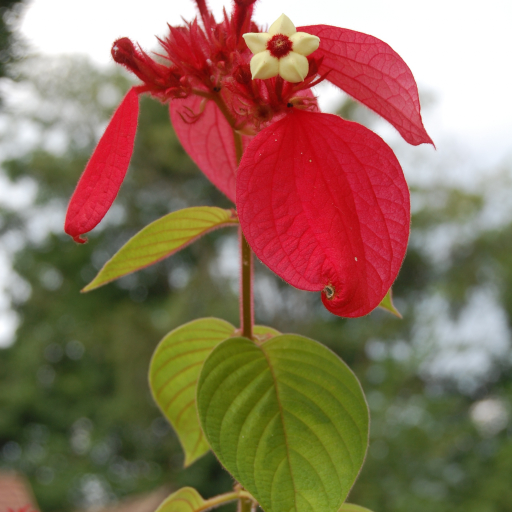
Commonly known as "Ashanti Blood" or the "Red Flag Bush," Mussaenda erythrophylla is a showstopper from the tropical forests of West Africa. Its name comes from the stunning, oversized red bracts that look like glowing leaves, which are often mistaken for the plant's actual petals. Whether cascading over a garden wall or standing as a vibrant shrub, this plant brings a dramatic, velvet-textured flair to any sun-drenched landscape.
🔍 How to Identify
- 🔴 Vibrant Bracts: The most striking feature—large, heart-shaped, velvety red sepals that surround the actual flowers and look like crimson foliage.
- ⭐ Star Flowers: Small, tubular, creamy-yellow flowers with a fuzzy red center peek out from the middle of the bright bracts.
- 🌿 Foliage Texture: Deep green, oval-shaped leaves with prominent veins and a slightly fuzzy (pubescent) texture that feels soft to the touch.
🏡 In Your Garden
- ☀️ Sun & Humidity: This plant is a true tropical; it thrives in high humidity and requires plenty of bright light to produce its iconic red color. If kept in too much shade, the "flags" will look dull and pale.
- ✂️ Pruning Habits: Because it can grow quite leggy or even attempt to climb like a vine, regular pruning after the flowering season is essential to keep it bushy and manageable.
- 🌡️ Cold Sensitivity: It has zero tolerance for frost. If temperatures dip, it will drop its leaves immediately as a stress response, so it’s best kept in containers in cooler climates.
⚠️ Safety & Toxicity
- ✅ General Safety: Mussaenda erythrophylla is generally considered non-toxic to humans and common household pets like cats and dogs.
- 💧 Sap Sensitivity: While not poisonous, the milky sap can occasionally cause mild skin irritation for those with sensitive skin. It is always wise to wear gloves when performing heavy pruning.
✨ Fun Fact
The massive red "petals" aren't actually flowers at all! They are modified sepals—specialized leaves designed by nature to act as giant neon signs, waving in the wind to lure pollinators like butterflies and hummingbirds to the tiny, inconspicuous yellow flowers hidden in the center.

Detailed Care Instructions
| Humidity | Normal |
| Difficulty | Medium |
| Hibernation | Cold Period |
| Temperature | 20°C - 30°C |
| Hardiness Zones | 9B - 11 |
To grow Mussaenda Erythrophylla plant, also known as Red Flag Bush or Ashanti Blood, follow these steps:
- Climate and location: Mussaenda Erythrophylla thrives in warm climates and requires temperatures between 60-85°F (15-29°C). Choose a sunny or partially shaded location for planting.
- Soil: The plant prefers well-drained soil with a pH level between 5.5 and 7.0. Amend the soil with organic matter like compost or peat moss to improve drainage and nutrient content.
- Planting: Dig a hole twice as wide and as deep as the plant's root ball. Place the plant in the hole, ensuring it sits at the same depth as it was in the nursery container. Backfill the hole with soil, gently firming it around the plant.
- Watering: Initially, water the plant deeply to establish its roots. Once established, water Mussaenda Erythrophylla regularly, keeping the soil consistently moist but not waterlogged. Avoid overwatering, as it can lead to root rot.
- Fertilizer: Feed the plant with a balanced, slow-release fertilizer during the growing season (spring to summer). Follow the manufacturer's instructions for the appropriate dosage. A fertilizer with a ratio of 10-10-10 (NPK) is suitable.
- Pruning: Regular pruning helps maintain the plant's shape and encourages bushier growth. After flowering, prune back the branch tips by about one-third to promote new growth.
- Mulching: Apply a layer of organic mulch, such as wood chips or straw, around the base of the plant. Mulching helps retain moisture, suppresses weeds, and maintains a consistent soil temperature.
- Pests and diseases: Mussaenda Erythrophylla is generally resistant to pests and diseases. However, keep an eye out for common garden pests like aphids or whiteflies. Treat any infestations promptly with an appropriate insecticidal soap or neem oil.
- Propagation: You can propagate Mussaenda Erythrophylla through softwood cuttings in spring or early summer. Take cuttings from healthy, non-flowering shoots and root them in a well-draining potting mix.
By following these guidelines and providing the right growing conditions, you can successfully grow Mussaenda Erythrophylla plant and enjoy its beautiful red flowers.

Place in a bright room that is sun drenched almost all day. Or directly in a south-facing window.

Musaenda Erythrophylla requires consistent and regular watering to thrive. When irrigating this plant, it is important to ensure that the soil is moist but not waterlogged, as waterlogging could lead to root rot. The frequency of watering will depend on several factors, including the plant's location, humidity, and temperature. In general, it is best to water the plant deeply once a week, allowing the water to penetrate deeply into the soil. It is important to avoid getting water on the foliage, as this could encourage the development of fungal diseases. Additionally, it is a good idea to mulch around the base of the plant to help retain moisture in the soil. Overall, ensuring that the plant is watered consistently and properly is key to its health and vitality.
- Choose a balanced fertilizer with a nitrogen-phosphorus-potassium ratio of 1:1:1.
- Dilute the fertilizer to half strength according to package instructions.
- Water the plant thoroughly before applying fertilizer.
- Apply the diluted fertilizer to the soil around the base of the plant.
- Avoid getting fertilizer on the leaves as it may burn them.
- Repeat application every 4-6 weeks during the growing season.
- Reduce or stop fertilization during the winter months when the plant is dormant.
Mussaenda Erythrophylla is a tropical plant that requires well-draining soil that is rich in organic matter. The acidity level should be slightly acidic to neutral, with a pH range of 5.5 to 7.5.
It is recommended to use a soil mix that is composed of equal parts of peat moss, perlite, and vermiculite. This substrate provides excellent drainage and aeration for the roots and allows for proper nutrient uptake.
Additionally, adding a slow-release fertilizer to the soil mix before planting can help provide a balanced nutrient profile for the plant. It is also important to avoid over-fertilization as it can lead to root burn and stunted growth.
Lastly, it is essential to ensure that the soil is moist but not waterlogged as excessive moisture can lead to root rot and other diseases. Therefore, it is important to water the plant regularly, only when the top layer of soil feels dry to touch.
To propagate this plant, take stem cuttings from the bottom of the plant, selecting healthy, non-flowering stems. Strip off the lower leaves, leaving only a few sets on the top. Dip the cut ends in rooting hormone and place the stems in a pot filled with a well-draining potting mix. Water the cuttings thoroughly and cover the pot with a plastic bag to create a greenhouse effect. Place the pot in a bright, warm location with indirect sunlight.
Keep the soil moist but not soggy and remove any wilted or dead leaves. After a few weeks, check for root development by gently tugging on the stem. If the stem resists, roots have formed and you can remove the plastic bag. Once the cuttings have established roots, they can be transplanted into individual pots or outdoors if the weather permits.








