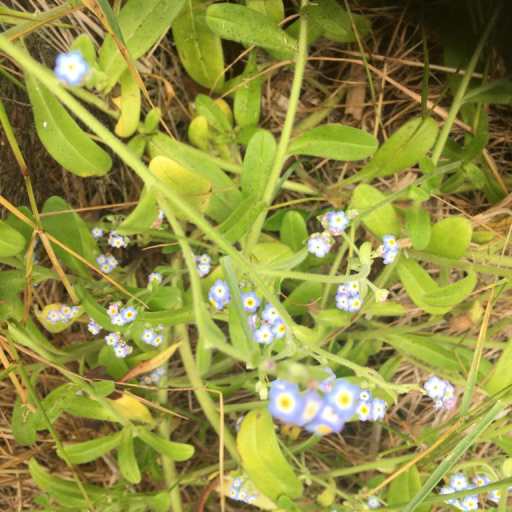
Plant Overview
Commonly known as the Sea Forget-me-not, Myosotis maritima is a rare and resilient coastal treasure native to the Azores islands. While its inland cousins are famous for woodland gardens, this specific variety has traded the shade for the salt spray of volcanic cliffs. It carries the romantic "forget-me-not" name, which stems from a medieval legend of a knight who threw a bouquet to his lover just before drowning, shouting his final plea: "Forget me not!"
🔍 How to Identify
- 🌊 Coastal Foliage: Unlike the thin leaves of common forget-me-nots, this species has thick, slightly fleshy leaves designed to store water and resist the drying effects of sea salt.
- 💎 Jewel-like Blooms: It features small, five-petaled flowers that are a striking sky blue, often centered with a tiny yellow "eye" that acts as a bullseye for pollinators.
- ☁️ Velvet Texture: The entire plant is covered in fine, stiff hairs, giving it a silvery-green sheen that protects it from the intense island sun.
🏡 In Your Garden
- 🌋 Volcanic Heritage: This plant thrives in rocky, well-draining soil and is highly specialized for maritime environments. It isn’t a fan of "wet feet" and prefers mimicry of its native volcanic slopes.
- 🌬️ Wind & Salt Resilience: It is incredibly hardy against coastal winds and salt spray, making it an excellent choice for rock gardens or seaside containers where other delicate flowers might wither.
- 🌱 Conservation Note: Because it is endemic to the Azores and face habitat loss, cultivating this plant helps preserve a unique lineage of island evolution.
⚠️ Safety & Toxicity
- 🐾 Pet Precaution: Like many members of the Boraginaceae family, this plant may contain trace amounts of pyrrolizidine alkaloids. While not typically lethal, it can cause liver discomfort if ingested in large quantities by cats or dogs.
- 👶 Low Risk for Humans: It is generally considered non-toxic to touch, though the tiny hairs on the leaves might cause mild skin irritation for those with very sensitive skin.
✨ Fun Fact
The Myosotis maritima is a "halophyte," meaning it is one of the few flowering plants in its genus that has evolved to actually crave the salty air of the Atlantic Ocean—most other forget-me-nots would shrivel at the first sign of a sea breeze!

Detailed Care Instructions








