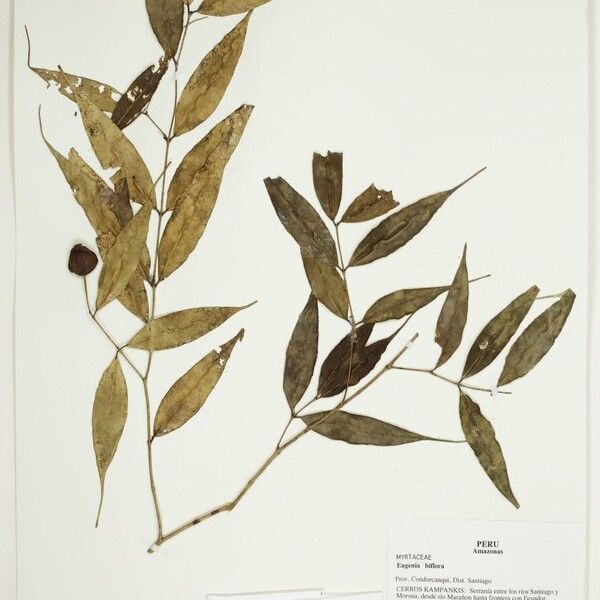
Plant Overview
Hailing from the lush Atlantic Forest of Brazil, Myrcia caudata is a delicate member of the Myrtle family known for its elegant, tapering foliage. Often referred to by enthusiasts as a "Grumixama-mirim," its botanical name highlights its most striking feature: the "caudate" or tail-like tips of its leaves. This slow-growing evergreen is a favorite for those looking to recreate a tropical understory vibe at home.
🔍 How to Identify
- 🍃 Tailed Leaves: The most distinct feature is the "drip tip"—the leaf ends in a long, narrow point that looks like a small tail.
- 🌸 Pom-Pom Blooms: It produces small, white flowers with a "fuzzy" appearance due to a high density of long, delicate stamens.
- 🍒 Dark Berries: Following the flowers, it develops small, globose fruits that turn a dark purple or black when fully ripe.
🏡 In Your Garden
- 💧 The Understory Rule: In nature, this plant lives beneath the canopy. It craves high humidity and dappled light; harsh, direct afternoon sun will quickly brown those beautiful leaf tips.
- 🌱 Acidic Ambitions: It thrives in slightly acidic, well-draining soil. If your tap water is very "hard" (alkaline), the plant may struggle to take up nutrients, so rainwater is its best friend.
⚠️ Safety & Toxicity
- ✅ Safe Status: Myrcia caudata is generally considered non-toxic to humans and common household pets.
- 👅 Edibility Note: While many species in the Myrcia genus produce edible berries, they are often astringent or resinous. Unless you are an expert, it is best to treat this as an ornamental plant rather than a food source.
✨ Fun Fact
The "tail" (caudate apex) on the leaf isn't just for decoration; it is a specialized evolutionary tool. In its native rainforest, this tip acts as a funnel, allowing heavy rainwater to shed rapidly off the leaf surface. This keeps the plant dry and prevents the growth of mold and moss in the humid Brazilian air!

Detailed Care Instructions







