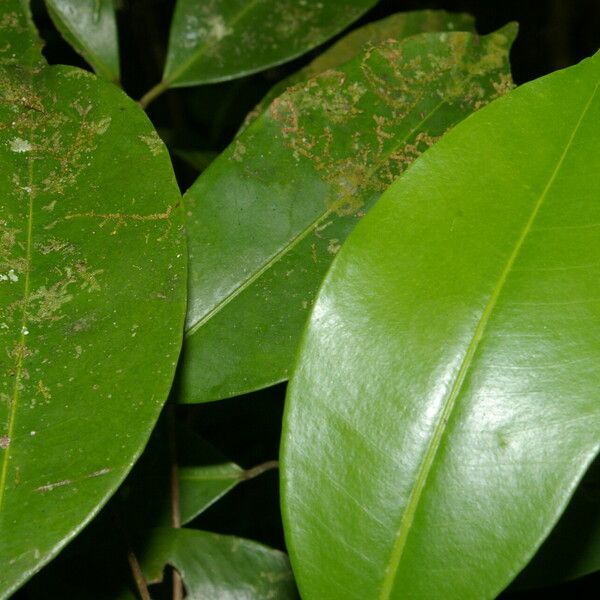
Plant Overview
Known as the "Basin Leaf" or more commonly as a member of the "Stopper" family, Myrcia chytraculia is a hidden gem of the Caribbean and Florida hammocks. These plants earned the nickname "Stoppers" because they grow in such dense, tangled thickets that they can literally stop a traveler in their tracks. With their glossy foliage and delicate, exploding blooms, they bring a touch of tropical elegance to any coastal landscape.
🔍 How to Identify
- 🍃 The Leaves: Look for smooth, leathery leaves that grow in a strictly opposite pattern. They feature a distinct "drip tip" (a pointed end) which helps rainwater shed quickly in humid environments.
- 🌸 The "Lid" Flowers: Its most fascinating feature is the flower bud. Before blooming, the bud is sealed with a tiny cap; when it opens, the "lid" pops off to reveal a white burst of many long stamens that look like a miniature firework.
- 🌳 The Bark: As the plant matures into a small tree, the bark becomes smooth and can occasionally peel in thin strips, revealing shades of grey and reddish-brown underneath.
🏡 In Your Garden
- 🏝️ Coastal Champion: This plant is exceptionally hardy when it comes to salt spray and wind. It is an ideal choice for gardeners in coastal zones who need a resilient hedge or a windbreak that won't wither in the salty air.
- 🐦 Bird Buffet: If you are looking to attract wildlife, this is a top-tier choice. The small, dark berries that follow the flowers are a favorite snack for local songbirds, though the plant requires a bit of patience as it is a relatively slow grower.
⚠️ Safety & Toxicity
- 🛡️ General Safety: Myrcia chytraculia is not known to be toxic to humans, dogs, or cats. It is a "friendly" inhabitant for backyard spaces where pets roam.
- 🚫 Not a Fruit Tree: While birds find the berries delicious, they are not considered a culinary fruit for humans. Ingesting large amounts of the berries might cause mild stomach discomfort, so it's best to leave them for the birds.
✨ Fun Fact
✨ The older scientific name for this group, Calyptranthes, comes from the Greek words for "hooded flower." This refers to the tiny "hats" the flowers wear before they bloom—the plant literally "tips its cap" to you when it's ready to show off its petals!

Detailed Care Instructions








