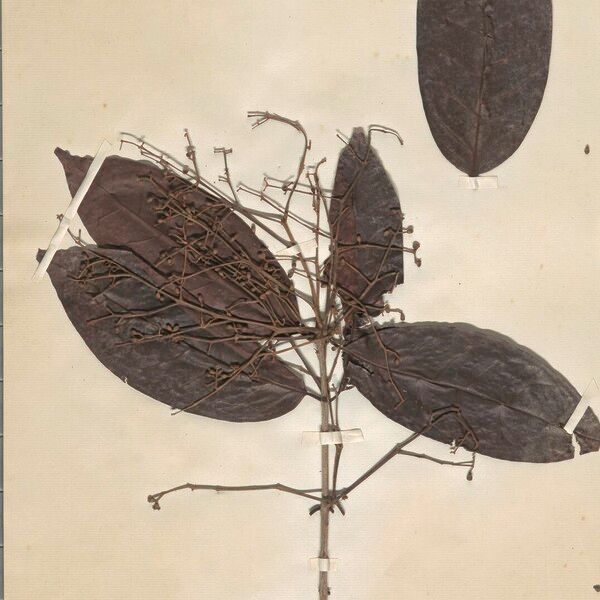
Plant Overview
Known as the "Pointed Myrtle" or "Goiaba-brava" in its native South American haunts, Myrcia cuspidata is an elegant representative of the Atlantic Forest. This evergreen shrub is often admired for its "tailor-made" appearance, featuring leaves that look like they were meticulously sharpened by nature. It serves as a vital bridge in its ecosystem, acting as a reliable food source for specialized tropical birds.
🔍 How to Identify
- 🍃 The "Cuspidate" Tip: The most defining feature is the leaf apex; each glossy, dark green leaf tapers into a long, fine point (acumen), which helps rainwater drip off quickly in humid environments.
- ☁️ Star-Burst Blooms: It produces small, delicate white flowers with a "fuzzy" appearance due to their numerous long stamens, a classic trait of the Myrtaceae family.
- 🫐 Transitioning Berries: After flowering, it develops small, round berries that shift from a pale green to a deep, dark purple or black when fully ripe.
🏡 In Your Garden
- 💧 Humidity is Key: Coming from the lush rainforests of Brazil, this plant thrives on moisture. It prefers "dappled" sunlight rather than harsh, direct afternoon sun, which can scorch its delicate leaf tips.
- 🌱 The Taproot Rule: This species develops a sensitive root system early on. It is notoriously grumpy about being moved, so it is best to plant it in its "forever home" or a very large container to avoid transplant shock.
- 🌬️ Balsamic Scent: If you gently bruise the foliage, it releases a subtle, spicy, and resinous aroma. This is due to the essential oil glands dotted across the leaf surface, which act as a natural deterrent for many common garden pests.
⚠️ Safety & Toxicity
- ✅ Status: Generally considered non-toxic to humans. In its native regions, various Myrcia species are even used in traditional folk medicine.
- 🐾 Pets & Kids: While there are no recorded cases of serious poisoning for cats or dogs, the high concentration of essential oils in the leaves might cause mild stomach upset if ingested in large quantities. As always, keep an eye on curious nibblers.
✨ Fun Fact
- 📜 Nature's Raincoat: The long, pointed tips of the leaves are actually called "drip tips." They are an evolutionary marvel that allows the plant to shed water rapidly during tropical downpours, preventing the growth of mold and algae on the leaf surface!

Detailed Care Instructions







