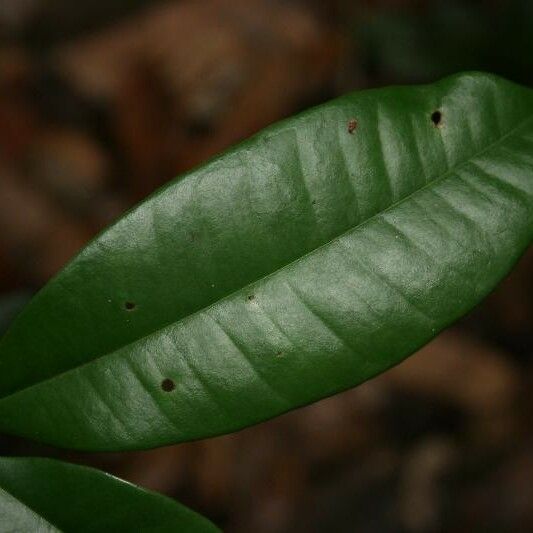
Plant Overview
Known as the "Cambui-da-mata" or "Forest Guava" in its native Brazil, Myrcia decorticans is a striking member of the Myrtle family. It is most famous for its "ghostly" appearance in the shaded understory of the Atlantic Forest, where its trunk glows with a smooth, pale texture. This plant is a favorite among collectors who appreciate the structural beauty of trees that literally shed their past to grow.
🔍 How to Identify
- 📜 The Peeling Bark: Its most defining feature is the "decorticating" bark—the outer layer peels away in thin, papery sheets to reveal a smooth, tan-to-cream colored trunk underneath.
- 🍃 Elegant Foliage: The leaves are lance-shaped, dark green, and grow in opposite pairs. They have a subtle, waxy sheen that helps them shed excess rainwater in humid environments.
- 🍒 Dark Jewels: It produces small, spherical fruits that transition from a vibrant red to a deep, glossy purple-black when fully ripe, nestled among the leaf axils.
🏡 In Your Garden
- 🌿 The Need for Drainage: While it hails from tropical forests, it is highly sensitive to "wet feet." In a garden setting, it requires well-draining, slightly acidic soil to mimic the leaf-littered floor of its native habitat.
- 🕊️ Biodiversity Magnet: If you are looking to bring life to your space, this plant is an avian favorite. Its small berries are a high-energy snack for local birds, while its delicate white flowers are a magnet for native pollinators.
⚠️ Safety & Toxicity
- ✅ Generally Safe: There are no known toxicities associated with Myrcia decorticans for humans. In its native range, the berries are often used to make traditional jellies or spirits.
- 🐾 Pet Caution: While not listed as a high-risk plant, the high tannin content in the bark and leaves of Myrtaceae species can occasionally cause mild stomach upset if chewed by curious dogs or cats.
✨ Fun Fact
The specific epithet decorticans comes from the Latin word decorticare, which literally means "to strip off the bark." It shares this naming convention with several eucalyptus species that exhibit the same dramatic peeling behavior!

Detailed Care Instructions

Place in a bright room that is sun drenched almost all day. Or directly in a south-facing window.

Some plants require more regular watering than others, which should be done every few days. It's critical to maintain the soil moist all of the time. The water requirements of the same plant placed in pots with varying sizes will differ. Because the water in the smaller pot evaporates faster than the water in the larger pot, it will require more watering. Regardless of pot size, the surface should constantly be maintained moist.








