Plant Overview
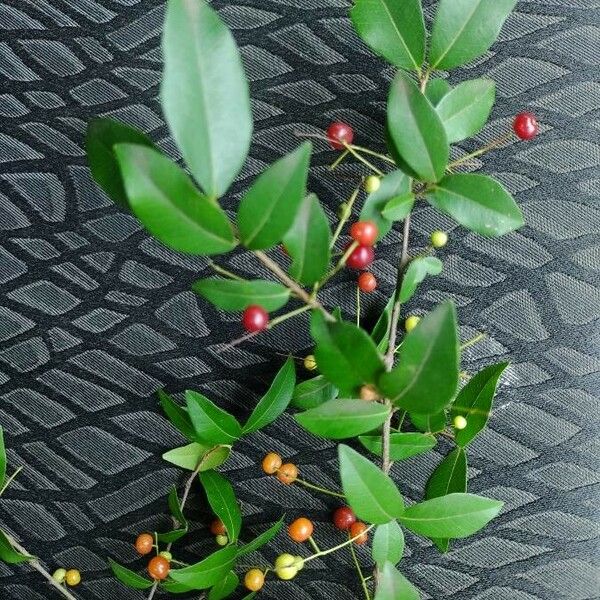
Myrcia laruotteana, affectionately known in its native Brazil as Guamirim, is a graceful evergreen that embodies the lush spirit of the Atlantic Forest. This resilient shrub or small tree is a favorite for those looking to add a touch of South American elegance to their landscape, offering fragrant blooms and a bounty of berries that invite wildlife into the garden. It is a member of the Myrtle family, sharing its heritage with famous cousins like Eucalyptus and Allspice.
🔍 How to Identify
- 🍃 Lustrous Leaves: The foliage consists of deep green, glossy leaves with a distinct lance-like shape that tapers to a fine point, often growing in a dense, bushy pattern.
- 🌸 Delicate Blooms: It produces clusters of small, "fluffy" white flowers characterized by long, prominent stamens that give the plant a misty, ethereal look during peak bloom.
- 🫐 Glossy Berries: After flowering, the plant develops small, rounded fruits that transition from green to a deep, dark purple or nearly black when fully ripe.
🏡 In Your Garden
- ☁️ Light Preferences: As a native of forested regions, this plant thrives in dappled sunlight or partial shade. It mimics the protection it receives from taller canopy trees in the wild, though it can tolerate more sun if kept well-watered.
- 💧 Thirst for Consistency: The Guamirim prefers "even" moisture. Because of its forest-floor heritage, it dislikes drying out completely; however, it requires well-draining soil to ensure the roots don't sit in stagnant water.
- 🌳 Wildlife Magnet: If you are looking to create a "living garden," this is a top choice. The nectar-rich flowers attract pollinators, while the berries are a primary food source for local songbirds.
⚠️ Safety & Toxicity
- ✅ General Safety: Myrcia laruotteana is generally considered non-toxic and is not known to have the aggressive irritants found in other tropical species.
- 🐾 Berry Caution: While the berries are a gourmet treat for wild birds, they are not a standard commercial fruit for humans. Always supervise toddlers and pets around berries to prevent accidental ingestion or choking hazards.
✨ Fun Fact
Many members of the Myrtaceae family, including the Guamirim, have "exfoliating" bark. As the tree ages, it may naturally shed thin, papery layers of bark, a clever evolutionary trick that helps the tree prevent the growth of parasitic mosses and fungi on its trunk!

Detailed Care Instructions








