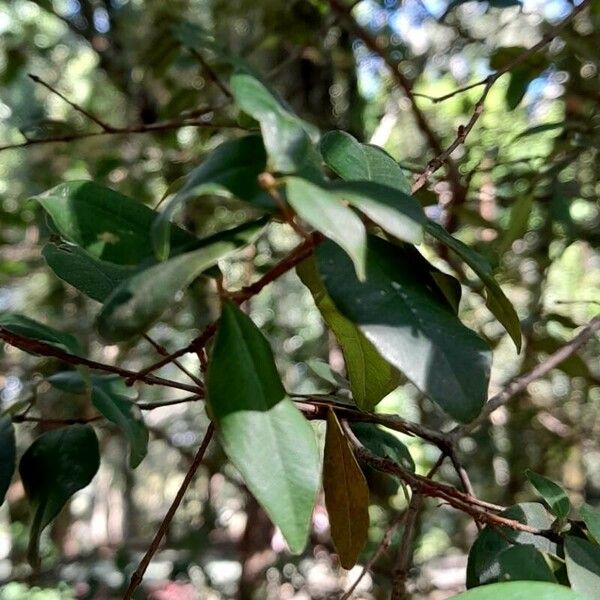
Plant Overview
Known in its native South America as Cambuí, Myrcia selloi is a resilient and elegant member of the Myrtle family. It is a cornerstone of the Atlantic Forest ecosystem, often found hugging riverbanks or tucked away in coastal thickets. This plant is a favorite among restoration gardeners looking to invite nature back into their space, thanks to its dense, shimmering foliage and wildlife-friendly berries.
🔍 How to Identify
- 🍃 Glossy Foliage: The leaves are small, lance-shaped, and have a beautiful waxy sheen that reflects sunlight. They grow in an opposite pattern along the stems.
- ☁️ Powder-Puff Flowers: During the blooming season, the plant is covered in delicate white flowers that appear "fuzzy" due to a dense spray of long, protruding stamens.
- 🍒 Jewel-like Berries: It produces tiny, globose fruits that transition from green to a deep, dark purple or black when they reach full maturity.
🏡 In Your Garden
- 🕊️ Wildlife Magnet: If you plant a Cambuí, expect your garden to become a local hub for songbirds and pollinators. The flowers provide nectar for bees, while the berries are a primary food source for native birds.
- 💧 Riparian Roots: In the wild, this species thrives near water. In a garden setting, it prefers "wet feet" and does best in soil that remains consistently moist, making it a perfect choice for low-lying areas or near ponds.
⚠️ Safety & Toxicity
- ✅ Safe Status: Myrcia selloi is generally considered non-toxic to humans, dogs, and cats. It does not possess stinging hairs or known irritants.
- 👅 Edibility Nuance: While the berries are technically edible and sometimes used in local South American jams or fermented drinks, they can be quite astringent (dry and tart) if consumed before they are perfectly ripe. Always verify the plant's identity before tasting wild fruit.
✨ Fun Fact
🌱 The Forest Rebuilder: Because it grows quickly and attracts so many seed-dispersing animals, Myrcia selloi is classified as a "pioneer species." It is one of the first plants ecologists use when trying to jumpstart the recovery of a destroyed forest.

Detailed Care Instructions
Growing Myrcia selloi, also known as "Myrcia intricata" or simply Myrcia, can be a rewarding experience with proper care and attention. Here are some steps and tips to help you grow this plant successfully:
1. Choosing the Right Location:
- Light: Myrcia selloi generally prefers full sun to partial shade. Ensure it gets at least 4-6 hours of sunlight daily.
- Climate: This plant thrives in tropical and subtropical climates. It is not frost-tolerant, so if you are in a cooler region, consider growing it in a container that can be moved indoors during the winter.
2. Soil Requirements:
- Texture: Well-draining soil is essential for Myrcia selloi. A mix of garden soil, compost, and sand can create a suitable environment.
- pH Level: Slightly acidic to neutral soil (pH 6.0-7.0) is ideal.
3. Watering:
- Frequency: Keep the soil consistently moist but not waterlogged. Water the plant regularly, especially during dry periods.
- Method: Water deeply to encourage a healthy root system. If planted in a container, ensure proper drainage to prevent root rot.
4. Fertilization:
- Type: Use a balanced, slow-release fertilizer or a well-decomposed compost.
- Frequency: Fertilize during the growing season (spring and summer) every 4-6 weeks.
5. Planting:
- Seeds: If starting from seeds, plant them in a seed-starting mix and keep them warm and moist until they germinate.
- Transplants: If using seedlings or larger plants, dig a hole twice the size of the root ball, place the plant in the hole, and backfill with soil. Water thoroughly after planting.
6. Pruning:
- Prune Myrcia selloi to maintain its shape and remove any dead or damaged branches. This can be done in late winter or early spring before new growth begins.
7. Pest and Disease Control:
- Pests: Common pests may include aphids, spider mites, and scale insects. Monitor your plant regularly and treat infestations promptly with insecticidal soap or neem oil.
- Diseases: Overwatering can lead to root rot. Ensure good air circulation around the plant and avoid wetting the foliage late in the day.
8. Propagation:
- Cuttings: You can propagate Myrcia selloi using stem cuttings. Take a cutting with several nodes, remove the lower leaves, and place it in water or a moist growing medium until roots develop.
- Seeds: Collect seeds from mature fruits, clean them, and sow them in a well-draining seed starting mix.
9. Container Growing:
- If you are growing Myrcia selloi in a container, choose a pot with good drainage holes. Use a high-quality potting mix, and remember that container plants may need more frequent watering and fertilization.
10. General Care:
- Mulching around the base of the plant can help retain soil moisture and regulate soil temperature.
- Monitor your plant for signs of stress or deficiency and adjust care as needed.
By following these guidelines, you can successfully grow and enjoy the beauty of Myrcia selloi in your garden or home. Good luck!
Watering Myrcia Selloi requires a mindful approach to ensure the plant thrives. Here are some detailed guidelines:
- Soil Moisture: Keep the soil consistently moist but not waterlogged. It’s essential to strike a balance, as too much or too little water can harm the plant.
- Watering Schedule: Depending on the climate, water the plant deeply once or twice a week. In hotter climates or during dry spells, you may need to increase the frequency. In cooler climates or during rainy seasons, reduce the watering frequency accordingly.
- Water Quality: Use lukewarm water to avoid shocking the plant's roots. Tap water is generally fine, but if your tap water is highly chlorinated or hard, consider using filtered or rainwater.
- Drainage: Ensure that the plant is in well-draining soil and that the pot or ground has adequate drainage holes to prevent water buildup. This helps to keep the roots healthy and prevents root rot.
- Mulching: Apply a layer of mulch around the base of the plant to help retain soil moisture. Organic mulch such as bark or compost works well, keeping the soil cool and reducing the frequency of watering.
- Signs of Overwatering or Underwatering: Be watchful for yellowing leaves or wilting, which might indicate improper watering. Adjust your watering habits if you notice these signs.
- Humidity: While not directly related to watering, the plant appreciates a humid environment. In a dry climate, consider using a humidity tray or misting the leaves occasionally to maintain humidity levels.
By following these guidelines, you'll create an optimal environment for your Myrcia Selloi to flourish.
Myrcia selloi, like many plants, benefits from a balanced and well-planned fertilization regimen.
- Choosing Fertilizer: Use a balanced, water-soluble fertilizer with an N-P-K ratio around 10-10-10 or 20-20-20. This ensures that the plant receives adequate amounts of nitrogen (N), phosphorus (P), and potassium (K).
- Frequency: During the active growing season, which typically spans spring through early fall, fertilize every 4-6 weeks. During the winter months, reduce fertilizing to once every 8-10 weeks as the plant's growth slows down.
- Application: Follow the manufacturer's instructions on the fertilizer packaging regarding the amount to use. Usually, you would dilute the fertilizer in water and apply it to the soil around the plant. Avoid getting the fertilizer on the leaves to prevent burn.
- Organic Alternatives: If you prefer organic options, consider using compost or well-rotted manure. An alternative organic fertilizer could be fish emulsion, which should also be applied according to the product's guidelines.
- Monitoring Soil: Pay attention to the plant’s soil condition. If the soil is poor or sandy, it may require more frequent applications or a slightly higher concentration of fertilizer. Conversely, rich soils may mean you can fertilize less often.
- Signs of Overfertilization: Watch for signs of overfertilizing, such as leaf burn, yellowing, or stunted growth. If these appear, flush the soil with water to help remove excess fertilizer and reduce the frequency of future applications.
Remember, environmental factors like sun exposure, temperature, and humidity can also influence your plant’s fertilization needs, so adjust as necessary based on its growth and health.
Myrcia selloi is a tropical plant that requires specific soil conditions for optimal growth. Here's what you need to know to choose the right soil for this plant:
- Well-Draining Soil: Myrcia selloi prefers well-draining soil to prevent waterlogging, which can cause root rot. A mix that drains quickly but still retains some moisture is ideal.
- Sandy Loam: A sandy loam soil is highly recommended as it balances drainage and moisture retention. This type of soil contains a mix of sand, silt, and clay in a proportion that allows for good aeration.
- Organic Matter: Incorporate plenty of organic matter like compost or well-rotted manure. This not only enriches the soil with nutrients but also enhances its structure, promoting healthy root growth.
- pH Level: Aim for a slightly acidic to neutral pH (around 6.0 to 7.0). Test your soil's pH and adjust if necessary using soil amendments like lime to raise the pH or sulfur to lower it.
- Nutrient-Rich: The soil should be rich in essential nutrients. If your native soil lacks nutrients, consider adding a balanced fertilizer to support the plant's growth.
- Moisture Retention: While good drainage is crucial, the soil should retain enough moisture to keep the plant hydrated between watering sessions. Mulching can help maintain soil moisture and temperature.
- Aeration: The soil should have good aeration to allow for adequate oxygen flow to the roots. Avoid compacted soils, and consider using amendments like perlite or vermiculite to improve soil porosity.
By ensuring these soil conditions, you can provide an environment in which Myrcia selloi can thrive. Regular soil tests and amendments may be needed to keep the soil in optimal condition as the plant grows.
Myrcia selloi is a plant that can be propagated both by seeds and cuttings. Here's a detailed guide for both methods:
Propagation by Seeds:
- Seed Collection:
- Collect mature fruits from a healthy plant. These fruits usually turn a specific color when they are ready for collection.
- Extract the seeds from the pulp by soaking the fruits in water to separate the seeds from the flesh. Gently rub the soaked fruits to release the seeds.
- Collect mature fruits from a healthy plant. These fruits usually turn a specific color when they are ready for collection.
- Seed Treatment:
- Clean the seeds thoroughly to remove any remaining pulp.
- Some growers recommend a stratification process to break the seed dormancy. This involves keeping the seeds in a cold, moist environment for a few weeks. However, confirm if this step is necessary for Myrcia selloi based on specific research or expert advice.
- Clean the seeds thoroughly to remove any remaining pulp.
- Sowing:
- Sow the seeds in a well-draining potting mix. A mixture of sand, peat, and perlite works well.
- Plant the seeds at a depth approximately twice their diameter.
- Water the soil after planting to ensure it is moist but not waterlogged.
- Sow the seeds in a well-draining potting mix. A mixture of sand, peat, and perlite works well.
- Germination:
- Place the container in a warm, bright location but avoid direct sunlight.
- Maintain consistent moisture in the soil.
- Germination may take several weeks depending on the conditions.
Propagation by Cuttings:
- Place the container in a warm, bright location but avoid direct sunlight.
- Cutting Selection:
- Choose healthy, semi-hardwood or hardwood stems from the current or last season’s growth. The stem should be free from any signs of disease or pests.
- Cut a section of the stem approximately 4 to 6 inches long, using a clean, sharp knife or pruning shears.
- Choose healthy, semi-hardwood or hardwood stems from the current or last season’s growth. The stem should be free from any signs of disease or pests.
- Preparation:
- Remove the leaves from the lower half of the cutting.
- You may dip the cut end in rooting hormone to encourage root development, although this is optional.
- Remove the leaves from the lower half of the cutting.
- Planting the Cuttings:
- Prepare a rooting medium, which can be a mix of equal parts perlite and peat, or use a commercial propagation mix.
- Insert the cut end of the cutting into the rooting medium, ensuring that at least one or two nodes are buried.
- Firm the medium around the cutting to hold it in place.
- Prepare a rooting medium, which can be a mix of equal parts perlite and peat, or use a commercial propagation mix.
- Rooting Environment:
- Place the container in a warm area with bright, indirect light.
- Maintain high humidity around the cutting to prevent dehydration. This can be achieved by covering the container with a plastic bag or placing it in a humidity chamber.
- Ensure that the medium remains moist but not soggy.
- Place the container in a warm area with bright, indirect light.
- Root Development:
- Check for root development after a few weeks by gently tugging on the cutting. Resistance indicates that roots are forming.
- Once the roots are well established, gradually acclimate the new plant to a less humid environment and eventually transplant it to a larger pot or a suitable outdoor location.
Care for Young Plants:
- Check for root development after a few weeks by gently tugging on the cutting. Resistance indicates that roots are forming.
- Watering: Regularly water young plants to maintain consistent moisture, but avoid waterlogging.
- Light: Provide bright, indirect sunlight for the seedlings or rooted cuttings.
- Fertilization: Apply a balanced fertilizer at half the recommended strength once the plant shows new growth.
- Transplanting: When the plants outgrow their containers, transplant them to a larger pot or an appropriate spot in the garden.
By following these steps, you should be able to successfully propagate Myrcia selloi and enjoy its growth in your garden or home.








