Plant Overview
Known as the "Black Rodwood" or "Guamirim," Myrcia splendens is a true star of the Neotropical forests. Its name, splendens, literally means "shining," a tribute to its lustrous, glossy foliage that seems to reflect every drop of sunlight. Often found in the lush landscapes of Brazil and the Caribbean, this plant is a favorite for those seeking a sophisticated "jungle" aesthetic with elegant, understated beauty.
🔍 How to Identify
- 🍃 Lustrous Leaves: The most striking feature is the foliage—small, lance-shaped leaves that boast a brilliant waxy sheen. If you hold them up to the light, you may see tiny translucent dots which are glands containing fragrant essential oils.
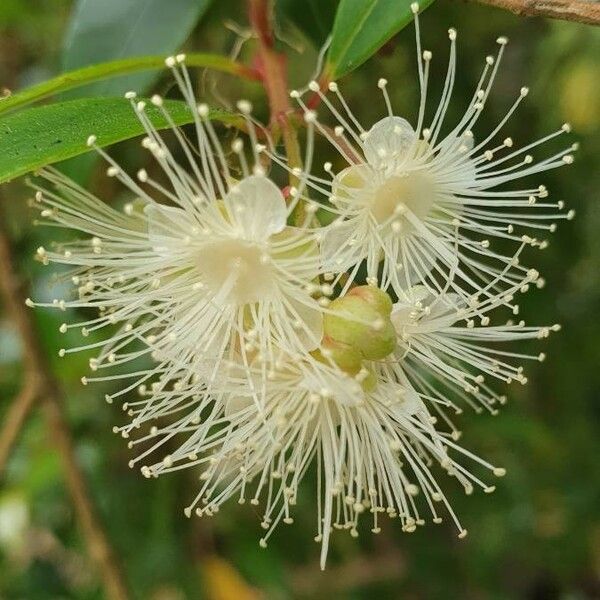
- ☁️ Puffy White Blooms: It produces clusters of tiny, delicate white flowers that look like miniature fireworks. These "puffball" blossoms are typical of the Myrtle family, defined by their long, spray-like stamens.
- 🌑 Ink-Dark Berries: Following the flowers, the plant yields small, round fruits. These berries transition from green to a deep, dramatic black or dark purple as they ripen, providing a sharp contrast against the green leaves.
🏡 In Your Garden
- 💧 The Thirst for Humidity: Because it hails from humid tropical forests, this plant can be finicky in dry, air-conditioned homes. It thrives best when misted frequently or grouped with other plants to create a moist micro-climate.
- 🌱 Root Sensitivity: Like many of its cousins in the Myrtaceae family, Myrcia splendens has a delicate root system that dislikes being disturbed. It is best to choose its "forever home" early, as frequent repotting can lead to "transplant shock" and leaf drop.
- ☀️ Light Filtering: In the wild, it often grows as an understory tree. This means it prefers "dappled" or bright indirect light. Direct, harsh afternoon sun can scorch those namesake shiny leaves, turning them dull and brown.
⚠️ Safety & Toxicity
- 🐾 Pet Safety: Myrcia splendens is generally considered non-toxic to cats and dogs. It does not contain the harsh alkaloids found in many other tropical houseplants.
- 👄 Human Caution: While the berries are a staple for birds, they are not a common food source for humans. While not "deadly," they are often resinous or astringent; it is best to keep them away from curious toddlers to avoid stomach upset.
✨ Fun Fact
In its native habitats, Myrcia splendens is considered an "ecological pioneer." It is one of the first plants to move back into cleared or damaged forest areas, acting as a nursery plant that provides shade and food for birds, which then bring in the seeds of other forest trees!

Detailed Care Instructions
To grow Myrcia splendens, also known as the Brazilian Grumichama or Jaboticaba, you can follow these steps:
- Climate and location: Confirm that your climate is suitable for growing Myrcia splendens. It thrives in tropical or subtropical regions.
- Soil: Choose well-draining, fertile soil with a slightly acidic pH (around 5.5-6.5).
- Sunlight: Find a location that receives full to partial sunlight for at least six hours a day.
- Planting: If starting from seeds, soak them in water for 24 hours before planting. Prepare small pots with seed-starting mix or a mix of peat moss and sand. Plant the seeds about 1/4 inch deep and cover with a thin layer of soil.
- Watering: Keep the soil consistently moist, but not waterlogged, during the germination period. Once the plant has established, reduce watering to allow the top layer of soil to dry before watering again. Avoid overwatering as this can cause root rot.
- Fertilization: Fertilize the plant with a balanced, slow-release fertilizer during the growing season. Follow the manufacturer's instructions for proper dosage.
- Pruning: Trim any dead or damaged branches to maintain the health and appearance of the plant. Pruning can also be done to shape the tree if desired.
- Pests and diseases: Watch out for common pests such as aphids or mealybugs. Regularly inspect the plant for signs of pests and treat with appropriate insecticides if needed. Diseases are not usually a major concern for Myrcia splendens.
Remember that Myrcia splendens is a slow-growing plant, and it may take several years to reach maturity and produce fruits. Be patient and provide the necessary care for optimal growth.
Myrcia Splendens is a plant that requires regular watering to thrive. It is important to water it deeply, allowing the soil to become saturated, but not waterlogged.
To water Myrcia Splendens, first, check the soil moisture by inserting your finger into the soil up to the second knuckle. If it feels dry, it is time to water. If it feels damp, wait a few more days before watering.
When watering, pour water slowly and evenly over the soil surface, ensuring that the water reaches the roots. Avoid getting the foliage wet, as this can lead to fungal diseases.
Water Myrcia Splendens as often as necessary depending on the weather, but avoid overwatering as this can lead to root rot. During periods of drought, it may be necessary to water more frequently.
In addition to regular watering, it is also important to provide good drainage and avoid leaving the plant standing in water.
To fertilize this plant, use a well-balanced fertilizer that is specifically formulated for flowering plants. It should contain equal parts nitrogen, phosphorus, and potassium. Apply the fertilizer every two to three months during the plant's growing season, which is typically from spring until early fall. Be sure to water the plant well before and after fertilizing to avoid any potential damage to the roots. Additionally, if the plant is growing in a container, make sure to use a high-quality potting mix that contains plenty of organic matter to help retain moisture and nutrients.
Myrcia Splendens prefers a well-draining and loamy soil. It is best to use a soil mix that contains a combination of sand, peat moss, and perlite or vermiculite. The addition of organic matter such as compost, aged manure or leaf mold can also be beneficial. It is important to maintain the soil's moisture levels without allowing it to become waterlogged. The pH of the soil should be slightly acidic, with a range between 5.5-6.5. Avoid using heavy clay soils or soils that are too alkaline, as they can negatively affect the growth and health of the plant.
To propagate this plant, start by taking a stem cutting from a healthy, mature plant. Use clean, sharp shears or a knife to make a clean cut at a slight angle just below a leaf node. The cutting should ideally be around 4-6 inches long.
Remove any leaves from the bottom 2 inches of the stem, leaving just a few at the top. Dip the end of the cutting in rooting hormone powder to help encourage root growth.
If planting in soil, make a small hole in a pot filled with moist potting mix and gently insert the cutting, making sure the bottom 2 inches are covered. Firm the soil around the stem and water gently.
If propagating in water, fill a glass with fresh water and submerge the cut end of the stem. Change the water every few days to prevent bacterial growth.
Place the cutting in a warm, bright spot that receives indirect light. Keep the soil or water moist, but not soaking wet.
Within a few weeks, you should start to see new growth and roots forming. Once the plant has established a good root system, it can be transplanted into a larger pot or planted in the ground.








