Plant Overview
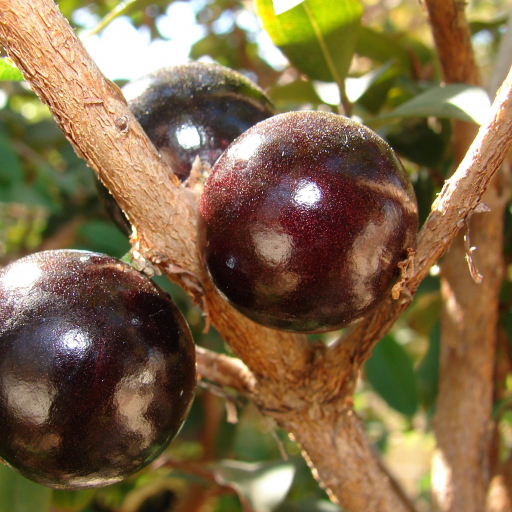
Imagine a tree that looks like it’s being swallowed by giant, glossy, purple pearls. Known most commonly as the Jabuticaba, this Brazilian native is famous for its "cauliflory"—the rare botanical habit of producing flowers and fruit directly on its woody trunk rather than on new stems. It is a slow-growing masterpiece that brings a touch of tropical surrealism to any garden or greenhouse.
🔍 How to Identify
- 🫐 Trunk-Borne Fruit: The most striking feature is the clusters of dark purple, grape-like fruits that emerge directly from the bark, appearing as if they were glued onto the tree.
- 🧥 Mottled Bark: Even without fruit, the tree is stunning; its smooth, tan-colored bark peels away in patches to reveal creamy shades underneath, much like a Guava or Eucalyptus tree.
- 🍃 Lance-Shaped Leaves: The foliage consists of small, leathery, dark green leaves that grow in pairs. When the leaves first emerge, they often have a beautiful salmon-pink or reddish tint.
🏡 In Your Garden
- 💧 Thirst for Moisture: Jabuticaba loves "wet feet." In its native Brazilian rainforests, it often grows near riverbanks. Unlike many trees that prefer to dry out between waterings, this plant needs consistently moist soil to prevent fruit drop and leaf browning.
- 🧪 Acidic Preferences: This plant is a "calcifuge," meaning it hates lime and alkaline soil. If your water is hard, you may notice the leaves turning yellow; using rainwater and acidic mulch (like pine needles) helps keep it vibrant.
- 🌳 The Ultimate Bonsai: Because of its slow growth rate and small leaves, it is one of the most coveted species for bonsai enthusiasts. It tolerates heavy pruning well and can be shaped into a miniature fruiting forest.
⚠️ Safety & Toxicity
- ✅ Edible & Nutritious: The fruit is 100% safe and highly prized for humans. The white pulp is sweet and floral, though the thick purple skin is high in tannins and can be slightly astringent.
- 🐾 Pet Friendly: The Jabuticaba is generally considered non-toxic to cats and dogs. However, as with any fruit, the thick skins and seeds could cause mild digestive upset if a curious pet consumes them in large quantities.
✨ Fun Fact
Because the fruit begins to ferment almost immediately after being picked (often within 24 hours), you will rarely find fresh Jabuticaba in grocery stores. In Brazil, this has led to a massive culture of "tree-to-table" eating, where the fruit is transformed into world-class jams, jellies, and potent homemade wines.

Detailed Care Instructions
| Hardiness Zones | 9B - 11 |
To grow Myrciaria cauliflora, also known as jabuticaba or Brazilian grape tree, follow these steps:
- Obtain seeds or seedlings: You can buy seeds or young seedlings from a local nursery or online plant stores. Opt for high-quality seeds or healthy seedlings.
- Choose a suitable location: Jabuticaba plants prefer full sun to partial shade. Select a well-drained area with fertile soil that is rich in organic matter.
- Prepare the soil: Before planting, prepare the soil by removing any weeds or grass and loosening it to improve drainage. Incorporate organic matter, such as compost, to enrich the soil.
- Planting seeds or seedlings: If you have seeds, sow them about 1 inch deep in pots or directly in the ground. Water regularly to keep the soil moist, but not waterlogged. If you are using seedlings, dig a hole slightly larger than the root ball, place the plant in the hole, and backfill with soil. Water thoroughly after planting.
- Watering and fertilizing: Proper watering is essential for establishment and growth. Water young plants regularly, keeping the soil consistently moist but not saturated. Once established, jabuticaba plants are moderately drought-tolerant. Fertilize with a balanced slow-release fertilizer according to the package instructions once every few months.
- Pruning: Jabuticaba trees have a naturally bushy growth habit. Prune lightly to maintain shape and remove any dead or damaged branches. Be careful not to over-prune, as it may reduce fruit production.
- Pests and diseases: Monitor for common pests like aphids, scale insects, or mealybugs. Use organic or chemical insecticides if necessary. Keep an eye out for fungal diseases like rust or powdery mildew. Adequate spacing, good air circulation, and proper watering can help prevent disease issues.
- Harvesting: Depending on the variety and climate, jabuticabas may take several years to produce fruit. The tree produces fruit directly on its trunk and branches. Harvest when the fruit fully ripens and has a deep purple color. Gently twist the fruit to detach it from the tree.
Remember that Myrciaria cauliflora is a tropical plant and requires a warm climate to thrive. It may not be suitable for regions with cold winters or freezing temperatures.

Place in a bright room that is sun drenched almost all day. Or directly in a south-facing window.

Myrciaria Cauliflora is a tropical plant that requires consistent watering to thrive. When watering Myrciaria Cauliflora, it is important to ensure that the soil is completely soaked, but not waterlogged. This can typically be achieved by using a watering can or hose to slowly water the plant, allowing the water to soak in gradually.
It is important to avoid allowing the soil to completely dry out between waterings, as this can lead to stress and potential damage to the plant. On the other hand, overwatering can lead to root rot and other types of fungal diseases, so it is important to strike a balance.
One way to accomplish this is by monitoring the moisture level of the soil around the plant. This can be done by inserting a finger or a moisture meter into the soil to check for dryness. If the soil feels dry to the touch, it is likely time to water the plant.
Additionally, Myrciaria Cauliflora plants benefit from regular fertilization with a balanced, slow-release fertilizer. This can help to ensure that the plant receives the nutrients it needs to grow strong and healthy, even during periods of drought or stress.
Overall, watering Myrciaria Cauliflora requires a balance of vigilance, patience, and knowledge of the plant's specific needs. With proper care, these tropical beauties can thrive and produce delicious, nutritious fruit.
To fertilize this plant, choose a slow-release fertilizer with a balanced NPK ratio, and apply it to the soil around the base of the plant every 2-3 months during the growing season. Avoid over-fertilizing, as this can lead to excess foliage growth and a decrease in fruit production. Water the plant thoroughly after fertilizing to help the nutrients reach the roots.
Myrciaria cauliflora plant prefers a soil that is well-draining and has a slightly acidic pH between 5.5 and 6.5. The soil should be rich in organic matter and nutrient-dense. A mixture of peat moss, perlite, and vermiculite with some aged compost added can make a good soil mix for this plant. The soil should not be too compacted to ensure that there is enough oxygen available for the roots. The plant can also benefit from regular fertilization with a balanced fertilizer that includes nitrogen, phosphorus, and potassium. It's important to avoid overwatering, as excessively wet soil can lead to root rot.
To propagate this plant, start by taking a cutting from a healthy mother plant. Make sure the cutting is at least 6 inches long and has several leaves attached to it. Remove any leaves from the lower 2 inches of the cutting.
Next, dip the cut end of the stem in rooting hormone powder to encourage root growth. Plant the cutting in a pot filled with soil that is moist but well-draining.
Cover the pot with a plastic bag to create a greenhouse-like environment. This will help retain moisture and humidity around the cutting, promoting faster root growth.
Place the pot in a warm, bright location, but avoid direct sunlight as this may damage the cutting. Keep the soil moist but not waterlogged by watering sparingly once a week.
After 4-6 weeks, gently tug on the cutting to see if it has taken root. Once you feel resistance, it's time to remove the plastic bag and allow the plant to adjust to its new environment.
When the new plant has started to grow, you can repot it in a larger container or plant it in your garden. With proper care, your new plant will thrive and produce delicious fruit.
Common pests of the jaboticaba include Scale insect, mealybugs, spider mites, aphids. Make a habit of checking your jaboticaba frequently for pests so that any infestations can be caught and managed early.







