Plant Overview
Known as the "Chinese Bayberry" or "Yangmei," this vibrant evergreen is a jewel of East Asian horticulture. For over 2,000 years, it has been cherished not just for its refreshing, tart-sweet fruit, but also for its glossy beauty and medicinal properties. In Chinese culture, the ripening of these deep-red berries signals the height of summer and is often celebrated in poetry and traditional festivals.
🔍 How to Identify
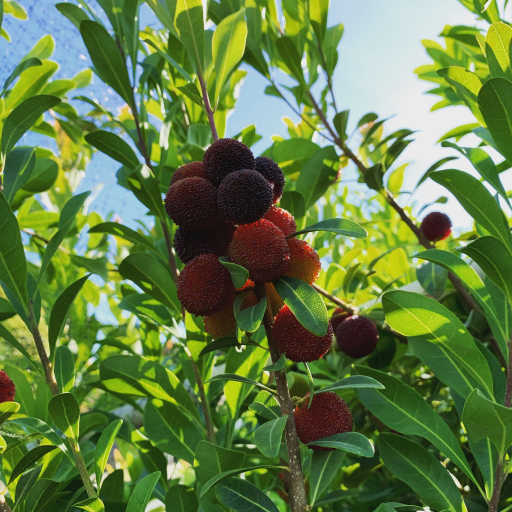
- 🍃 Foliage: Glossy, dark green leaves that are leathery to the touch, typically narrow and oblong with slightly serrated edges toward the tips.
- 🔴 The Fruit: Distinctive round drupes covered in tiny, fleshy bumps (papillae); they transition from green to a brilliant crimson and finally a deep, blackish-purple when fully ripe.
- 🌳 Growth Habit: A multi-stemmed shrub or small tree that maintains a neat, rounded canopy, providing year-round structure to a landscape.
🏡 In Your Garden
- 🧪 Soil Sensitivity: This plant is an "acid-lover." It thrives in acidic soil and will often suffer from yellowing leaves (chlorosis) if planted in alkaline or lime-heavy ground.
- 🤝 The Nitrogen Fixer: It possesses a unique symbiotic relationship with soil bacteria (Frankia), allowing it to "fix" its own nitrogen. This makes it incredibly resilient in poor, sandy, or nutrient-depleted soils.
- 🌦️ Climate Needs: While it loves sun, it prefers humid environments and can be sensitive to extreme frost, making it best suited for temperate to subtropical garden zones.
⚠️ Safety & Toxicity
- ✅ Status: Generally safe and highly edible.
- 🍒 Human Consumption: The fruit is a "superfood" rich in antioxidants; however, the juice is incredibly potent and can easily stain clothing or skin a deep purple.
- 🐾 Pets & Kids: The plant and fruit are non-toxic to dogs and cats. However, like cherries, the fruit contains a hard central pit that could be a choking hazard for very small pets or curious toddlers.
✨ Fun Fact
In China, the fruit is so beloved that it is used to create "Yangmei Jiu," a traditional infused rice wine. There is also a famous legend that the great poet Li Bai once traded his calligraphy for a basket of these berries, claiming their flavor was more valuable than gold.

Detailed Care Instructions
To grow a Myrica Rubra plant, also known as a Red Bayberry or Chinese Bayberry, you can follow these steps:
- Obtain high-quality seeds or saplings from a reputable source. Myrica Rubra plants can be propagated from seeds or by obtaining saplings from nurseries.
- Choose a suitable location for planting. Myrica Rubra plants thrive in well-drained soil and full sun or partial shade. Ensure that the location gets at least 6 hours of sunlight per day.
- Prepare the soil by loosening it and removing any weeds or rocks. Myrica Rubra plants prefer slightly acidic soil, so if your soil is alkaline, you may need to amend it with organic matter or a soil acidifier.
- If you are planting from seeds, soak them in water for 24 hours before planting. This helps to improve germination rates.
- Dig a hole slightly larger than the root ball of the sapling or, if planting from seeds, create a small indentation in the soil.
- Place the sapling into the hole, ensuring the root ball is positioned at the same level as the surrounding soil. If planting seeds, place them in the indentation and cover them lightly with soil.
- Water the plant thoroughly after planting and continue to water regularly, keeping the soil consistently moist but not waterlogged.
- Apply a layer of organic mulch around the base of the plant to conserve moisture, suppress weeds, and provide nutrients as it decomposes.
- Prune the plant as necessary to maintain its shape and remove any dead or diseased branches. Pruning can be done during the dormant season or after fruiting.
- Fertilize the plant annually in early spring with a balanced slow-release fertilizer to promote healthy growth and fruit production.
- Protect the plant from extreme cold temperatures, as Myrica Rubra plants are sensitive to frost. Consider covering the plant or relocating it to a protected area during winter if you live in a colder climate.
- If growing in a container, ensure the pot has proper drainage holes and use well-draining potting soil. Water regularly and fertilize as needed.
By following these steps and providing proper care, your Myrica Rubra plant should thrive and eventually produce delicious bayberries.
To water this plant, ensure that the soil is slightly moist to the touch, but not waterlogged. Water the plant deeply and thoroughly, allowing the water to penetrate the soil and reach the roots. The frequency of watering will depend on factors such as the humidity and temperature of the plant's environment, as well as the depth and quality of the soil. It is important to monitor the soil moisture level regularly, as overwatering can lead to root rot and other plant diseases. Additionally, ensure that the plant receives adequate sunlight and is planted in well-draining soil to promote healthy growth and development.
To fertilize this plant, use a balanced fertilizer with an N-P-K ratio of 7-7-7 or 10-10-10. Apply the fertilizer every two months during the growing season (spring and summer). Be sure to water the plant thoroughly before and after fertilizing, and avoid getting any fertilizer on the leaves or stems. Always follow the instructions on the fertilizer packaging for application rates and frequency.
The ideal soil to use for the plant in question is one that is well-draining, loamy, and rich in organic matter. It should have a slightly acidic to neutral pH between 5.5 and 7.0. The soil should be moist, but not waterlogged, as excessive moisture can lead to root rot. Adding compost or aged manure before planting can help improve the soil's quality and nutrient content. Additionally, the plant prefers a soil that is porous and allows for good air circulation around the roots.
To propagate this plant, take a healthy and mature stem cutting from the main plant. The cutting should be at least 6 inches long and have several leaves on it. Remove the bottom set of leaves and dip the cut end of the stem into rooting hormone. Plant the cutting in a pot filled with well-draining soil and water it thoroughly.
Place the pot in a location with bright, indirect light and maintain a consistent level of moisture in the soil. Mist the cutting regularly to keep the foliage hydrated. After a few weeks, the cutting should have developed roots and can be transplanted into a larger container or planted in the ground.
Alternatively, this plant can also be propagated by layering. Choose a low-growing branch and bend it down to the ground. Make a small cut in the middle of the branch, without cutting it off completely. Apply rooting hormone to the cut and bury that part of the branch in the soil. Keep the soil moist and in a few weeks, new roots should have formed. Cut the layered branch from the parent plant and replant it.








