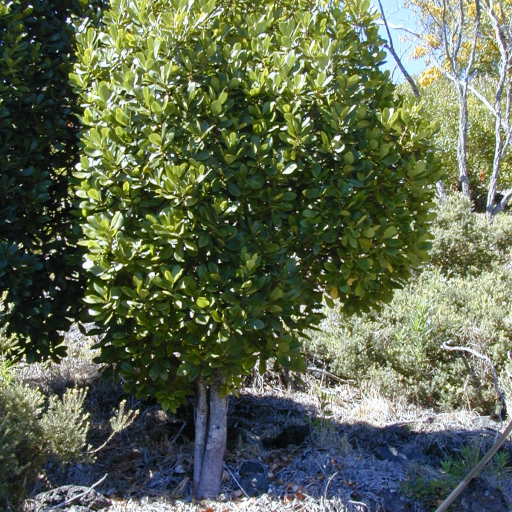
Plant Overview
Known to the locals of Hawaii as Kōlea lau nui, this stunning evergreen tree is a true volcanic treasure. Its name literally translates to "large-leaved Kōlea," reflecting its bold, architectural foliage that stands out in the mist-covered rainforests. While it can grow into a towering forest giant in the wild, it is often admired by enthusiasts for its slow-growing, dignified presence and its deep connection to Hawaiian culture.
🔍 How to Identify
- 🍃 Robust Foliage: The leaves are large, thick, and leathery, usually oval-shaped with a glossy dark green finish that helps the plant shed heavy tropical rainwater.
- 🌸 Wood-Borne Flowers: Look closely at the branches rather than the tips; this plant exhibits "cauliflory," meaning its tiny, cream-to-reddish flowers cluster directly on the woody stems and trunk.
- 🟣 Ink-Dark Berries: It produces small, round fruits that ripen into a deep purple or charcoal black, which are a favorite snack for native Hawaiian forest birds.
🏡 In Your Garden
- 🏝️ Mimic the Cloud Forest: This species thrives in high-humidity environments with consistent moisture. If you are growing it as a specimen plant, ensure the soil is rich in organic matter but drains rapidly—it hates "wet feet" despite its love for rain.
- 🐢 The Patient Gardener’s Tree: Myrsine lessertiana is famously slow-growing. It invests its energy into creating dense, heavy wood and thick leaves, making it very sensitive to root disturbance. Once planted, it prefers to stay in one spot for its entire life.
⚠️ Safety & Toxicity
- ✅ Generally Non-Toxic: There are no widely recorded instances of Myrsine lessertiana being toxic to humans, cats, or dogs.
- 🌿 Skin Sensitivity: While the plant is safe, the tannins in the bark (historically used for dyes) might cause mild irritation to those with very sensitive skin if the bark is damaged or handled extensively.
✨ Fun Fact
Ancient Hawaiians discovered that the sap and bark of the Kōlea tree produced a magnificent red dye. This dye was highly prized for coloring kapa (traditional bark cloth), turning simple fibers into royal garments.

Detailed Care Instructions
To grow Myrsine lessertiana plant, follow these steps:
- Choose an appropriate location: Myrsine lessertiana plant prefers a bright and partially shaded spot. It can tolerate full sun but may require extra care and watering. Ensure the location has well-draining soil.
- Prepare the soil: Before planting, prepare the soil by mixing organic matter like compost or aged manure to improve drainage and fertility. Ensure the soil pH is slightly acidic, around 5.5 to 6.5.
- Planting method: If you have seeds, soak them in water overnight to improve germination. Sow the seeds in a small seed pot, cover them lightly with soil, and keep the pot in a warm place. Water regularly to keep the soil moist. Transplant the seedlings to their final location once they have grown a few inches high.
- Watering: Myrsine lessertiana plant prefers regular watering, especially during dry periods. However, avoid excessive waterlogging, as it can cause root rot. Ensure the soil is moist but not saturated.
- Mulching: Apply a layer of organic mulch such as wood chips or straw around the base of the plant to retain moisture, suppress weed growth, and maintain a cool temperature.
- Fertilization: Feed the plant with a balanced slow-release fertilizer once or twice a year. Alternatively, you can use organic fertilizers like compost or well-rotted manure.
- Pruning: Myrsine lessertiana plant benefits from occasional pruning to maintain its shape and promote bushier growth. Prune back any dead, damaged, or overcrowded branches. This is best done in early spring before new growth appears.
- Pest and disease control: Ensure good air circulation around the plant to avoid fungal diseases. Regularly inspect for pests like aphids or scale insects and treat accordingly with appropriate organic or chemical pest control products.
- Propagation: Myrsine lessertiana plant can be propagated by seeds or through softwood or semi-hardwood cuttings. Take cuttings from healthy, disease-free plants during the active growing season and root them in a well-draining potting mix.
Remember, Myrsine lessertiana plant requires patience, proper care, and suitable growing conditions to thrive.

Place in a bright room that is sun drenched almost all day. Or directly in a south-facing window.

Myrsine Lessertiana is a plant that requires regular watering to thrive. The best way to determine when it needs water is to check the surface of the soil. If the soil feels dry to the touch, it is time to water the plant.
To water Myrsine Lessertiana, use a watering can or hose with a gentle spray nozzle. Avoid using a strong stream of water, as this can damage the plant's delicate leaves and roots. Slowly water the soil around the base of the plant, making sure to soak the soil thoroughly. It is important not to overwater the plant, as this can lead to root rot.
During the hot summer months, Myrsine Lessertiana may require more frequent watering. In addition, it is important to ensure that the plant is not sitting in standing water, as this can lead to fungal growth and other issues. Finally, it is recommended to water the plant in the morning or evening, when the sun is not as strong, to prevent water from evaporating too quickly.
To fertilize the Myrsine Lessertiana plant, apply a balanced fertilizer with equal amounts of nitrogen, phosphorus, and potassium every two to three months during the growing season. Water the plant thoroughly before and after applying the fertilizer to prevent burning. Avoid over-fertilizing as it can lead to excessive growth and weak stems. Use a slow-release fertilizer if possible and follow the manufacturer's instructions for application rates. Monitor the plant for any signs of nutrient deficiencies and adjust the fertilization schedule accordingly.
Myrsine Lessertiana prefers an acidic, well-draining soil with good organic matter content. It thrives in soils that are sandy or loamy and that have a pH from 4.5 to 6.5. The soil should be kept consistently moist but not waterlogged, as Myrsine Lessertiana is intolerant of drought. It is also recommended to add a slow-release fertilizer or compost to the soil at least once a year to provide essential nutrients for healthy growth. It is important to avoid using soil that is too alkaline or heavy, as this can lead to root rot or other growth issues.
Myrsine Lessertiana plant can be propagated through both stem cuttings and seeds.
To propagate through stem cuttings:
- Choose a healthy stem from the plant and make a 6-8 inch cutting.
- Remove the leaves from the bottom half of the cutting.
- Dip the cut end of the stem into rooting hormone powder.
- Plant the cutting into a pot filled with well-draining soil.
- Water the cutting lightly and place it in a location with indirect sunlight.
- Keep the soil moist and allow several weeks for the cutting to develop roots.
- Once the cutting has developed roots, it can be transplanted into a larger pot or outdoors in the garden.
To propagate through seeds:
- Collect the seeds from the plant when they are mature.
- Soak the seeds in warm water for 24 hours.
- Fill a pot with well-draining soil.
- Plant the seeds in the soil, covering them with a thin layer of soil on top.
- Water the soil lightly and place the pot in a location with indirect sunlight.
- Keep the soil moist and allow several weeks for the seeds to germinate.
- Once the seedlings have developed several sets of leaves, they can be transplanted into larger pots or outdoors in the garden.








