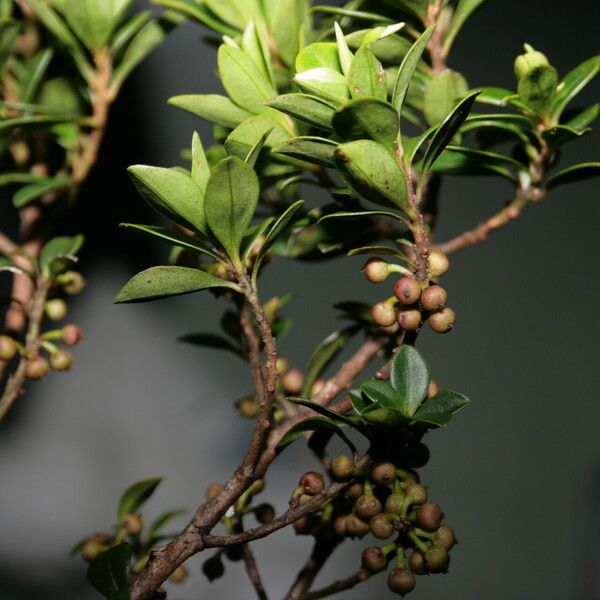
Plant Overview
Hailing from the lush Atlantic Forest and Cerrado regions of Brazil, the Myrsine velutina is a woody gem often sought after by enthusiasts of tropical flora. Known colloquially as the "Velvet Myrsine," its name is a direct tribute to its most enchanting feature: the soft, downy texture of its foliage. This resilient shrub or small tree acts as a vital "pioneer species," often being one of the first to reclaim and heal disturbed soil in its native habitat.
🔍 How to Identify
- 🌿 The Foliage: The leaves are elliptic and leathery, but they possess a fine, velvety "fuzz" (pubescence) on the underside that feels like soft suede to the touch.
- 🍒 The Berries: It produces small, spherical drupes that transition from green to a deep purple or blackish hue when ripe, often clustering tightly along the stems.
- 🪵 The Bark: Younger branches typically display a reddish or rusty brown tint, covered in the same fine hairs that characterize the leaves, giving the plant a warm, earthy aesthetic.
🏡 In Your Garden
- 🌱 A Natural Healer: Because it is a pioneer species, it is incredibly hardy once established. It is often used in ecological restoration projects to provide shade and protection for slower-growing "climax" trees.
- 💧 Humidity Lover: Coming from the Brazilian rainforests, it thrives in high-humidity environments. If grown indoors or in a dry climate, it appreciates regular misting or being placed near a water feature to keep its velvety leaves from drying out.
- ☀️ Light Nuance: While it enjoys bright, indirect light, its velvety coating is an evolutionary adaptation that helps it handle a bit more sun than its smooth-leaved cousins by reflecting excess heat.
⚠️ Safety & Toxicity
- 🐾 Pet & Child Safety: There is no widespread evidence of severe toxicity associated with Myrsine velutina. However, as with most ornamental woody plants, the berries and leaves are not meant for human or pet consumption.
- 👅 Ingestion Risk: Ingesting large quantities of the berries may cause mild stomach upset in curious cats or dogs. It is always best to keep this plant out of reach of nibbling pets.
✨ Fun Fact
The Myrsine velutina is a favorite "fast food" stop for tropical birds! In the wild, its abundant berries are a primary food source for local avian populations, who in turn help the plant travel by dispersing its seeds across the forest floor.

Detailed Care Instructions








