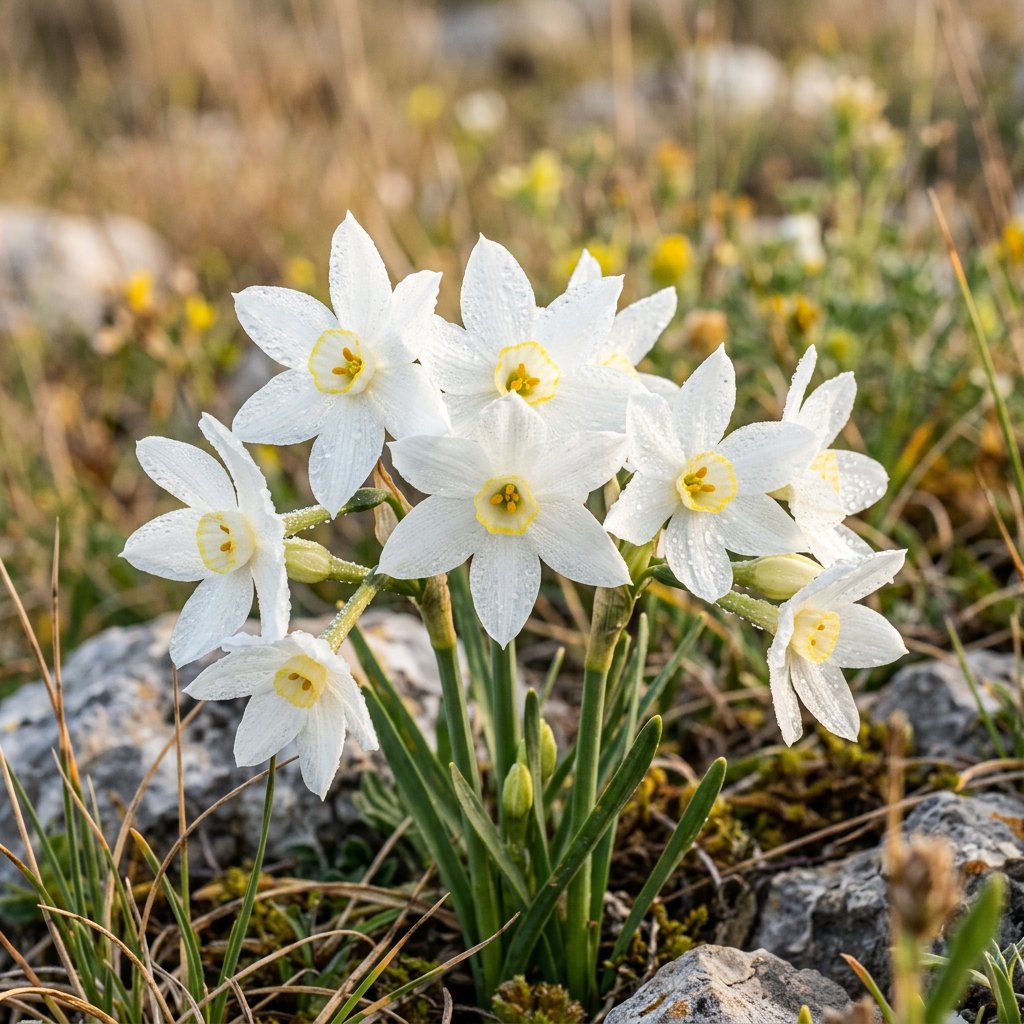
Plant Overview
Often called the "Paperwhite," this Mediterranean beauty is the unofficial mascot of winter indoor gardening. Known for its snow-white blossoms and a fragrance so potent it can fill an entire home, it is a favorite for "forcing" when the garden outside is dormant. In the language of flowers, it represents purity and unconditional love, though its intense scent is famously polarizing—you either love it or find it completely overwhelming!
🔍 How to Identify
- 🌸 The Flowers: Clusters of small, paper-thin, star-shaped blossoms sit atop tall, leafless stems. Each flower features six pure white petals and a tiny, shallow cup (corona) at the center.
- 🍃 The Foliage: Long, narrow, strap-like leaves that are a deep grayish-green. They grow upright from the bulb and often reach heights of 12 to 18 inches.
- 👃 The Aroma: An unmistakable, musky, and heady floral scent. Unlike the sweet smell of a classic yellow daffodil, the Paperwhite is much more pungent and "perfumey."
🏡 In Your Garden
- 💧 Hydroponic Potential: One of the few bulbs that doesn't require a "chill period" to bloom. You can grow them without any soil at all—simply nestle the bulbs into a bed of decorative pebbles and add water to the base.
- ☀️ The Light Chase: These plants are notorious for "legginess." If they don't receive enough bright, indirect light, the stems will stretch toward the sun and eventually collapse under their own weight. Providing a cool environment helps keep their growth compact.
⚠️ Safety & Toxicity
- 🚫 Toxic Status: All parts of the Narcissus papyraceus, particularly the bulb, contain the alkaloid lycorine.
- 🐾 Pets & Kids: Highly toxic if ingested. It can cause severe stomach upset, vomiting, and salivation in dogs and cats. Keep these bulbs well out of reach of curious nibblers.
- 🧤 Skin Irritation: The sap contains calcium oxalate crystals, which can cause "Daffodil itch" (dermatitis). If you are sensitive, it is a good idea to wear gloves when pruning or handling cut stems.
✨ Fun Fact
🍸 The Boozy Secret: If your Paperwhites are growing too tall and falling over, you can give them a "stiff drink." Research from Cornell University found that watering them with a 4% to 5% alcohol solution (using diluted vodka or gin) stunts their height by about 30% without affecting the size or longevity of the flowers!

Detailed Care Instructions
| Humidity | Normal |
| Lighting | Part Sun |
| Toxicity | Poisonous |
| Difficulty | Medium |
| Temperature | 10°C - 24°C |
| Hardiness Zones | Min 8A |
To grow Narcissus Papyraceus, also known as Paperwhite Narcissus, follow these steps:
- Purchase bulbs: Buy healthy, firm bulbs from a reputable garden center or online nursery in early autumn. Paperwhite Narcissus bulbs are usually available between September and December.
- Container selection: Choose a container with drainage holes that is at least 4-6 inches deep. You can use a pot made of plastic, ceramic, or clay, as long as it has proper drainage.
- Planting: Fill the container with well-draining potting soil, leaving about 1-2 inches of space at the top. Place the bulbs close together, but not touching each other or the sides of the container. Gently press them into the soil, leaving the top third of the bulb exposed.
- Watering: Water the soil thoroughly after planting until it is evenly moist. Avoid overwatering, as Narcissus bulbs can rot in excessively wet conditions. Throughout the growing period, maintain moist, but not waterlogged, soil.
- Sunlight and temperature: Place the container in a sunny spot that receives at least 6-8 hours of indirect or filtered sunlight each day. Paperwhite Narcissus prefers cool temperatures around 50-60°F (10-15°C).
- Growth and care: Paperwhites typically bloom within 4-6 weeks after planting. As the leaves emerge, turn the container daily to prevent the stems from leaning towards the light source. If the stems become too elongated, you can support them with stakes or decorative branches.
- Fertilization: Once the bulbs begin to sprout, you can apply a diluted liquid fertilizer to promote healthy growth. Follow the instructions on the fertilizer package for the recommended dosage and frequency.
- Flowering: Enjoy the fragrant white flowers that Paperwhite Narcissus produces. The blossoms usually last for about 2-3 weeks. If you want to prolong blooming, keep the container in a cool location, as warmer temperatures can cause the flowers to fade more quickly.
- After blooming: Paperwhite Narcissus is often grown as a temporary plant. After flowering, you can discard the bulbs or save them for planting outdoors in suitable climates.
Remember that Narcissus Papyraceus blooms readily and does not require a cold period like other Narcissus species. Enjoy the process and the lovely flowers it produces!

Place in a window with dappled sun or a spot in the middle of a room. Or directly in a window facing west or east.

To water this plant, ensure that the soil is consistently moist during its growing period. Water the plant when the top layer of soil seems dry to the touch. Make sure not to overwater, as this can lead to root rot. Water from the base of the plant, rather than from the top, to avoid wetting the leaves. Allow excess water to drain away and do not allow the plant to sit in standing water. During the dormant period, reduce watering but do not allow the soil to completely dry out.
To fertilize this plant, start by choosing a balanced fertilizer with equal amounts of nitrogen, phosphorus, and potassium. Mix the fertilizer into the soil around the base of the plant, being careful not to touch the roots or foliage. Water the plant thoroughly after fertilizing. Repeat this process every 4-6 weeks during the growing season. Avoid fertilizing when the plant is dormant.
The ideal soil for growing this particular plant should be well-draining and rich in organic matter. It should have a pH level ranging from 6.0 to 7.5. The soil should be moist, but not waterlogged or too dry. Soil that contains too much clay can lead to root rot, while soil that is too sandy may dry out too quickly. Mixing in a slow-release fertilizer specifically formulated for bulbs can also help to ensure healthy growth.
Propagation of this plant can be done through division of the bulbs. Carefully separate the bulbs into individual pieces and replant them in well-draining soil. It is important to ensure that each division has at least one healthy shoot and root system. Water the newly planted divisions regularly and keep them in a location with plenty of sunlight. Over time, the divisions will grow and multiply, creating a beautiful display of this plant.
Common pests of the paper-white narcissus include Spider mites, aphids, thrips. Make a habit of checking your paper-white narcissus frequently for pests so that any infestations can be caught and managed early.








