Plant Overview
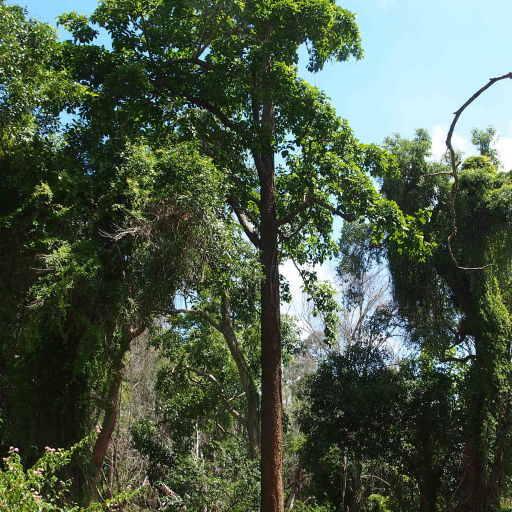
Often called the Leichhardt Tree or Cheesewood, this tropical giant is famous for its bizarre, spherical flowers that look like tiny glowing suns. Native to the riverbanks of Northern Australia and Southeast Asia, it is a fast-growing beauty that provides deep, cooling shade and a touch of the prehistoric to any landscape. In the wild, it acts as a vital "pioneer" species, quickly reclaiming riverbanks after floods.
🔍 How to Identify
- 🍃 Lush Foliage: The leaves are impressively large, broad, and glossy green. They often have a "quilted" texture due to their deep, prominent veins and can grow up to 25cm long.
- 🟡 Pincushion Flowers: The star attraction is the globose flower head—a perfectly round, fragrant yellow ball covered in tiny white spikes (styles) that give it a fuzzy, alien appearance.
- 🪵 Textured Bark: The bark is thick, corky, and grey-brown. As the tree matures, the bark becomes deeply fissured, providing a home for various micro-organisms and insects.
🏡 In Your Garden
- 💧 A Thirsty Giant: This tree naturally grows along "riparian" zones (riverbanks and billabongs). In a garden setting, it thrives in wet soil where other trees might suffer from root rot, making it perfect for poorly drained spots.
- 🏗️ Give it Space: Because it grows rapidly and has a vigorous root system searching for water, it is best kept well away from pipes, swimming pools, and house foundations. It is a "forest maker" that needs room to spread its canopy.
⚠️ Safety & Toxicity
- 🐾 Low Risk: Nauclea orientalis is not considered highly toxic, but it does contain bitter alkaloids in its bark and leaves.
- 👅 Bitter Defense: While not typically dangerous to touch, the foliage tastes extremely bitter, which usually discourages pets or children from chewing on it. However, it is always best to supervise curious toddlers around garden plants.
✨ Fun Fact
The nickname "Cheesewood" comes from the tree's soft, easy-to-cut timber, which is a distinct yellow-orange color and has a texture surprisingly similar to a block of firm cheese!

Detailed Care Instructions
Here are some steps you can follow to grow Nauclea Orientalis plant:
- Obtain seeds or seedlings: You can purchase Nauclea Orientalis seeds or seedlings from a local nursery or online retailer.
- Choose the right location: Nauclea Orientalis prefers to grow in well-draining soil and partial shade. Select a location in your garden that receives dappled sunlight or partial shade throughout the day.
- Prepare the soil: Nauclea Orientalis can tolerate a wide range of soil types, but it prefers loamy, fertile soil. Prepare the planting area by loosening the soil and removing any weeds or grass.
- Plant the seeds or seedlings: If you have seeds, sow them directly in the ground at a depth of about 1 inch. If you have seedlings, dig a hole slightly larger than the root ball and place the seedling in it. Gently backfill the soil around the seed or seedling and press it down lightly.
- Water the plant: Keep the soil moist, but not waterlogged, especially during the first few weeks after planting. Water the Nauclea Orientalis regularly, especially during dry periods.
- Mulch the soil: Apply a layer of organic mulch, such as wood chips or compost, around the base of the plant. This will help retain moisture, suppress weed growth, and provide nutrients to the plant as the mulch breaks down.
- Prune if necessary: Nauclea Orientalis may need occasional pruning to remove dead or damaged branches and to maintain its shape. Pruning is best done during the dormant season, which is usually in late winter or early spring.
- Fertilize when needed: Nauclea Orientalis does not typically require regular fertilization, but if your soil is poor, you can apply a balanced fertilizer once or twice a year during the growing season.
- Monitor for pests and diseases: Keep an eye out for any signs of pest infestations or diseases. Common pests that can affect Nauclea Orientalis include aphids, scale insects, and mealybugs. If necessary, treat the plant with organic pest control methods.
- Enjoy your plant: Nauclea Orientalis is known for its attractive flowers and glossy leaves. Once established, it will provide beauty to your garden for many years to come.

Place in a bright room that is sun drenched almost all day. Or directly in a south-facing window.

To water this plant, make sure to thoroughly soak the soil around the base of the plant, taking care not to get the leaves or stem wet. Water only when the soil is dry to the touch, and adjust watering frequency based on the plant's environment, as it may require more water in hot, dry conditions. Use room temperature or tepid water, and avoid using chlorinated water or hard water, as this may harm the plant. Additionally, ensure adequate drainage to prevent waterlogging and root rot.
To fertilize Nauclea Orientalis, use a balanced fertilizer with equal parts nitrogen, phosphorus, and potassium. Apply the fertilizer during the active growing season, typically in the spring and summer months. Dilute the fertilizer according to the manufacturer's instructions and apply it directly to the soil around the base of the plant. Do not apply the fertilizer to the leaves or stem. Water the plant thoroughly after fertilizing. Repeat the process every 2-4 weeks during the growing season. Avoid over-fertilizing as this can lead to harm to the plant.
The ideal soil for this particular plant is a well-draining, highly fertile and nutrient-rich soil that is slightly acidic in nature. It should have a pH range of around 5.5 to 6.5. The soil should be loamy, with a well-balanced mixture of sand, silt, and clay to ensure adequate water drainage and air circulation around the plant roots. It is also recommended to mix in compost or organic matter to enhance the soil's fertility. The plant prefers moist soil, but it is important not to overwater, as this can lead to root rot. When planting, it is advisable to incorporate some slow-release fertilizer granules into the soil to provide the plant with the necessary nutrients over time.
To propagate (plant species), you can take a cutting from a healthy plant and root it in a moist soil mixture. Take a portion of the stem that is about 6 inches long with several leaves attached. Remove the lower leaves and trim the stem to fit in a 3-inch pot. Dip the cut end in rooting hormone and plant it in a pot filled with moist soil. Cover the cutting with a plastic bag or dome to create a humid environment. Water the newly planted cutting so that the soil stays moist but not waterlogged. Place the pot in a location with indirect light and maintain a temperature between 65 and 75 degrees Fahrenheit. When new growth appears, you may remove the cover and transplant the new plant to a larger container.








