Plant Overview
Often called the "Canela-preta" or Black Cinnamon in its native South America, Nectandra megapotamica is a majestic evergreen that anchors the lush Atlantic Forest. This member of the Lauraceae family is a close relative of the avocado and true cinnamon, sharing their characteristic aromatic leaves and sturdy constitution. It is celebrated by conservationists for its ability to restore degraded lands and by gardeners for its dense, glossy canopy.
🔍 How to Identify
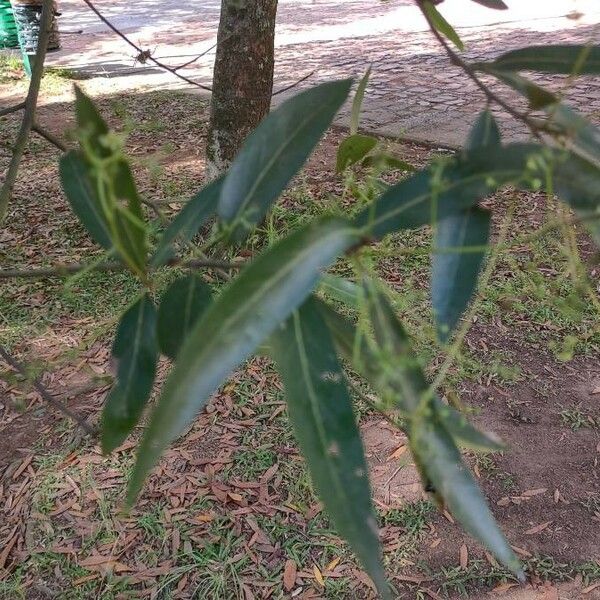
- 🍃 Leaf Texture: The leaves are lance-shaped, dark green, and remarkably glossy. When held up to the light, you can often see tiny translucent dots which are the oil glands that give the plant its spicy fragrance.
- 🌳 The "Cinnamon" Bark: As the tree matures, its bark turns a distinctive dark grey or blackish hue with a rough, fissured texture, which is how it earned its common Portuguese name.
- 🫐 Capped Fruits: It produces small, oval berries that turn purple-black when ripe. Each berry sits in a small, woody "cup" (called a cupule), making them look like tiny, elegant acorns.
🏡 In Your Garden
- 🌱 The Taproot Rule: This species develops a deep, dominant taproot very early in its life. Because of this, it hates being transplanted; it is best to sprout it in a deep container or plant it directly in its permanent location to avoid "stunting" its growth.
- 💧 Humidity Lover: While it is surprisingly hardy once established, it performs best in deep, organic-rich soil that mimics the forest floor. It thrives near water sources or in areas of the garden that stay naturally cool and humid.
⚠️ Safety & Toxicity
- 🐾 Mild Caution: Nectandra megapotamica is generally not considered "deadly," but its leaves and berries are rich in essential oils and alkaloids.
- 👶 Ingestion Risk: If pets or small children ingest the berries or chew on the leaves, they may experience mild gastrointestinal upset or nausea. It is best treated as an ornamental tree rather than an edible one.
✨ Fun Fact
🪵 The Scent of History: In the past, the wood of the Canela-preta was so highly prized for its natural resistance to rot and its pleasant, spicy aroma that it was a primary choice for crafting high-end furniture and even flooring in colonial South American manor houses!

Detailed Care Instructions








