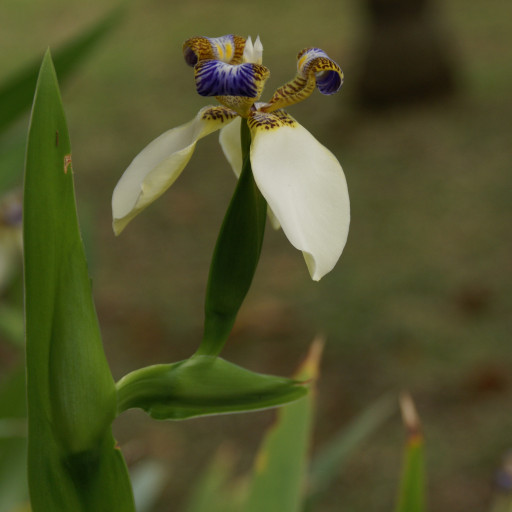
Plant Overview
Often called the Walking Iris or the Apostle Plant, Neomarica gracilis is a tropical treasure from Brazil that tells a story as it grows. It earned its "Apostle" nickname from the folk belief that the plant will not bloom until it has produced at least twelve leaves—one for each of the biblical apostles. It is beloved for its intricate, orchid-like flowers and its fascinating way of "walking" across a garden bed.
🔍 How to Identify
- ⚔️ The Foliage: Bright green, sword-shaped leaves that grow in a flat, fan-like arrangement, reaching about 2 feet in height.
- 🌸 The Bloom: Stunning white outer petals surround a center of smaller, curled inner petals intricately patterned with vibrant violet, blue, and brown "tiger" stripes.
- 👣 The "Walk": After flowering, a new plantlet forms at the tip of the flower stalk. As the baby plant grows heavier, the stalk arches down to the ground, where the new plant takes root and begins its life a few inches away from the parent.
🏡 In Your Garden
- 🌱 The Propagation Dance: If you want your Iris to "walk," avoid trimming the spent flower stalks. Let them naturally bend toward the soil. If you are growing it in a hanging basket, these "babies" will dangle beautifully, creating a tiered effect.
- 🌤️ Light and Humidity: This plant is a forest-floor native. It thrives in dappled light or bright indirect sun. Direct midday sun will scorch the thin leaves, while too much shade will prevent those legendary blooms from appearing.
- 💧 Soil Preference: It prefers rich, organic soil that stays consistently moist. Unlike some desert irises, Neomarica gracilis does not like to dry out completely, making it a perfect companion for ferns and begonias.
⚠️ Safety & Toxicity
- 🐾 Mildly Toxic: While not considered deadly, the plant contains compounds that can cause stomach upset, drooling, or lethargy in cats and dogs if ingested in large quantities.
- 🧤 Sap Sensitivity: Some gardeners find the sap from broken leaves or rhizomes causes mild skin irritation. It is best to wear gloves if you have sensitive skin and are performing heavy pruning.
✨ Fun Fact
The flowers of the Walking Iris are incredibly fleeting—each individual bloom typically opens at dawn and withers by sunset. However, a single plant can produce a succession of flowers throughout the spring and summer, ensuring the "walk" continues!

Detailed Care Instructions
| Humidity | Normal |
| Lighting | Full Sun |
| Difficulty | Easy |
| Hibernation | Cold Period |
| Temperature | 21°C - 25°C |
| Hardiness Zones | 10 - 11 |
To grow Neomarica gracilis, also known as walking iris, follow these steps:
- Purchase healthy rhizomes: Obtain healthy rhizomes from a reputable nursery or online retailer. Make sure the rhizomes are firm and free from rot or damage.
- Choose a suitable location: Neomarica gracilis thrives in bright, indirect sunlight or partial shade. Select a spot with well-draining soil and some protection from direct sunlight.
- Prepare the soil: Create a loose, well-draining soil mixture by amending garden soil with organic matter like compost or peat moss. This helps provide good drainage and nutrients for the plant.
- Plant the rhizomes: Dig a hole in the prepared soil that is wide and deep enough to accommodate the rhizomes. Place the rhizomes horizontally in the hole, ensuring that the top of the rhizomes are level with or slightly above the soil surface.
- Water thoroughly: After planting, water the rhizomes thoroughly to settle the soil and eliminate air pockets. Provide enough water to keep the top inches of soil moist but not waterlogged. Avoid overwatering, as it can lead to root rot.
- Mulch and fertilize: Apply a layer of organic mulch around the base of the plants to suppress weeds, conserve moisture, and keep the soil cool. Fertilize with a balanced, slow-release fertilizer once a month during the growing season to nourish the plants.
- Maintain optimal conditions: Neomarica gracilis prefers average room temperatures between 60-75°F (15-24°C). Keep the soil consistently moist but not waterlogged. Mist the foliage occasionally to increase humidity levels. Protect the plants from frost or extreme temperature fluctuations.
- Divide and propagate: After a few years, Neomarica gracilis may become overcrowded or produce fewer flowers. To control its growth and enhance flowering, consider dividing the rhizomes. Dig up the rhizomes, divide them into smaller clumps, and replant them in new locations or share them with fellow gardeners.
- Watch for pests and diseases: Monitor the plants regularly for signs of pests like aphids, spider mites, or mealybugs. Treat any infestations promptly with organic insecticidal soap or other suitable treatments. Also, watch for common fungal diseases such as leaf spot or root rot, and take appropriate measures to prevent or treat them.
By following these steps, you should be able to successfully grow and care for your Neomarica gracilis plant.

Place in a window with dappled sun or a spot in the middle of a room. Or directly in a window facing west or east.

To water this plant, you should first check the soil moisture level by sticking your finger about an inch into the soil. If it feels dry to the touch, it's time to water. Use room temperature water and pour it slowly into the soil until it starts to drain out of the bottom of the pot. This will ensure that the roots are getting enough water without drowning them. Avoid getting water on the leaves as this can cause damage. In general, this plant prefers to be kept evenly moist but not waterlogged, so be sure to monitor the soil moisture regularly.
To fertilize this plant, first dilute a balanced fertilizer to half strength. Apply this fertilizer to the soil surrounding the plant once every two weeks during the growing season. Fertilization should occur in the morning or early evening when temperatures are cooler and the plant is not under stress. Avoid over-fertilizing, as this can lead to burnt or damaged roots. Instead, monitor the plant's growth and adjust the frequency as needed. Remember to always follow the manufacturer's recommendations for fertilization.
Neomarica Gracilis requires loose, well-draining soil with good moisture retention. A mix of organic and inorganic matter is recommended to create the ideal soil texture and composition. The soil should be slightly acidic with a pH range of 5.5 to 6.5. High-quality potting soil with added perlite, vermiculite, and peat moss is a good option for Neomarica Gracilis. It is important to avoid using heavy or compacted soil that retains too much water, as this can lead to root rot and other issues. Additionally, regular fertilization and proper watering are crucial for healthy growth and optimal performance of this plant.
The propagation method of this plant involves dividing its clumps or rhizomes.
- First, carefully dig out the plant from the soil and gently separate the clumps or rhizomes.
- Inspect each division and make sure that they have healthy roots and shoots.
- Cut off any dead or damaged parts with a clean, sharp garden tool.
- Prepare a container with well-draining potting soil or compost.
- Plant each division into the soil, making sure to cover the roots but leave the leaves above the surface.
- Water the newly propagated plants thoroughly and place them in a bright and warm location, away from direct sunlight.
- Keep the soil moist but not waterlogged. Overwatering can lead to root rot and fungal diseases.
- After a few weeks, new growth should emerge from the soil, indicating successful propagation.
- Continue to care for the new plants as you would for established ones.
- Transplant the new plants to their permanent location when they reach an appropriate size.
Common pests of the walking iris include Mealybugs, spider mites, thrips, snails. Make a habit of checking your walking iris frequently for pests so that any infestations can be caught and managed early.








