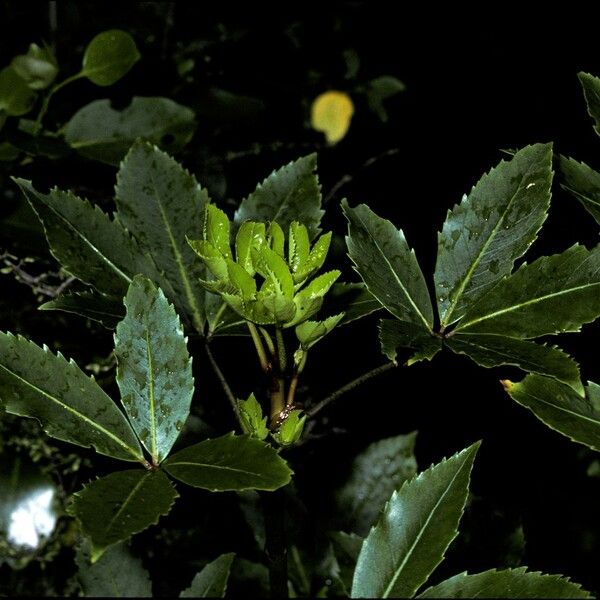
Plant Overview
Known as the Mountain Five-finger or Orihou, this New Zealand native is the rugged, high-altitude cousin of the common garden Five-finger. It is a stunning evergreen shrub that brings a lush, architectural feel to temperate gardens, proving that "tropical-looking" plants can actually be quite tough and frost-hardy.
🔍 How to Identify
- 🖐️ The Foliage: Look for its signature "hand-shaped" (palmate) leaves. Each leaf is typically composed of 3 to 5 thick, leathery leaflets that fan out from a central stem.
- 🪚 Serrated Edges: The leaflets feature distinct, sharp teeth along the margins, which are often more pronounced than those of its lowland relatives.
- 🫐 Fruit Clusters: In late autumn and winter, the plant produces dense, flat-topped clusters of tiny, dark purple-to-black berries that look like peppercorns.
🏡 In Your Garden
- ⛰️ Sub-Alpine Specialist: Because it originates from cooler, mountainous regions, this plant thrives in areas where other broadleaf evergreens might struggle with frost. It prefers "cool feet"—meaning it loves a thick layer of mulch to keep its roots chilled.
- 💧 The Drainage Rule: The Mountain Five-finger is highly susceptible to root rot if left in soggy soil. It requires gritty, well-draining earth and doesn't like being moved once established, as its root system is sensitive to disturbance.
- 🕊️ Biodiversity Booster: If you want to attract birds, this is a top-tier choice. The nectar-rich flowers and oily berries are a primary food source for nectar-feeding birds like the Tui and Bellbird.
⚠️ Safety & Toxicity
- 🐾 Mild Toxicity: While not considered deadly, the plant contains saponins (natural soap-like compounds) common in the Araliaceae family. These can cause mild digestive upset or drooling if chewed by curious pets or toddlers.
- 🧤 Sap Sensitivity: Some gardeners find the sap slightly irritating to the skin. It is always a good idea to wear gloves when pruning to avoid a "pins and needles" sensation or a mild rash.
✨ Fun Fact
✨ Cultural Calendar: In Māori tradition, the Orihou was often observed as a biological "clock." The timing of its heavy fruiting was used as a sign to indicate the coming of a cold winter and to help predict the abundance of bird harvests for the season.

Detailed Care Instructions
To grow Neopanax colensoi, also known as five-finger or pseudopanax, follow these steps:
- Choose the right location: Neopanax colensoi prefers a location with partial shade to full sun. It can tolerate full shade but may grow more slowly. Ensure the spot has well-draining soil.
- Soil preparation: Prepare the soil by removing any weeds or grass. Loosen the soil and mix in organic matter like compost or well-rotted manure to improve drainage and provide nutrients.
- Planting: Dig a hole that is slightly larger than the root ball of the plant. Place the Neopanax colensoi plant in the hole, ensuring the soil level is the same as it was in the pot. Backfill the hole with the amended soil, gently pressing it down around the plant to remove air pockets.
- Watering: Water the plant thoroughly after planting to settle the soil and encourage root establishment. Afterward, water regularly to keep the soil moist but not waterlogged. During hot weather, the plant may require more frequent watering.
- Mulching: Apply a layer of mulch around the base of the plant to help retain moisture, suppress weeds, and insulate the roots.
- Pruning: Neopanax colensoi generally requires minimal pruning. However, you can shape it by selectively pruning branches. Prune in late winter or early spring before new growth emerges.
- Fertilizing: Apply a balanced slow-release fertilizer in spring to provide necessary nutrients. Follow the instructions on the fertilizer packaging for the appropriate amount to use.
- Protection: Neopanax colensoi is generally hardy, but it may need protection from severe winter conditions in colder regions. Cover the plant with burlap or other protective material if frost is expected.
- Monitoring and care: Regularly monitor the plant for pests or diseases. Treat any issues promptly with appropriate measures. Continue watering and maintaining the plant as needed.
Remember that Neopanax colensoi is a slow-growing plant, so be patient as it establishes and develops. With proper care and conditions, it should thrive and grow well.

One way to water the Neopanax Colensoi plant is to check its soil before watering. Insert your finger into the soil up to your first knuckle. If the soil feels dry, it's time to water the plant. Water the plant slowly and thoroughly until the water begins to drain out of the drainage holes. Avoid getting water on the leaves or stem of the plant, as this can lead to rot. It's also important to avoid letting the plant sit in water for long periods of time, as this can lead to root rot. Finally, be sure to water the plant less frequently in the winter when it's dormant, and increase watering during the warmer months when it's actively growing.
To fertilize this plant, use a balanced fertilizer with equal amounts of nitrogen, phosphorus, and potassium. Apply the fertilizer during the growing season, which is usually in the spring and summer. Dilute the fertilizer in water according to the package instructions, and apply it around the base of the plant. Avoid applying fertilizer on the foliage or flowers. Water the plant thoroughly after applying fertilizer. Repeat the process every 4-6 weeks during the growing season.
The Neopanax Colensoi plant prefers moist, well-draining soil that is rich in organic matter. A pH range of 5.5 to 7.0 is ideal for optimal growth. It is recommended to use a mix of peat moss, perlite, and a high-quality potting soil to provide an ideal growing environment. Avoid using heavy clay soils as they can lead to poor root development and waterlogging. Additionally, proper drainage is crucial to avoid root rot. The Neopanax Colensoi plant can also benefit from regular fertilization to promote healthy growth.
To propagate this plant, select a healthy stem that has several leaves and no flowers. Using a clean pair of pruning shears or scissors, make a gentle cut at a 45-degree angle just below a node. Remove any leaves from the bottom of this cutting. Dip the cut end in rooting hormone powder, and then insert it into a small pot filled with damp, well-draining soil. Water the cutting, and then cover it with a clear plastic bag or a clear plastic container to create a humid environment. Place the pot in a bright, sheltered spot out of direct sunlight. In a few weeks, the cutting will start producing roots. When you see new growth emerging from the stem, your plant has successfully rooted. Gradually remove the cover from the pot and allow the plant to acclimate to the surrounding environment. When it has grown strong enough, you can transplant it to its permanent location in a larger pot or in the garden.








