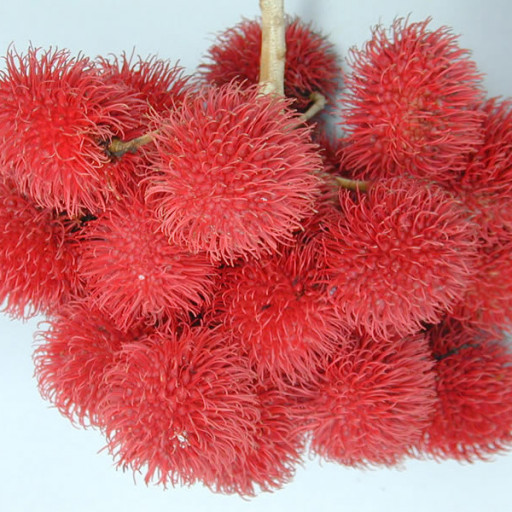
Plant Overview
Often called the "Hairy Lychee," the Rambutan is a tropical superstar known for its striking, alien-looking fruit. Native to the Malay-Indonesian region, its name literally translates to "hairy" (rambut) in Malay. While it looks like something plucked from a fantasy novel, it is a prized orchard tree loved for its sweet, juicy translucent flesh and lush, evergreen canopy.
🔍 How to Identify
- 🌿 The Foliage: Large, glossy, dark green leaves that are pinnate (divided into multiple leaflets). They create a dense, umbrella-like shade that stays green year-round in the right climate.
- 🔴 The Fruit: Distinctive oval-shaped drupes covered in soft, pliable, hair-like protrusions called "spinterns." These typically turn a brilliant crimson red or bright yellow when the fruit is ready to harvest.
- 🌸 The Blooms: Tiny, petal-less, greenish-white flowers that grow in loose clusters (panicles) at the tips of the branches.
🏡 In Your Garden
- ☀️ Tropical Demands: This tree is a true child of the equator. It requires high humidity and consistent warmth; it has zero tolerance for frost and will suffer if temperatures dip below 50°F (10°C) for long periods.
- 💧 Sensitive Roots: Rambutans have a deep taproot and a delicate root system that hates "wet feet." They require deep, organic-rich soil that drains exceptionally well to prevent fungal infections and root rot.
- 🌬️ Wind Protection: Because the wood can be somewhat brittle and the large leaves catch the air like sails, it is best planted in a spot protected from strong winds to prevent branch breakage.
⚠️ Safety & Toxicity
- ✅ Fruit Status: The translucent white flesh is safe, nutritious, and sweet for humans. It is rich in Vitamin C and antioxidants.
- 🐾 Pet Warning: While the fruit flesh is harmless, the bitter seeds and the "hairy" rind contain saponins and tannins. If a dog or cat consumes the peel or seeds, it may cause mild gastrointestinal distress or vomiting.
- 🦴 Choking Hazard: Like its cousin the Lychee, the Rambutan contains a single large, slippery seed. Always supervise children while they are eating the fruit to prevent choking.
✨ Fun Fact
The "hairs" on the outside of the Rambutan aren't just for show! Botanically known as spinterns, these soft spines actually help the fruit regulate its temperature and moisture levels in the sweltering tropical heat.

Detailed Care Instructions
| Humidity | Normal |
| Lighting | Full Sun |
| Difficulty | Medium |
| Hibernation | Cold Period |
| Temperature | 21°C - 30°C |
To grow Nephelium lappaceum, also known as rambutan, follow these steps:
- Climate and Location: Nephelium lappaceum thrives in tropical and subtropical climates. It requires temperatures between 68-86°F (20-30°C) and high humidity. Choose a location with full to partial sunlight.
- Soil: Plant the rambutan in well-draining soil that is rich in organic matter. The pH should be between 5.0-6.5. If the soil is heavy clay or compacted, consider improving drainage by adding sand or compost.
- Planting: Obtain fresh rambutan seeds or seedlings from a reliable source. Soak the seeds in water for 24 hours before planting to aid germination. Dig a hole about twice the size of the root ball of the seedling or 2-3 inches deep for planting the seeds. Space multiple plants about 30-40 feet apart to allow sufficient room for growth.
- Watering: Rambutan requires regular watering to keep the soil moist but not waterlogged. Water deeply at least once a week, adjusting the frequency based on rainfall and humidity levels. Reduce watering during the dormant period.
- Pruning: Prune the plant to maintain its shape and remove any dead or diseased branches. This will promote new growth and improve air circulation. Pruning also helps the tree to bear more fruit by redirecting its energy.
- Fertilization: Apply a balanced fertilizer formulated for fruit trees every three months, starting from the second year of planting. Use organic fertilizers like compost or well-rotted manure to add nutrients to the soil.
- Mulching: Spread a layer of organic mulch around the base of the plant to retain moisture and suppress weed growth. This also helps to maintain an even soil temperature and protects the roots.
- Pest and Disease Control: Monitor the plant regularly for pests such as aphids, fruit flies, and spider mites. Use organic pest control methods or consult with a local garden center for suitable insecticides. Prevent common fungal diseases like anthracnose by ensuring good air circulation, avoiding overhead watering, and promptly removing any infected fruits or leaves.
- Harvesting: Rambutan fruits typically ripen 100-130 days after flowering. Harvest them when the outer hairy skin turns bright red or yellow. Gently twist the stem to remove the fruit from the tree. They are best eaten fresh but can also be preserved or used in various recipes.
Remember, growing rambutan requires patience as it can take several years for the tree to produce fruits.

Place in a bright room that is sun drenched almost all day. Or directly in a south-facing window.

To properly water this plant, observe the soil in the pot; if it is dry around 1-2 inches deep, it's time to water. Water the plant until the soil is moist but not completely drenched, then wait until the soil becomes dry again before watering. Make sure to avoid waterlogging the plant, and consider using a well-draining soil mix and pot with drainage holes to ensure proper drainage. Keep the plant in a bright, sunny spot and monitor the humidity levels around it; if the air is too dry, provide extra moisture by misting the leaves or place a humidifier nearby.
- Use a balanced fertilizer with a ratio of 10-10-10 or 20-20-20.
- Apply the fertilizer in the early spring when new growth emerges.
- Water the plant deeply before and after fertilizing to ensure the nutrients are absorbed.
- Use approximately 1 pound of fertilizer per inch of trunk diameter.
- Spread the fertilizer evenly around the drip line of the plant.
- Avoid applying fertilizer directly to the trunk or foliage.
- Repeat fertilizing every 6-8 weeks during the growing season.
- Adjust the amount of fertilizer applied based on the specific needs of the plant.
- Monitor the plant for signs of over-fertilization, such as leaf burn or stunted growth, and adjust accordingly.
When planting the Nephelium Lappaceum plant, it is important to choose a well-draining soil mix that is rich in organic matter. The pH level should be around 5.5 to 6.5. The plant prefers a slightly acidic soil, but can tolerate a slightly alkaline soil as well. Use a mix of peat moss, perlite, and compost to create a suitable soil for the Nephelium Lappaceum plant. Ensure that the soil is kept consistently moist but not waterlogged. Avoid planting the tree in heavy clay or compacted soils as this can stunt its growth and lead to root rot. Adding mulch around the base of the plant can help maintain moisture levels and prevent competition from weeds or other plants.
To propagate this plant, you will need to first obtain mature seeds from a mature plant. Once you have the seeds, make sure to remove any fruit pulp that may be left on them by washing them thoroughly in warm water.
Next, prepare a well-draining soil mixture by combining equal parts of peat moss, sand, and perlite. Fill small pots with this mixture and make a small hole in the center of each pot that is deep enough to accommodate one seed.
Plant one seed in each pot and cover it lightly with soil. Water the pots thoroughly and place them in a warm, bright location where they can receive filtered sunlight. Keep the soil moist but not waterlogged.
In about 2-3 weeks, the seed should germinate and a small seedling will emerge from the soil. Allow the seedling to grow for a few months, regularly feeding it with a balanced fertilizer to promote healthy growth.
Once the plant has reached a good size, it can be transplanted into a larger pot or directly into the ground if the climate is suitable. With proper care and attention, your Nephelium Lappaceum plant should grow into a beautiful fruit-bearing tree.
Common pests of the rambutan include Scale insect, mealybugs, spider mites, aphids, larvae. Make a habit of checking your rambutan frequently for pests so that any infestations can be caught and managed early.








