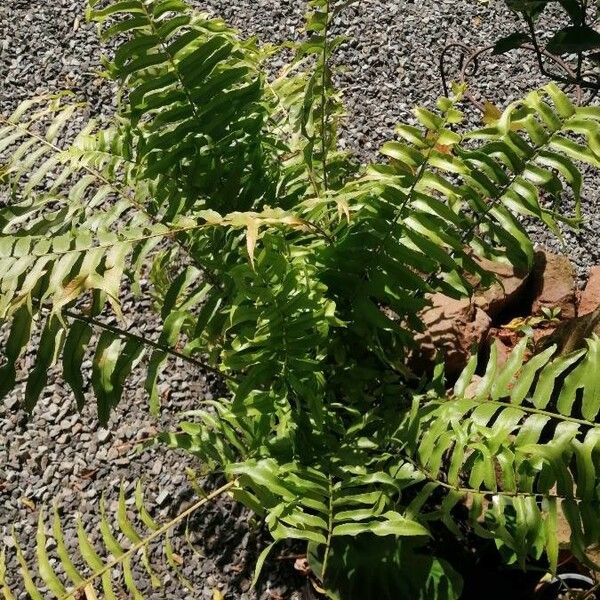
Plant Overview
Meet the Fishtail Sword Fern, a tropical showstopper that looks like it belongs in a prehistoric rainforest. Often called the "Giant Sword Fern," its standout feature is the way its leafy fronds split at the ends into two or more "tails," giving it a quirky, bifurcated silhouette that sets it apart from common Boston ferns. It is a hardy survivor that adds a lush, architectural texture to any indoor space.
🔍 How to Identify
- 🧬 Fishtail Tips: The most striking feature; the tip of each individual leaflet (pinna) is forked, resembling the tail of a fish or a split ribbon.
- 🌿 Arching Fronds: It produces long, stiffly arching green fronds that can grow significantly larger and more robust than those of its cousin, the Boston fern.
- 🌱 Growth Habit: It grows in a dense, upright clump that eventually cascades, making it a perfect candidate for high pedestals or hanging baskets.
🏡 In Your Garden
- 💧 Humidity is Key: Coming from tropical jungles, this fern "breathes" through its leaves. If the air is too dry, those unique "tails" will turn brown and crisp, so it thrives in steamy bathrooms or near a humidifier.
- 🏝️ Sensitive Roots: Unlike many houseplants, this fern has very fine, hair-like roots that hate being disturbed. It prefers a "snug" pot and should only be repotted when absolutely necessary to avoid transplant shock.
⚠️ Safety & Toxicity
- 🐾 Pet Friendly: This is a "safe" plant for households with curious cats and dogs, as it is non-toxic if nibbled.
- 👶 Child Safe: It is non-poisonous to humans, though its delicate fronds can be damaged by rough handling, so it’s best kept out of high-traffic play areas.
✨ Fun Fact
The name falcata comes from the Latin word for "sickle-shaped," referring to the curved appearance of the leaflets. While many ferns are prized for their symmetry, the Fishtail Sword Fern is loved specifically for its "genetic glitch" that causes the ends to fork!

Detailed Care Instructions
To grow a Nephrolepis Falcata plant, also known as the Macho fern, follow these steps:
- Choose the right location: Nephrolepis Falcata thrives in bright, indirect light. Avoid placing it in direct sunlight as it can scorch the leaves. Place it near an east-facing window or provide filtered sunlight if growing outdoors.
- Optimal temperature and humidity: These ferns prefer a temperature range of 60-75°F (15-24°C). Maintain a relative humidity level of 50% or higher by misting the leaves regularly or placing a tray with water near the plant.
- Soil requirements: Plant the Nephrolepis Falcata in well-draining soil. A mix of peat moss, perlite, and potting soil will work well. Avoid using heavy clay soil.
- Watering: Keep the soil consistently moist but not soggy. Water whenever the top inch of soil feels dry to the touch. Allow excess water to drain away to prevent root rot.
- Fertilization: Nephrolepis Falcata benefits from regular feeding during the growing season, which is spring to early fall. Use a balanced liquid houseplant fertilizer diluted to half the recommended strength and apply every two weeks. Reduce or eliminate feeding during the winter months.
- Pruning: Remove any yellow or dead fronds to maintain the plant's appearance and overall health. Pruning also helps to prevent disease and pests.
- Propagation: You can propagate Nephrolepis Falcata by dividing the plant. Carefully separate the root clumps and plant them in separate pots. Ensure each section has healthy roots and fronds.
- Pests and diseases: Watch out for common fern pests such as spider mites and scale insects. Regularly inspect the leaves and treat any infestations promptly with an appropriate insecticidal soap or neem oil. Also, prevent fungal diseases by avoiding overwatering and providing good air circulation around the plant.
By following these steps, you should be able to grow a healthy and thriving Nephrolepis Falcata plant.

Place in a window with dappled sun or a spot in the middle of a room. Or directly in a window facing west or east.

To properly water this plant, it is important to first assess the moisture level of the soil by sticking a finger about an inch below the surface. If the soil feels dry, it is time to water. It is best to use room temperature water and water the plant until water begins to flow out of the drainage holes at the bottom of the pot. It is important to avoid letting the plant sit in standing water, so be sure to drain any excess water from the saucer or pot. The frequency of watering will depend on factors such as the size of the pot, the temperature and humidity of the environment, and the season. It is important not to let the soil completely dry out between watering, but also to avoid overwatering which can lead to root rot.
To fertilize this plant, feed it with a balanced houseplant fertilizer once a month during the growing season (spring and summer). Mix the fertilizer with water to dilute it and apply it to the soil. Be careful not to over-fertilize, as this plant is sensitive to excessive nutrients. Additionally, make sure to water the plant thoroughly before and after fertilizing.
Nephrolepis falcata plants prefer a well-draining soil mix that is rich in organic matter. A good soil mix for this plant can be made by combining equal parts of high-quality potting soil, perlite, and peat moss. The potting soil should be a mix that is specifically formulated for houseplants. Adding perlite will help improve drainage, while peat moss will help retain moisture in the soil. To provide additional nutrients to the plant, some growers may choose to mix in slow-release fertilizers or worm castings. The soil should be kept consistently moist, but not waterlogged, to prevent root rot. It is important to maintain proper soil moisture levels as this plant is sensitive to both drought and overwatering.
To propagate this plant, you will need to:
- Take a healthy, mature frond from the parent plant.
- Carefully separate the frond into several smaller pieces, making sure each piece has at least one healthy leaf and a small section of the stem attached.
- Fill a pot with a well-draining potting mix, such as a mix of peat moss and perlite.
- Make small holes in the soil with your finger or a dibber, and insert each individual frond piece into a hole, covering the stem and leaving the leaves exposed.
- Water the newly planted pots thoroughly, and place them in a location with bright, indirect light.
- Keep the soil evenly moist, but not waterlogged, and mist the leaves occasionally with a spray bottle to increase humidity.
- After a few weeks, you should begin to see new growth emerging from the base of the frond pieces. At this point, you can begin to fertilize the plants to encourage further growth and development.
- After a few months, your new plants should be ready to be transplanted into larger pots or into the garden, where they will continue to grow and thrive.








