Plant Overview
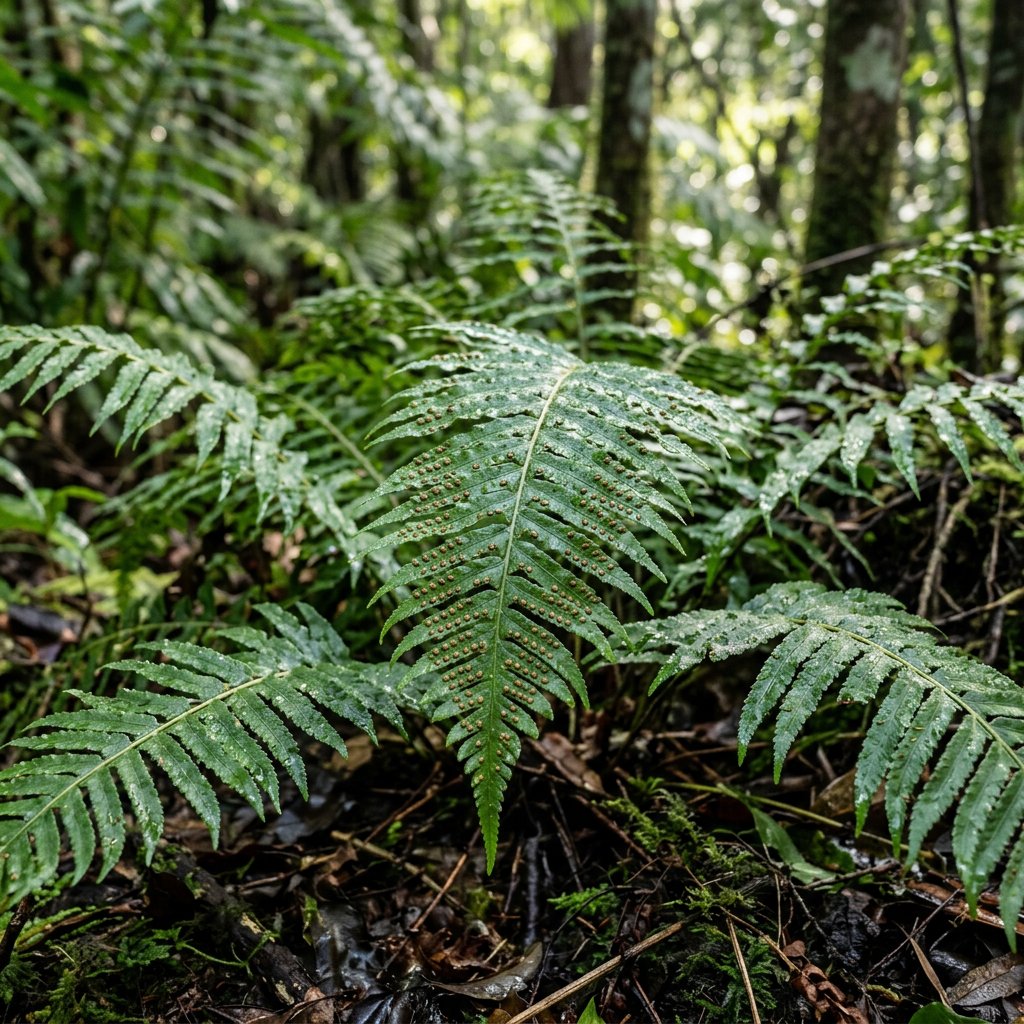
Often hailed as the "Kimberly Queen Fern," this Australian native is the more refined, upright sibling of the common Boston Fern. It earned its royal title for its elegant, sword-like fronds that reach toward the sky rather than draping over the sides of a pot. Whether it’s gracing a modern parlor or a humid patio, it brings a lush, prehistoric vibe to any space without the "messy" reputation of its cousins.
🔍 How to Identify
- 🌿 Upright Fronds: Unlike trailing ferns, the Kimberly Queen grows vertically, maintaining a neat, architectural shape that doesn't sprawl out as it ages.
- 🍃 Sword-Like Pinnae: The narrow leaflets (pinnae) are closely packed along the stem, giving the plant a dense, bushy appearance that feels sturdy to the touch.
- 🎨 Deep Forest Green: The foliage maintains a rich, dark green color that is slightly more matte and leathery than the pale or neon greens of other Nephrolepis varieties.
🏡 In Your Garden
- ☀️ Sun-Seeker: While most ferns hide in the deep shadows, this "Queen" is surprisingly tolerant of gentle morning sun. This extra light helps it maintain its vibrant color and prevents the fronds from becoming "leggy."
- 🧹 The "Fern Confetti" Fix: One of the best reasons to choose this species is that it is less prone to shedding its leaves when stressed. You won't find nearly as much "brown needle" debris on your floor compared to the notorious Boston Fern.
- 🛁 Thirst for Humidity: While it is tougher than most, it still dreams of the Australian tropics. It thrives in humid environments like bathrooms or near a humidifier, which prevents the leaf tips from turning crispy and brown.
⚠️ Safety & Toxicity
- 🐾 Pet Friendly: Good news for pet parents! This plant is considered non-toxic to cats and dogs, making it a worry-free addition to your indoor jungle.
- 👶 Gentle Touch: The fronds are soft and lack the sharp serrations or thorns found on other tropical plants, making them perfectly safe for households with curious children.
✨ Fun Fact
🌬️ Nature's Air Filter: Beyond its beauty, this fern is a functional powerhouse; it is highly ranked for its ability to filter common indoor air toxins like formaldehyde and xylene, acting as a living, breathing air purifier!

Detailed Care Instructions
| Soil Ph | 6.1-6.5 |
| Humidity | High |
| Lighting | Part Sun |
| Toxicity | Non-Toxic |
| Soil Type | Moist But Well-Drained |
| Difficulty | Hard |
| Plant Type | Evergreen Fern |
| Mature Size | 3 Feet Tall |
| Native Area | Australia |
| Temperature | 18°C - 24°C |
| Sun Exposure | Partial Sun, Shade |
| Hardiness Zones | 9-11 |
To grow a Nephrolepis Obliterata plant, also known as the Sword Fern or Kimberley Queen Fern, you can follow these steps:
- Purchase a healthy Nephrolepis Obliterata plant from a reputable nursery or garden center. Make sure to choose a plant with lush, green fronds and no signs of pests or diseases.
- Select a suitable location for your fern. Nephrolepis Obliterata plants prefer bright, indirect light but can tolerate some shade. Avoid placing them in direct sunlight, as it can burn their delicate fronds. The plant also prefers a temperature range of 60-75°F (15-24°C).
- Prepare a well-draining potting mix suitable for ferns. You can use a mixture of peat moss, perlite, and sandy soil to provide adequate moisture retention and aeration. Avoid using heavy soils or those that retain too much water, as this can lead to root rot.
- Choose a pot with drainage holes that is slightly larger than the root ball of your Nephrolepis Obliterata plant. This allows room for growth and prevents waterlogging. Fill the pot with the prepared potting mix.
- Carefully remove the fern from its nursery pot, handling it by the root ball rather than the fragile fronds. Gently loosen any roots that may be tightly bound, as this encourages healthy growth.
- Place the plant in the center of the pot and fill in the remaining space with the potting mix, gently pressing it down to ensure the plant is secure. Leave a small gap at the top to allow for watering.
- Water the plant thoroughly after potting, ensuring the soil is evenly moist but not waterlogged. From then on, water the fern whenever the top 1-2 inches (2.5-5 cm) of soil feels dry. Watering frequency may vary depending on factors such as temperature, humidity, and pot size.
- Maintain a moderate to high humidity level around the plant, as Nephrolepis Obliterata ferns thrive in humid environments. You can achieve this through methods such as misting the fronds regularly, placing the pot on a tray filled with water and pebbles, or using a humidifier.
- Fertilize your Nephrolepis Obliterata plant every two to four weeks during the growing season (spring to early fall) with a balanced liquid houseplant fertilizer. Follow the instructions on the fertilizer packaging for the correct dilution ratio.
- Regularly prune or remove any yellow or dead fronds to promote new growth and maintain the plant's overall health and appearance. You can use clean and sharp scissors or pruning shears for this task.
- Keep an eye out for common pests such as scale insects or mealybugs. If infested, treat them with an appropriate insecticide or use natural methods like wiping the fronds with a mixture of water and mild soap.
With proper care, your Nephrolepis Obliterata plant should thrive and grow into a beautiful, lush fern.

Place in a window with dappled sun or a spot in the middle of a room. Or directly in a window facing west or east.

To properly water this plant, you should ensure that the soil remains consistently moist, but not waterlogged. It is important to avoid letting the soil completely dry out in between waterings, as this can cause the plant to wilt and damage its roots. When watering, it is best to use room temperature water and to allow the excess water to drain out of the pot. Depending on the size of the pot and environmental conditions, this plant may need to be watered once or twice per week. It is recommended to check the soil moisture level by sticking your finger into the soil approximately two inches deep before watering.
For optimal growth, this plant should be fertilized every 2-3 weeks during the growing season (spring and summer) using a balanced fertilizer with an N-P-K ratio of 10-10-10 or 20-20-20. During the dormant season (fall and winter), fertilizing can be reduced to once a month. Always follow the instructions on the fertilizer package and avoid over-fertilizing, as this can damage the plant's roots. It is also important to water the plant before fertilizing and to avoid fertilizing a dry plant.
The ideal soil for the Nephrolepis Obliterata plant is a well-draining, nutrient-rich soil mix. The soil should have a pH level between 5.5 and 6.5 and should be moist but not waterlogged. A good soil mix would consist of peat moss, vermiculite, perlite, and coarse sand. It is important to avoid using heavy or compact soil as it can prevent proper drainage and lead to root rot. The plant also benefits from the addition of organic fertilizers and regular watering to maintain healthy growth.
Nephrolepis Obliterata can be propagated through spores or by dividing the rhizome. Here is a step-by-step guide on how to propagate Nephrolepis Obliterata:
- Collecting spores: Nephrolepis Obliterata produces spores on the underside of the fronds. To collect spores, select mature fronds that have developed spores.
- Place the frond in a paper bag or envelope and let it dry for a few days. This will cause the spores to fall off the frond and collect in the bag/envelope.
- Sow the spores in a potting mix that is well-draining and moist. Cover the pot with a plastic bag or a clear lid to create a humid environment.
- Keep the pot in a bright, warm location, but away from direct sunlight. In about 4-6 weeks, the spores will start to germinate and form into small, green filaments called gametophytes.
- Once the gametophytes develop into small ferns, they can be transplanted into their own individual pots.
- Dividing the rhizome: Nephrolepis Obliterata can also be propagated by dividing the rhizome. To do this, remove the plant from its pot and gently separate the roots into two or more sections.
- Each section should have a few fronds and a healthy root system. Pot each section into its own pot with fresh potting soil.
- Water the new plants thoroughly and keep them in a bright, humid location until they are established.
Common pests of the kimberley queen fern include Scale insect, mealybugs, spider mites, fungus gnats. Make a habit of checking your kimberley queen fern frequently for pests so that any infestations can be caught and managed early.








