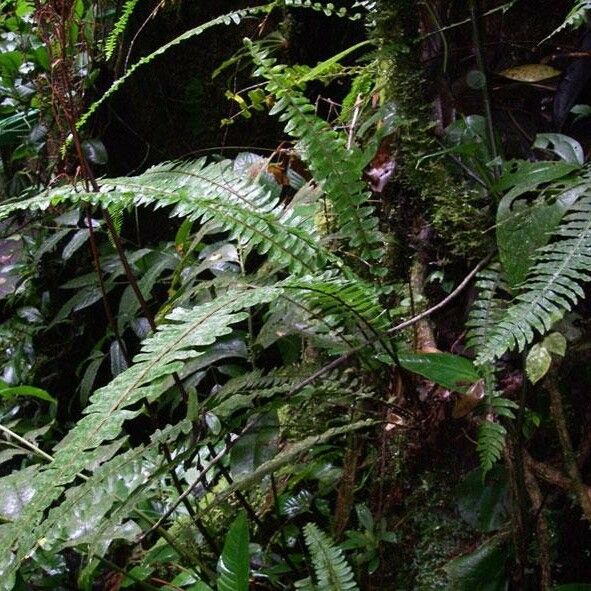
Plant Overview
The Gully Fern, scientifically known as Nephrolepis rivularis, is a graceful tropical traveler often found cascading down the damp banks of Caribbean and Central American rivers. Unlike its famous cousin, the Boston Fern, the Gully Fern has a wilder, more rhythmic appearance, with long, arching fronds that seem to flow like the water it grows near. It is a favorite among collectors who want to bring a touch of the humid, primeval rainforest into their personal spaces.
🔍 How to Identify
- 🌿 Sword-Like Fronds: The fronds are remarkably long and narrow, often reaching over 3 feet in length, giving the plant a weeping, fountain-like silhouette.
- 🍃 Serrated Leaflets: Each individual leaflet (pinna) is slightly curved—almost like a tiny sickle—with finely toothed edges that feel delicate to the touch.
- 🌑 Hidden Spores: On the underside of mature leaves, you will find "sori" (spore cases) arranged in neat rows near the margins, protected by a kidney-shaped cover characteristic of the Nephrolepis family.
🏡 In Your Garden
- 💧 The Humidity Requirement: Because it evolved in misty river gullies, this fern is a "humidity hound." It thrives in bathrooms or near kitchens where steam is common; if the air gets too dry, the leaflet tips will quickly turn brown and crispy.
- 🪴 Epiphytic Tendencies: In the wild, it often grows on tree trunks or rocky crevices. In a home setting, this means it dislikes heavy, compact soil. Use a loose, airy mix (like orchid bark and peat) to keep its roots oxygenated and prevent "wet feet."
- 🌤️ Dappled Shadows: It is naturally shaded by the jungle canopy, so it prefers bright, filtered light. Direct afternoon sun will scorch its thin leaves, turning your lush green fountain into a parched yellow mess.
⚠️ Safety & Toxicity
- ✅ Pet Friendly: Like most members of the Nephrolepis genus, the Gully Fern is considered non-toxic to cats and dogs. It is a safe choice for households with curious nibblers.
- 👶 Child Safe: It is non-poisonous to humans. However, the fine spores on the underside of the leaves can sometimes cause very mild skin or eye irritation in particularly sensitive individuals if handled excessively.
✨ Fun Fact
The name Nephrolepis is derived from the Greek words nephros (kidney) and lepis (scale). This refers to the tiny, kidney-shaped flaps that protect the plant's spores, looking like a row of miniature shields under every leaf!

Detailed Care Instructions
To grow a Nephrolepis Rivularis plant, also known as the Boston fern, follow these steps:
- Choose a suitable location: Boston ferns prefer bright, indirect light. Avoid placing them in direct sunlight, as it can scorch the leaves. Select a location with good airflow but not too drafty.
- Select a suitable container: Choose a container with drainage holes to prevent waterlogging. Ferns prefer slightly cramped conditions, so select a pot that is just slightly larger than the plant's root ball.
- Prepare the soil: Use a well-draining potting mix, preferably one specifically formulated for ferns or houseplants. Good-quality soil with organic matter and perlite or vermiculite for added drainage is ideal.
- Planting the fern: Gently remove the plant from its nursery pot, being careful not to damage the roots. Place it in the new container, ensuring that the top of the root ball is level with the pot's rim. Fill in the remaining space with potting mix, carefully firming it around the roots.
- Watering: Keep the soil consistently moist, but not soggy. Ferns prefer humid environments, so misting the leaves occasionally or placing a tray of water nearby to increase humidity can be helpful. Avoid allowing the plant to sit in standing water.
- Fertilizing: Apply a balanced, water-soluble fertilizer once a month during the growing season (spring and summer). Follow the instructions on the fertilizer packaging for proper dilution and application.
- Temperature and humidity: Boston ferns thrive in temperatures between 60-75°F (15-24°C) and prefer high humidity levels. They may struggle in dry indoor environments, so consider using a humidifier or placing the pot on a tray filled with water and pebbles to increase humidity.
- Pruning: Prune any dead or yellowing fronds to maintain the plant's appearance and health. Trim back any long, straggly fronds to encourage bushier growth.
- Repotting: As the plant grows, it may outgrow its current pot. Repot it into a slightly larger container when the roots become crowded, typically every 1-2 years.
- Pest control: Watch out for common pests like aphids, mealybugs, and spider mites. If an infestation occurs, treat the plant with an appropriate organic or chemical pesticide, following the instructions carefully.
By following these steps, you can successfully grow a Nephrolepis Rivularis (Boston fern) plant and enjoy its lush, feathery foliage.
To properly water this plant, you should begin by checking the soil moisture level using a moisture meter or by sticking your finger into the soil several inches deep. If the soil feels dry, it is time to water. Use a watering can with a narrow spout to water the soil evenly around the roots. Avoid getting water directly on the leaves as this can lead to fungal growth and disease. Keep in mind that this plant prefers consistently moist soil but does not tolerate waterlogging, so be sure to allow the soil to drain completely after watering. Water less frequently during the dormant season but do not allow the soil to dry out completely.
To fertilize this plant, use a balanced liquid fertilizer every other week during the growing season (spring and summer) and once a month in the fall and winter. Dilute the fertilizer to half strength and apply it to damp soil. Be careful not to over-fertilize, as this can cause damage to the roots.
The ideal soil for this plant should be well-draining and slightly acidic, with a pH range of 5.5 to 6.5. It should also have a good amount of organic matter to provide essential nutrients and improve soil structure. Adding perlite or sand can help to improve drainage in heavy soils. Avoid using soil that contains too much clay or sand, as this can lead to poor moisture retention or compaction. Additionally, the soil should not be too rich in nutrients, as this can cause excessive growth and may lead to pale or yellow leaves. When transplanting, gently loosen the roots and place the plant at the same depth it was in its original container. Water the plant thoroughly after planting and maintain even moisture levels, but do not let the soil become waterlogged.
To propagate this plant, you will need to locate the rhizome. Once you have located the rhizome, carefully separate a section of the plant, making sure to include some roots. Pot the new plant in a well-draining soil mix, keeping it moist but not waterlogged. Place the pot in a warm, bright location, protected from direct sunlight. After a few weeks, new growth should appear, indicating successful propagation.








