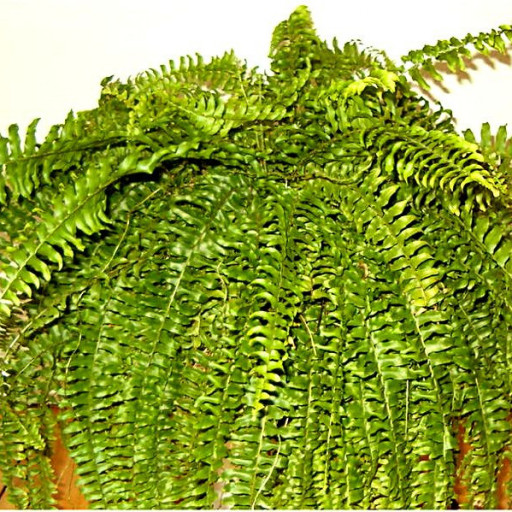
Plant Overview
Often called the "Boston Fern" or "Sword Fern," Nephrolepis is the quintessential houseplant that brings a lush, prehistoric elegance to any indoor space. During the Victorian era, these plants sparked a literal craze known as "Pteridomania" (Fern Fever), where they were displayed in ornate glass Wardian cases as symbols of status. Today, they are beloved for their cascading green fronds that act as living humidifiers for your home.
🔍 How to Identify
- 🌿 The Fronds: It produces long, sword-shaped fronds that emerge upright and then arch gracefully downward as they age, creating a fountain-like silhouette.
- 🍃 Leaflet Texture: Each frond is lined with small, tooth-like leaflets (pinnae) that give the plant a delicate, feathery appearance. Depending on the variety, these can be straight, ruffled, or even multi-layered.
- 🧶 Fuzzy Runners: You will often notice thin, brown, wire-like "runners" (stolons) creeping out from the base of the plant. These are not dead stems, but the plant’s way of searching for new ground to grow "pups."
🏡 In Your Garden
- ☁️ Humidity is King: The primary reason these ferns struggle is dry air. They thrive in "wet" rooms like bathrooms or kitchens. If the air is too dry, the plant will shed its leaflets (frond drop) as a defense mechanism, leaving a messy trail on your floor.
- 🌤️ Dappled Shade: Think of the jungle floor. Nephrolepis hates the "hot" afternoon sun, which can bleach and burn its delicate leaves. It prefers bright, filtered light—the kind you get through a sheer curtain.
- 🚿 Consistent Moisture: Unlike succulents, ferns have no way to store water. The soil should feel like a wrung-out sponge; if the root ball dries out completely, the fronds may turn brown and crispy almost overnight.
⚠️ Safety & Toxicity
- 🐾 Pet Friendly: Nephrolepis is a fantastic choice for pet owners! It is non-toxic to both cats and dogs, so you don't have to worry if your feline friend decides to bat at the dangling fronds.
- 👶 Safe for Kids: These plants are generally safe for humans as well, though their delicate fronds can be easily damaged by curious little hands.
✨ Fun Fact
🚀 The NASA Specialist: In the famous NASA Clean Air Study, the Boston Fern was ranked as one of the top plants for removing indoor air pollutants, specifically formaldehydes and xylene, making it a literal "green lung" for your living room!

Detailed Care Instructions
To grow a Nephrolepis plant, also known as a Boston fern, you can follow these steps:
- Choose a suitable location: Boston ferns prefer bright, indirect light. Avoid placing them in direct sunlight as it may burn their leaves. They also prefer a humid environment, so consider placing them in a bathroom or misting them regularly.
- Select the right pot and soil: Choose a pot with drainage holes to prevent water from pooling at the roots. Use a potting mix that is suitable for ferns or a mix of peat moss, potting soil, and perlite to ensure good drainage.
- Water properly: Boston ferns like consistently moist soil, but not overly saturated. Water the plant when the top inch of soil feels dry to the touch. Water thoroughly, allowing water to drain out from the bottom of the pot.
- Maintain humidity: Mist the plant regularly with water to increase humidity. Alternatively, you can place the pot on a tray filled with water and pebbles to create a humid microclimate around the plant.
- Provide adequate air circulation: Boston ferns benefit from good airflow. If the plant starts to look wilted or shows signs of disease, ensure it is not in a stagnant area and consider using a fan for gentle air movement.
- Fertilize occasionally: Use a balanced, water-soluble fertilizer specifically formulated for ferns. Apply it every month or according to the instructions on the label during the growing season (spring to fall).
- Prune as needed: Trim any yellow or brown fronds to maintain the plant's appearance and encourage new growth. You can also divide the plant every few years to rejuvenate it. Gently separate the root ball into multiple smaller plants and repot them individually.
- Monitor for pests and diseases: Keep an eye out for common fern pests like mealybugs, aphids, and scale insects. Treat infestations with an appropriate insecticide or by using natural remedies like neem oil.
By following these steps, you can provide optimal growing conditions for your Nephrolepis plant and help it thrive.

Place in a window with dappled sun or a spot in the middle of a room. Or directly in a window facing west or east.

The plant requires regular watering to keep its soil moist, but not waterlogged. It is essential to ensure that the soil does not dry out completely between watering. It is recommended to water the plant at least once a week, but this may vary depending on the climate and humidity levels of the plant's location.
The plant should be watered at the base, rather than from above, to prevent water from accumulating in the crown of the plant, which can cause rot. The water should be directed towards the root ball of the plant, and the soil should be allowed to absorb the water before any excess is drained away.
If the plant is grown in a container, it is important to ensure that the drainage holes are not clogged, as this can cause water to accumulate in the soil.
One way to ensure that the plant is receiving the correct amount of water is to check the moisture level of the soil periodically. This can be done by inserting a finger into the soil, or by using a moisture meter.
Over-watering can be just as damaging to the plant as under-watering, so it is important to monitor the plant's response to watering and adjust as necessary. Signs that the plant may be receiving too much water include yellowing leaves, wilting, and root rot.
To fertilize this plant, prepare a solution of water-soluble fertilizer that is high in nitrogen and low in potassium. Dilute the fertilizer according to the manufacturer's instructions and apply it to the soil around the base of the plant every two weeks during the growing season. Avoid over-fertilizing, as this can cause leaf burn and other plant problems. And be sure to give the plant plenty of water, as it needs a consistently moist soil to thrive.
The ideal soil for Nephrolepis plant should be well-draining and rich in organic matter. A combination of garden soil, peat moss, and perlite or sand can make a good potting mix for this plant. The pH level of the soil should be slightly acidic to neutral (between 5.5 and 7.0). Avoid using heavy soils as they can lead to root rot. The soil should be kept moist but not waterlogged, as this plant prefers consistent moisture but not standing water. Regular fertilization with a balanced fertilizer during the growing season can also help the Nephrolepis to thrive.
Nephrolepis plants can be propagated by a process called division. First, select a mature and healthy plant to divide. Carefully remove the plant from its pot, gently detangling the roots from the soil. Locate the natural point where the plant has separated into individual sections and cut through the rhizome with a sharp and sanitized knife. Each section should have its own fronds and a portion of the rhizome. Plant each section in a new pot with fresh soil and water thoroughly. Place the new plants in a warm and bright location, making sure to keep the soil moist until new growth appears.







