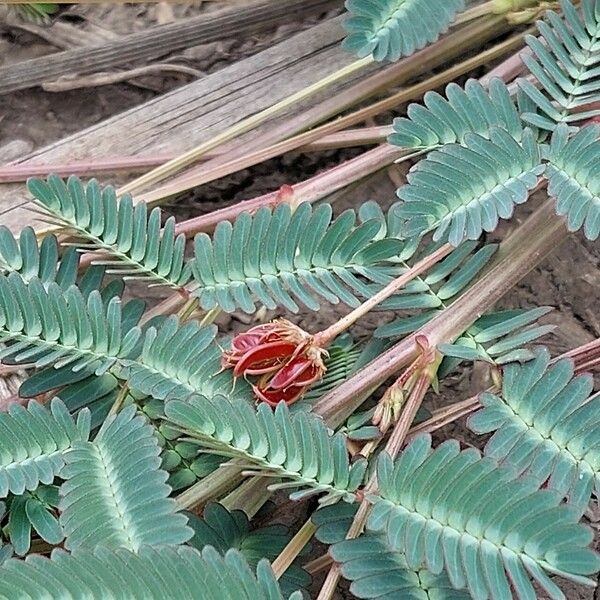
Plant Overview
Known affectionately as the Slender Sensitive Plant, Neptunia gracilis is a delicate, creeping beauty native to the grasslands and woodlands of Australia. It is often called the "Shy Plant" because of its dramatic reaction to touch—folding its fern-like leaves inward as if embarrassed. With its cheerful yellow "puff-ball" flowers, it adds a touch of interactive magic to any native garden or rockery.
🔍 How to Identify
- 🌿 The Foliage: Feathery, bipinnate leaves that resemble miniature fern fronds. When touched or shaken, the leaflets quickly fold together in pairs.
- 🟡 The Blooms: Small, bright yellow flower heads that look like fuzzy pom-poms or "puffs," consisting of many tiny flowers with long, protruding stamens.
- 🌱 The Habit: A prostrate or trailing perennial that stays low to the ground, spreading its slender, reddish-green stems across the soil.
🏡 In Your Garden
- ☀️ Sun Seeker: Unlike some forest ferns it resembles, this plant thrives in full sun to light dappled shade. It uses the bright light to power its rapid leaf movements.
- 💧 Drought Strategy: Once established, it is remarkably hardy. It develops a deep woody rootstock that allows it to survive dry spells and even recover after light frosts or grazing.
- 🧪 Soil Improver: As a member of the legume family, it works silently underground to "fix" nitrogen, improving the fertility of the surrounding soil for its neighbors.
⚠️ Safety & Toxicity
- ✅ Safe for Handling: The plant is generally considered non-toxic and is not known to have thorns, unlike some of its Mimosa cousins.
- 🐾 Pet Friendly: There are no records of Neptunia gracilis being toxic to cats or dogs, though it is always best to discourage pets from grazing on ornamental plants.
- 👶 Child Friendly: It is a wonderful "educational" plant for children due to its tactile response, though the stems can be somewhat fragile.
✨ Fun Fact
The leaf-folding trick isn't just for show! This movement, called thigmonasty, is a defense mechanism. By folding its leaves, the plant looks less "leafy" and appetizing to hungry herbivores and helps reduce water loss during the heat of the day.

Detailed Care Instructions
Growing Neptunia gracilis, a unique and beautiful plant sometimes called the "Sensitive Plant" due to its response to touch, involves a few key steps to ensure it thrives. Here’s how you can grow Neptunia gracilis:
Soil and Location
- Choose the Right Soil: Neptunia gracilis prefers well-drained, sandy or loamy soil. Ensure the soil pH is neutral to slightly acidic (around 6.0 to 6.5).
- Select a Good Location: This plant enjoys full sun to partial shade. Ensure it gets at least 4-6 hours of sunlight per day.
Planting
- Propagation: Neptunia gracilis can be grown from seeds or cuttings. For seeds, soak them in warm water for 24 hours before planting to soften the seed coat. For cuttings, take a healthy cutting and let it establish roots in water or moist soil.
- Planting Seeds: Sow the seeds about 1/4 inch deep in the soil, and space them around 2-3 inches apart. Lightly cover with soil and water gently.
- Transplanting Cuttings: If using cuttings, plant them in prepared soil, keeping the soil moist until the cuttings establish roots and new growth appears.
Watering
- Water Regularly: Keep the soil consistently moist but not waterlogged. Neptunia gracilis likes a moderate amount of water, so water when the top inch of soil feels dry.
Fertilization
- Fertilize Sparingly: Use a balanced, water-soluble fertilizer once a month during the growing season (spring and summer). Do not over-fertilize, as this can cause more harm than good.
Care and Maintenance
- Pruning: Regularly prune dead or yellowing leaves to encourage healthy growth and maintain the plant's shape.
- Pest Control: Keep an eye out for common pests like aphids or spider mites. If they appear, treat them with insecticidal soap or neem oil.
- Touch Response: Understand that Neptunia gracilis is sensitive to touch. While it’s fascinating to see the leaves fold in response, frequent touching can stress the plant and should be minimized.
Environment
- Temperature and Humidity: This plant prefers a warm, humid environment. Protect it from cold drafts and sudden temperature changes. Ideally, keep it at temperatures between 60-75°F (15-24°C).
By following these steps, you can successfully grow and maintain a healthy Neptunia gracilis plant. Happy gardening!

Place in a bright room that is sun drenched almost all day. Or directly in a south-facing window.

Neptunia gracilis is a semi-aquatic plant that requires a careful approach to watering. Here are detailed instructions on how to water this plant:
1. Soil Moisture: This plant prefers consistently moist soil. It thrives in conditions that mimic its natural habitat, where the soil remains damp but not waterlogged. Check the soil moisture regularly, ideally once or twice a week.
2. Watering Frequency: Water the plant when the top inch of the soil feels dry to the touch. This can vary based on your local climate and indoor conditions, but a general guideline is to water the plant every 3-7 days.
3. Water Quality: Use room-temperature, filtered, or rainwater to avoid chlorine and fluoride found in tap water, which may harm the plant. If using tap water, let it sit out overnight to allow any harmful chemicals to dissipate.
4. Watering Method: It's best to water Neptunia gracilis slowly and evenly to ensure that the moisture penetrates deeply into the soil. Water the plant at the base rather than overhead to avoid wetting the foliage, which can lead to fungal issues in high humidity.
5. Drainage: Ensure that the pot has good drainage holes to prevent water from accumulating and causing root rot. An ideal setup has a well-draining potting mix and a container that allows excess water to escape.
6. Signs of Over-Watering: Watch for symptoms such as yellowing leaves, a soggy or mushy stem, and root rot. If these signs appear, reduce watering frequency and check the soil's drainage.
7. Humidity: While not directly related to watering, maintaining a humid environment can benefit the plant. You can increase humidity by placing a tray of water near the plant or using a humidifier.
By following these guidelines, you can ensure that Neptunia gracilis receives the appropriate amount of water to thrive and grow healthily.
Here are some fertilizing instructions for Neptunia gracilis:
- Soil Preparation: Ensure the soil is well-draining. Mix in organic compost to enrich the soil before planting.
- Initial Fertilizing: When planting Neptunia gracilis, mix in a balanced, slow-release granular fertilizer into the soil. Follow the manufacturer’s instructions for the appropriate amount based on the size of your planting area.
- Regular Feeding: During the growing season (spring through early autumn), apply a balanced liquid fertilizer (e.g., 10-10-10 NPK) every four to six weeks. Dilute the fertilizer to half the recommended strength to avoid over-fertilization, which can harm the plant.
- Organic Options: You can also use organic fertilizers such as fish emulsion or seaweed extract. Apply these according to the instructions on the package, generally every two to four weeks during the growing season.
- Watering and Fertilizing: Water the plant thoroughly after fertilizing to help distribute the nutrients through the soil and to the roots.
- Winter Care: Reduce fertilization during the winter months when the plant’s growth slows. Feeding every two months is usually sufficient during this period.
- Monitoring: Keep an eye on the plant’s growth and health. Yellowing leaves or stunted growth may indicate a need for more nutrients or adjustments in your fertilizing routine.
By following these guidelines, you can help ensure that your Neptunia gracilis receives the nutrients it needs for healthy growth.
Neptunia gracilis thrives best in well-draining soil conditions. To achieve optimal growth, consider using a sandy or loamy soil mixture that ensures adequate drainage and prevents waterlogging, which can harm the plant's roots. The soil should be moderately fertile, so incorporating organic matter such as compost can enhance its nutrient profile and boost plant health.
Additionally, maintaining a slightly acidic to neutral pH level, ideally between 6.0 and 7.0, will provide a favorable environment for Neptunia gracilis. When preparing the soil, it's also a good idea to check for compactness; the soil should be loose enough to allow easy root penetration.
Given these conditions, you can cultivate a thriving Neptunia gracilis by prioritizing well-draining, nutrient-rich, and appropriately pH-balanced soil.
Propagating Neptunia gracilis involves several steps to ensure successful growth. This plant can be propagated both from seeds and by cuttings. Below are detailed methods for each approach:
Propagation from Seeds
- Seed Collection:
- Wait until the seed pods mature on the plant. They will typically turn brown and dry out. Harvest the pods before they split open.
- Wait until the seed pods mature on the plant. They will typically turn brown and dry out. Harvest the pods before they split open.
- Seed Preparation:
- Scarify the seeds to enhance germination. This can be done by gently nicking the seed coat with a knife or rubbing the seeds with sandpaper. Another method is to soak the seeds in warm water for 12-24 hours to soften the outer coat.
- Scarify the seeds to enhance germination. This can be done by gently nicking the seed coat with a knife or rubbing the seeds with sandpaper. Another method is to soak the seeds in warm water for 12-24 hours to soften the outer coat.
- Sowing:
- Use a well-draining seed-starting mix. Fill small pots or seed trays with the mix and moisten it.
- Sow the seeds about 1/4 inch deep in the soil.
- Cover the seeds lightly with soil and firm it down gently.
- Use a well-draining seed-starting mix. Fill small pots or seed trays with the mix and moisten it.
- Watering:
- Water the soil thoroughly and keep it consistently moist but not waterlogged.
- It's beneficial to use a spray bottle to avoid displacing the seeds.
- Water the soil thoroughly and keep it consistently moist but not waterlogged.
- Temperature and Light:
- Keep the seeds in a warm location with temperatures between 70-75°F (21-24°C).
- Ensure they receive plenty of bright, indirect light.
- Keep the seeds in a warm location with temperatures between 70-75°F (21-24°C).
- Germination:
- Germination usually takes 1-3 weeks. Be patient and continue to keep the soil moist throughout this period.
- Once seedlings appear, maintain their moisture and gradually acclimate them to more direct light.
Propagation from Cuttings
- Germination usually takes 1-3 weeks. Be patient and continue to keep the soil moist throughout this period.
- Selecting Cuttings:
- Choose healthy, non-flowering stems. A cutting of about 4-6 inches in length with at least two nodes is ideal.
- Choose healthy, non-flowering stems. A cutting of about 4-6 inches in length with at least two nodes is ideal.
- Preparation of Cuttings:
- Cut the stem just below a node using a sterilized, sharp knife or pruning shears.
- Remove the leaves from the bottom half of the cutting to reduce moisture loss and encourage root development.
- Cut the stem just below a node using a sterilized, sharp knife or pruning shears.
- Rooting Hormone:
- Dip the cut end of the stem in rooting hormone powder to increase the chances of successful rooting.
- Dip the cut end of the stem in rooting hormone powder to increase the chances of successful rooting.
- Planting:
- Fill pots with a mix of half peat and half perlite or any well-draining potting mix.
- Create a hole in the soil and insert the cutting, burying it at least one node deep. Firm the soil around the cutting.
- Fill pots with a mix of half peat and half perlite or any well-draining potting mix.
- Watering:
- Water the soil gently so that it is moist but not soaking wet.
- Cover the pot with a plastic bag or use a propagation dome to maintain high humidity around the cutting.
- Water the soil gently so that it is moist but not soaking wet.
- Care:
- Place the pot in a warm location with bright, indirect light.
- Keep the soil consistently moist and mist the cutting regularly if the air is dry.
- Place the pot in a warm location with bright, indirect light.
- Root Development:
- Roots should start to form within a few weeks. To check for rooting, gently tug on the cutting after a couple of weeks. If you feel resistance, it means roots are developing.
- Roots should start to form within a few weeks. To check for rooting, gently tug on the cutting after a couple of weeks. If you feel resistance, it means roots are developing.
- Transplanting:
- Once the cutting has established roots, transplant it into a larger pot with regular potting soil or into the garden, depending on the climate.
By following these steps, you can successfully propagate Neptunia gracilis either from seeds or cuttings, ensuring healthy growth and establishment in your garden or indoor collection.
- Once the cutting has established roots, transplant it into a larger pot with regular potting soil or into the garden, depending on the climate.







