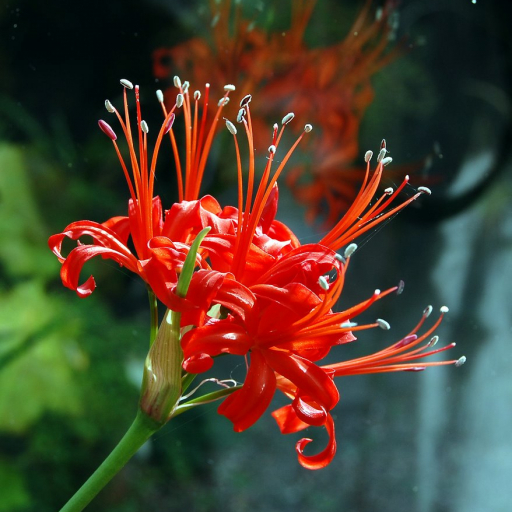
Plant Overview
Known as the Guernsey Lily or the Jersey Lily, Nerine sarniensis is a show-stopping autumn bloomer that looks like it belongs in a tropical paradise. Legend has it that these South African natives first appeared on the shores of the English Channel in the 17th century after a shipwrecked Dutch ship spilled its cargo of bulbs. Despite their delicate, exotic appearance, they are resilient survivors that "sparkle" under direct sunlight.
🔍 How to Identify
- 🌸 Crystalline Petals: The flowers feature six narrow, recurved (curled back) petals that possess a unique "diamond dust" quality, making them shimmer as if coated in tiny gold or silver flecks.
- 🕷️ Protruding Stamens: Long, elegant filaments extend far beyond the petals, giving the flower a distinctive spider-like or exploding star silhouette.
- 🌿 Late Foliage: One of its most curious traits is that the leafless flowering stem (scape) usually appears first; the strap-shaped, leathery green leaves only emerge as the flowers begin to fade.
🏡 In Your Garden
- ☀️ The Summer Bake: To trigger those brilliant autumn blooms, the bulbs require a "summer baking" period. They need to sit in dry, warm soil during their dormancy to mimic the heat of their native South African habitat.
- 🪴 Prefer "Tight Shoes": These plants are famously claustrophobic. They bloom much more reliably when their roots are crowded and pot-bound. If you move them or give them too much space, they may refuse to flower for several years.
⚠️ Safety & Toxicity
- 🚫 Toxic if Ingested: Like many members of the Amaryllis family, the entire plant—especially the bulb—is toxic if eaten.
- 🐾 Pet & Child Safety: It contains alkaloids like lycorine, which can cause stomach upset, vomiting, and lethargy in cats, dogs, and small children. It is best placed in a location where curious nibblers can't reach it.
✨ Fun Fact
The "diamond dust" on the petals isn't just a metaphor. The cells on the surface of the petals are shaped like tiny lenses that refract light, causing the flower to literally glitter in the sun to attract pollinators!

Detailed Care Instructions
To grow the Nerine Sarniensis plant, you can follow these steps:
- Choose a suitable location: Select a spot that receives at least six hours of direct sunlight each day. Nerine plants require ample sunlight to grow and bloom successfully.
- Prepare the soil: Nerines prefer well-draining soil that is slightly acidic. If your soil is heavy or clayey, amend it with compost or sand to improve drainage. Avoid planting Nerine bulbs in waterlogged soil.
- Plant the bulbs: Nerine Sarniensis is typically grown from bulbs. Plant the bulbs in early spring or early autumn, about 4-6 inches (10-15 cm) deep and spaced 8-12 inches (20-30 cm) apart. Make sure to plant them with the pointed end facing upwards.
- Watering: Water the bulbs thoroughly after planting and ensure the soil remains slightly moist throughout the growing season. Avoid overwatering, as excessive moisture can cause bulb rot.
- Fertilizing: In early spring, apply a slow-release bulb fertilizer to provide essential nutrients. Follow the package instructions for the correct amount and frequency of fertilization.
- Mulching: Apply a layer of organic mulch, such as straw or wood chips, around the base of the plant. This helps to retain moisture, suppress weeds, and insulate the bulbs during cold weather.
- Winter care: In regions with cold winters, protect the bulbs by covering them with a layer of mulch or moving potted plants indoors. This will provide insulation and prevent frost damage.
- Pruning: After flowering, allow the leaves to die back naturally. Do not remove them as they provide nourishment to the bulbs for the next season's growth.
- Dividing and propagation: Every few years, you can divide Nerine bulbs to propagate the plant. Dig up the bulbs during the dormant season, separate the offsets, and replant them.
By following these steps, you can successfully grow Nerine Sarniensis plants and enjoy their beautiful blooms.

Place in a bright room that is sun drenched almost all day. Or directly in a south-facing window.

To water this particular plant, it is important to first consider the soil in which it is growing. Nerine Sarniensis prefers a well-draining soil that is kept moist but not overly wet. This can be achieved by watering deeply but infrequently, allowing the soil to dry slightly between waterings.
When watering, it is best to avoid splashing the leaves as this can lead to fungal issues. Instead, use a watering can or hose with a gentle stream and aim for the soil directly around the base of the plant. It is also important to avoid getting water on the bulb itself, as this can lead to rot.
During the growing season, which typically runs from spring through early fall, Nerine Sarniensis may need to be watered more frequently. However, during the dormant season, which is generally from late fall through winter, the plant should be allowed to rest and watered sparingly.
Overall, the key to successfully watering Nerine Sarniensis is to strike a balance between keeping the soil moist and avoiding overwatering. With proper care, this plant can produce beautiful blooms year after year.
To fertilize this plant, make sure to use a balanced fertilizer with equal parts nitrogen, phosphorus, and potassium. Apply the fertilizer once a month during the growing season, which is typically spring and summer. Be sure to follow the instructions on the fertilizer packaging regarding the amount to use. Over-fertilizing can lead to burned leaves and may harm the plant.
Nerine sarniensis prefers well-draining, slightly acidic soil with a pH between 5.5 and 6.5. It grows well in sandy loam soil that is enriched with organic matter and has good drainage. The soil should be kept moderately moist, but not waterlogged, as the plant is susceptible to root rot in waterlogged soil. It is important to ensure that the soil is free of weeds and other debris which may harbor pests and diseases that can harm the plant. The use of a slow-release fertilizer formulated for bulbs can be helpful in promoting healthy growth and flowering.
To propagate this plant, start by gently removing the offsets from the main plant. Make sure the offsets have their own set of roots before removing them. Plant the offsets in a well-draining soil mix, preferably with sand or perlite mixed in. Water the newly planted offsets sparingly until they establish a good root system. Keep the newly propagated plants in a well-lit area with indirect sunlight. It may take a few years for the propagated plants to bloom.








