Plant Overview
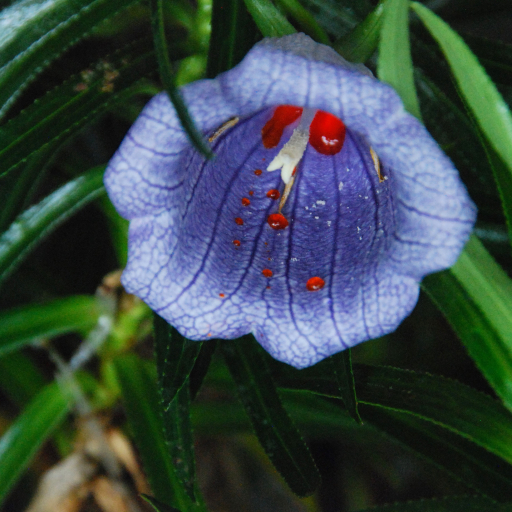
Known as the Mauritian Bellflower, this rare gem from the Indian Ocean island of Mauritius is a true botanical celebrity. It is one of only a handful of plants in the entire world that produces "blood-red" nectar, a striking contrast against its cool-toned petals. In its native habitat, it clings to the faces of volcanic cliffs and misty waterfalls, living a life of high-altitude drama.
🔍 How to Identify
- 🔔 Bell-Shaped Blooms: The flowers are elegant, five-lobed bells that range from a soft, dreamy lilac to a deep celestial blue.
- 🩸 Crimson Nectar: If you peek inside the flower, you will see pools of bright, ruby-red nectar at the base—a feature so rare it was once thought to be a biological myth.
- 🌿 Serrated Foliage: The leaves are narrow, lance-shaped, and dark green, featuring distinct "teeth" or serrations along the edges on slightly woody stems.
🏡 In Your Garden
- 💧 The Humidity Requirement: Coming from misty island cliffs, this plant craves high humidity. It is a "Goldilocks" plant; it hates drying out but will quickly suffer from root rot if left in stagnant, soggy soil.
- 🏺 Hanging Habit: Because it naturally grows on vertical cliff faces, it is happiest in a hanging basket or a tall pedestal pot where its stems can gracefully arch and trail downward.
- 🦎 A Gecko's Target: In the wild, the red nectar serves as a "stoplight" signal for its primary pollinator: the Mauritius Ornate Day Gecko. While you might not have geckos in your living room, the plant still produces this vivid syrup to attract attention.
⚠️ Safety & Toxicity
- 🐾 Pet Safety: As a member of the Campanulaceae family, it is generally considered non-toxic to cats and dogs, but ingestion of any ornamental plant can cause mild digestive upset.
- 🧤 Skin Sensitivity: The sap is mostly harmless, but those with very sensitive skin might experience slight irritation when pruning. It’s always a good idea to wash your hands after grooming your "red-blooded" beauty.
✨ Fun Fact
The Nesocodon mauritianus was the first plant ever scientifically recorded to produce colored nectar. Scientists believe the nectar evolved to be red because geckos (unlike bees) have excellent color vision and are specifically drawn to the color red against the green foliage!

Detailed Care Instructions
To grow Nesocodon Mauritianus plants, follow these steps:
- Climate: Ensure you are in a suitable climate. Nesocodon Mauritianus plants are native to tropical and subtropical regions, so they thrive in warm and humid conditions.
- Soil: Choose well-draining soil with a pH of about 6.5-7.5. Amend the soil with organic matter, such as compost or well-rotted manure, to improve its fertility and moisture-retaining capabilities.
- Sunlight: Plant the Nesocodon Mauritianus in a location that receives partial to full shade. Too much direct sunlight can scorch the leaves and hinder their growth.
- Watering: Provide regular watering to keep the soil evenly moist but not soggy. Avoid overwatering, as it can cause root rot. Check the moisture level by sticking your finger about an inch into the soil; if it feels dry, it's time to water.
- Fertilization: Feed the plant with a balanced, slow-release fertilizer during the growing season (spring and summer). Follow the instructions on the fertilizer packaging for proper application rates.
- Mulching: Apply a layer of organic mulch, such as chopped leaves or bark chips, around the base of the plant. Mulching helps retain soil moisture, suppresses weed growth, and protects the roots from extreme temperature fluctuations.
- Pruning: Regularly trim back long or straggly stems to promote bushier growth and to maintain a tidy appearance. Pinch off spent flowers to encourage the development of new blooms.
- Pests and Diseases: Watch out for common garden pests like aphids, snails, and slugs. Use organic pest control methods or insecticidal soaps if necessary. Ensure good air circulation around the plant to prevent fungal diseases.
- Propagation: Nesocodon Mauritianus can be propagated through stem cuttings or by dividing the plant. Take stem cuttings about 4-6 inches long, remove the lower leaves, and insert them into a pot filled with well-draining soil. Keep the soil lightly moist until roots develop.
By following these steps, you can successfully grow Nesocodon Mauritianus plants and enjoy their beautiful blue flowers.
To water this plant, you should first assess the moisture level of the soil by inserting your finger about an inch or two into the soil. If the soil feels dry, it is time to water the plant. Use a watering can with a spout to direct the water directly onto the soil around the base of the plant, avoiding getting water on the foliage. Allow the water to soak into the soil, but avoid overwatering, as Nesocodon Mauritianus prefers slightly moist, well-draining soil. It may be helpful to use a tray or saucer underneath the pot to catch any excess water that may drain out. In general, this plant should be watered about once a week, or as needed based on the moisture level of the soil.
The best time to fertilize Nesocodon Mauritianus is in the spring when new growth appears. Use a slow-release fertilizer with equal amounts of nitrogen, phosphorus, and potassium. Fertilize every four to six weeks during the growing season, but be careful not to over-fertilize, as this can burn the plant's roots. Water the plant well before and after fertilizing to prevent root damage. If the plant shows signs of stress or nutrient deficiency, adjust the fertilizer application accordingly.
The recommended type of soil for this plant is a well-draining soil mix that is rich in organic matter and slightly acidic with a pH level between 5.5 to 6.5. It should have good water retention capacity while also allowing excess water to drain through easily. Addition of small particles like sand or perlite can improve soil texture and increase aeration. The soil should be fertile and nutrient-rich, providing adequate amounts of micronutrients like iron, manganese, and zinc. It should not be too heavy and compacted as it can lead to poor root development and fungal diseases. A regular nutrient-rich fertilizer application every 1-2 months is also recommended to promote healthy growth and flowering.
To propagate this plant, start by taking stem cuttings from a healthy, mature plant. Use a sharp, clean knife to make a clean cut just below a node on a stem that is at least 4 inches long. Remove any leaves from the bottom half of the cutting and dip the cut end in rooting hormone.
Prepare a pot with well-draining soil, and make a hole with a pencil or a finger. Place the cutting in the hole and gently firm the soil around it. Water the soil lightly but thoroughly, and cover the pot with a plastic bag or clear plastic wrap to retain moisture. Place the pot in a warm, bright location, but out of direct sunlight.
Monitor the cutting regularly for signs of growth, such as new leaves or roots. When the cutting has rooted and is growing well, remove the plastic covering and gradually acclimate the plant to more light and less humidity. Once it is well established, it can be planted in a larger pot or garden bed.








