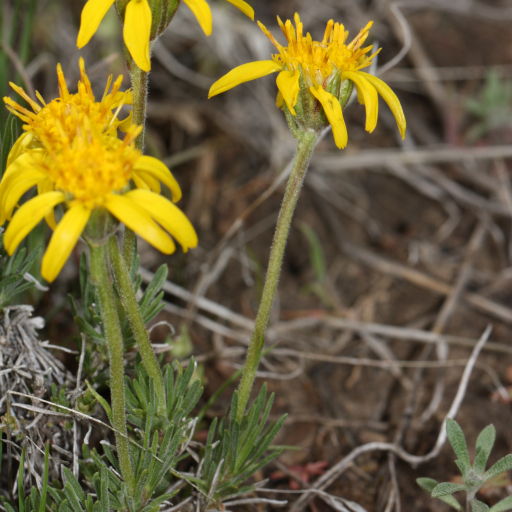
Plant Overview
Known affectionately as the Narrowleaf Mock Goldenweed, this pint-sized powerhouse is a master of survival in the rugged American West. It looks like a miniature golden cushion dropped onto a desert floor, thriving in harsh, rocky landscapes where most other plants would wither. In the wild, these bright yellow beacons often serve as the first splash of color in the early spring sagebrush steppe.
🔍 How to Identify
- 🌿 The Foliage: The leaves are incredibly thin (linear), grayish-green, and often feel slightly resinous or sticky to the touch.
- 🌻 The Blooms: It produces solitary, daisy-like flower heads with bright yellow "petals" (ray florets) surrounding a darker yellow center.
- 📏 Growth Habit: This is a "mat-forming" subshrub, meaning it stays very low to the ground—usually under 6 inches tall—creating a dense, woody tuft.
🏡 In Your Garden
- 🪨 The Perfect Rockery: This plant is a dream for "crevice gardens" or rockeries. It craves sharp drainage and will quickly rot if its feet stay wet in heavy potting soil.
- ☀️ Sun Worshiper: It requires full, unfiltered sun to maintain its compact shape. If grown in too much shade, it loses its "cushion" look and becomes leggy and weak.
- ⚓ The Taproot Rule: Like many desert-dwellers, it develops a deep, stubborn taproot. This makes it incredibly drought-tolerant, but it also means it hates being transplanted. Pick its permanent home carefully!
⚠️ Safety & Toxicity
- 🟢 Status: Generally considered non-toxic.
- 🐾 Pets & Kids: There are no recorded reports of toxicity for cats, dogs, or humans. However, because the leaves can be tough and resinous, they aren't exactly "palatable" and may cause minor stomach upset if ingested in large quantities.
✨ Fun Fact
The species name stenophyllus literally translates from Greek as "narrow leaf." This is an evolutionary trick: by having such tiny, thin leaves, the plant reduces the surface area exposed to the sun, helping it "hold its breath" and conserve water during blistering summer heatwaves.

Detailed Care Instructions

Place in a bright room that is sun drenched almost all day. Or directly in a south-facing window.

Some plants require more regular watering than others, which should be done every few days. It's critical to maintain the soil moist all of the time. The water requirements of the same plant placed in pots with varying sizes will differ. Because the water in the smaller pot evaporates faster than the water in the larger pot, it will require more watering. Regardless of pot size, the surface should constantly be maintained moist.








