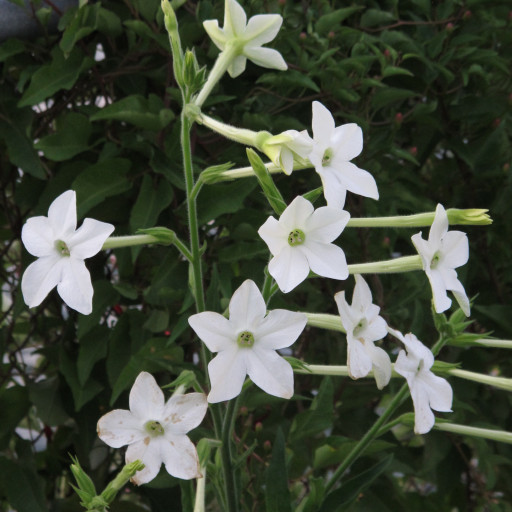
Plant Overview
Commonly known as Jasmine Tobacco or Winged Tobacco, this South American native is the secret weapon of the "moonlight garden." While it looks like a modest green plant by day, it transforms into a sensory powerhouse at dusk, releasing an intoxicating, sweet fragrance that can perfume an entire backyard. It earns its "winged" nickname from the way its leaves clasp the stem, creating a leafy fringe or "wing" along the stalks.
🔍 How to Identify
- 🎺 The Flowers: Long, elegant, trumpet-shaped blooms that flare into a five-pointed star. While the wild species is creamy white, garden varieties come in lime green, pink, and deep red.
- 🍃 The Foliage: Large, spoon-shaped leaves that are slightly fuzzy. The base of the leaf extends down the stem, giving it a "winged" appearance.
- 🖐️ The Texture: The entire plant is covered in tiny, glandular hairs that make it feel remarkably sticky to the touch—a natural defense mechanism against certain crawling insects.
🏡 In Your Garden
- 🌙 The Night Shift: Unlike many garden stars, Nicotiana alata is most active at night. Its flowers often wilt slightly in the afternoon sun and "wake up" at sunset to attract nocturnal pollinators like Hawkmoths.
- 🌱 Placement Strategy: Because it can grow quite tall and occasionally "flops" over, it’s best planted in the middle of a border where other plants can provide structural support. Avoid transplanting mature specimens, as their taproots prefer to stay put once established.
- 🦋 Pollinator Magnet: If you want to see hummingbirds during the day and giant Sphinx moths at night, this is the plant to grow. Its deep floral tubes are perfectly designed for their long tongues.
⚠️ Safety & Toxicity
- 🚫 Status: Toxic to humans and pets.
- 🐱 Details: As a member of the nightshade family and a relative of commercial tobacco, it contains nicotine and other alkaloids. If ingested, it can cause vomiting, drooling, and heart rate changes in cats, dogs, and horses.
- 🧤 Skin Sensitivity: The sticky sap can be a mild skin irritant for some gardeners; wearing gloves during pruning is recommended if you have sensitive skin.
✨ Fun Fact
Nicotiana alata was a staple in Victorian "Scent Gardens." Legend has it that the fragrance was so prized that ladies would carry handkerchiefs rubbed with the petals to use as a natural perfume throughout the evening.

Detailed Care Instructions
To grow Nicotiana Alata plant, also known as Jasmine or Angel's Trumpet, you can follow these steps:
- Choose the location: Select a suitable spot in your garden with well-drained soil, as this plant prefers full sun to partial shade.
- Soil preparation: Prepare the soil by loosening it and adding organic matter such as compost or well-rotted manure. Nicotiana Alata prefers fertile soil with a pH level between 6.0 and 7.5.
- Sowing seeds: You can start Nicotiana Alata seeds indoors 6-8 weeks before the last frost date or sow them directly in the garden after the frost has passed. Sow the seeds on the soil surface, lightly press them into the soil, and sprinkle a thin layer of soil over them.
- Seedling care: Once the seeds germinate, keep them in a warm and bright area. Provide adequate water, but take care not to overwater. Transplant the seedlings into larger pots when they have developed a few true leaves.
- Transplanting: When the weather is consistently warm and there is no risk of frost, transplant the seedlings or purchased Nicotiana Alata plants into your prepared garden bed. Space them about 12-18 inches apart, as they can reach a height of 3-5 feet.
- Watering: Nicotiana Alata requires regular watering to keep the soil moist but not waterlogged. Consistent moisture is important, especially during dry spells or hot weather.
- Fertilizer: Apply a balanced fertilizer, such as a slow-release granular or a water-soluble fertilizer, according to the manufacturer's instructions. Avoid excessive nitrogen fertilization, as it can promote excessive foliage growth at the expense of flower production.
- Pruning: You can pinch or prune Nicotiana Alata plants to encourage a bushier growth habit and more flowers. Pinching the growing tips when the plants are young will promote branching.
- Pests and diseases: Nicotiana Alata can be susceptible to pests such as aphids and caterpillars. Monitor your plants regularly and take appropriate action if any pests or diseases are observed. In severe cases, you may need to use organic insecticides or consult a horticulturist for recommendations.
- Enjoy the blooms: Nicotiana Alata plants will typically begin to bloom in early summer until the first frost. Enjoy the beautiful fragrant flowers and their attraction to pollinators, especially in the evening when their scent becomes stronger.
Remember to check your local gardening guidelines and any specific requirements for growing Nicotiana Alata in your region.

Place in a bright room that is sun drenched almost all day. Or directly in a south-facing window.

To properly hydrate the plant, it is advisable to use a watering can with a long spout to avoid overwatering. It is essential to ensure the soil is dry before watering. The soil should be moistened around the base of the plant, taking care not to splash water onto the foliage. Adequate watering is essential, but excess water can cause root rot, leading to stunted growth or death. Only water the plant when necessary and observe the soil's moisture level to avoid over or underwatering.
For best results, the Nicotiana Alata plant should be fertilized every two weeks during the growing season using a balanced fertilizer. Use a fertilizer with equal parts nitrogen, phosphorus, and potassium. Avoid using a fertilizer that is high in nitrogen, as this can cause excessive leaf growth at the expense of flower production. Be sure to apply the fertilizer to the soil around the base of the plant, and water thoroughly after fertilizing. Avoid getting fertilizer on the plant's leaves or flowers, as this can cause burning or damage.
The most suitable soil for Nicotiana Alata is a well-draining soil that is rich in organic matter. The ideal pH range for the soil should be between 6.0 to 7.0. Loamy soil is the best soil type to use for Nicotiana Alata because it mixes well with other organic materials and promotes proper drainage. It is recommended to avoid using heavy clay soil or sandy soil that does not retain moisture as these soils may not provide optimal growing conditions for Nicotiana Alata. Adding compost or aged manure to the soil mix will help provide the plant with the necessary nutrients and improve its overall health.
To propagate this particular plant species, you will need to collect seeds from a mature plant. Wait for the seed pods to turn brown and dry before harvesting the seeds. Sow the seeds in a tray filled with moist potting soil and cover lightly with soil. Place the tray in a warm and bright location where the temperature remains between 20°C to 25°C. Keep the soil moist and watch for germination within a week or two. Once the seedlings have developed their first set of true leaves, you can transfer them to individual pots or directly into the ground. If you choose to transfer them to individual pots, make sure the soil is well-draining and rich in organic matter. Water the plants regularly and fertilize with a balanced liquid fertilizer every two weeks for the first six weeks. As the plant grows, you may need to provide support in the form of stakes or poles to prevent it from falling over.
Common pests of the flowering tobacco include Aphids, larvae, snails. Make a habit of checking your flowering tobacco frequently for pests so that any infestations can be caught and managed early.








