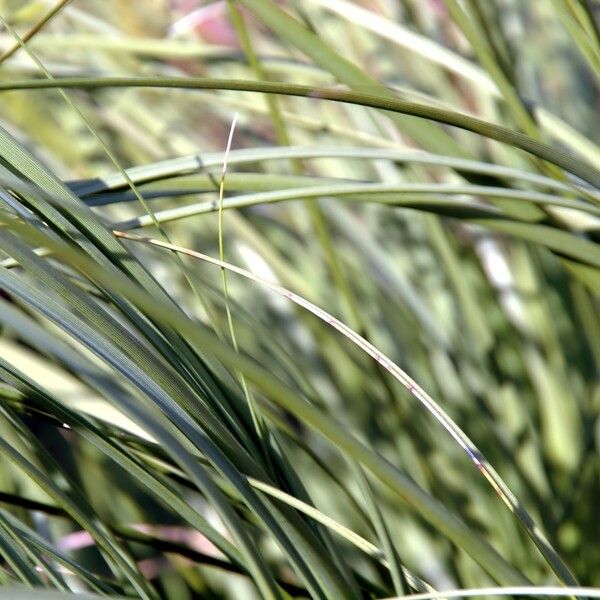
Plant Overview
Known affectionately as the Georgia Beargrass, Nolina georgiana is a resilient hidden gem of the Southeastern United States. Despite its name and grassy appearance, it isn't a grass at all—it’s a long-lived perennial more closely related to Asparagus and Yuccas. This plant is a true "fire follower," often waiting years for the heat of a forest fire to trigger its spectacular and rare blooming phase.
🔍 How to Identify
- 🌿 The Foliage: Long, slender, and wiry leaves that grow in a dense, fountain-like clump. They are stiff and slightly rough to the touch, often arching gracefully toward the ground.
- 🌸 The Bloom: When it decides to flower, it sends up a towering, branched stalk (up to 5 feet tall) covered in thousands of tiny, creamy-white bell-shaped flowers.
- 🍠 The "Hidden" Trunk: Unlike its desert cousins that grow tall trunks, the Georgia Beargrass keeps its woody stem mostly underground in a thickened base called a caudex, which protects it from heat and predators.
🏡 In Your Garden
- 🏜️ Sandhill Specialist: This plant is a master of "tough love" environments. It thrives in nutrient-poor, sandy soils where other plants might wither. If you plant it at home, the most important factor is drainage; it will not tolerate "wet feet" or heavy clay.
- ☀️ Sun Worshipper: To mimic its natural habitat in the longleaf pine savannas, it needs plenty of bright light. It is incredibly drought-tolerant once established, making it a perfect candidate for xeriscaping or low-maintenance rock gardens.
⚠️ Safety & Toxicity
- 🐾 Low Toxicity: Generally, Nolina georgiana is not considered highly poisonous to humans. However, it contains saponins, which can cause mild stomach upset or drooling if ingested by curious cats or dogs.
- 🔪 Sharp Edges: The most common "injury" from this plant comes from the leaves themselves. The edges can be surprisingly sharp and may cause small paper-cut-like nicks if handled roughly without gloves.
✨ Fun Fact
Though it looks like a soft ornamental grass, the leaves of the Georgia Beargrass are incredibly tough. Historically, they were harvested and used by indigenous peoples and early settlers to weave sturdy baskets and even fashion coarse, durable ropes.

Detailed Care Instructions
To grow Nolina georgiana, follow these steps:
- Choose the right location: Nolina georgiana prefers full sun to partial shade. It can tolerate a wide range of soil types but prefers well-drained soil.
- Planting: Dig a hole that is slightly wider and deeper than the plant's root ball. Place the plant in the hole and backfill it with soil, making sure to firm it gently around the roots.
- Watering: Water the plant regularly during the first year to establish its root system. After that, Nolina georgiana is drought-tolerant and doesn't require frequent watering. Water deeply but infrequently to encourage deep root growth.
- Mulching: Apply a layer of organic mulch around the base of the plant to help retain moisture and control weeds.
- Fertilizing: Nolina georgiana doesn't require much fertilizer. However, you can apply a slow-release, balanced fertilizer in early spring to promote healthy growth.
- Pruning: Trim any dead or damaged leaves as needed. Avoid pruning healthy leaves unless necessary.
- Winter protection: Nolina georgiana is generally hardy, but if you experience harsh winters, you can protect the plant by covering it with a frost blanket or moving it indoors to a cool and bright location.
- Propagation: Nolina georgiana can be propagated by carefully dividing the offset plants that emerge from the base of the parent plant during spring or early summer.
Remember to research the specific needs of the Nolina georgiana plant in your particular region, as climate and soil conditions may vary.
To water this particular species of plant, the soil should be evenly moistened but never oversaturated. It is important to allow the soil to dry out slightly before watering again to prevent root rot. It is recommended to check the soil moisture level regularly by sticking a finger in the soil up to an inch deep. If it feels dry at this depth, it is time to water the plant. Watering should be done at the base of the plant and not directly onto the leaves. During the winter months, the plant may require less water as it enters a dormant period.
To fertilize this plant, mix a balanced, slow-release fertilizer with water according to package instructions. Apply the fertilizer to the soil around the base of the plant, making sure to avoid getting any on the leaves. Water the plant thoroughly after fertilizing to help the nutrients soak into the soil. Repeat this process every 6-8 weeks during the growing season, which is typically from spring to fall. Avoid fertilizing during the winter months when the plant is dormant.
The ideal soil for the Nolina Georgiana plant is a well-draining, sandy soil with a slightly acidic to neutral pH level. The soil should have a good amount of organic matter, such as compost or leaf litter, to retain moisture and provide nutrients to the plant. The plant prefers a soil that is not compacted and has a loose texture, which allows for easy root growth and water absorption. It is recommended to avoid heavy, clay soils that can become waterlogged and damage the roots. Additionally, the Nolina Georgiana plant does well in full sun to partial shade conditions and should be watered moderately, allowing the soil to dry out slightly between watering.
- Prepare the plant
Ensure the plant is healthy and disease-free before propagating. Take a healthy leaf from the plant.
- Prepare the soil
Nolina Georgiana grows best in well-draining soil. Make sure the soil has enough water to support the plant.
- Take cuttings
Take a sharp, clean pair of scissors and cut the leaf stem at an angle.
- Put the cuttings in water
Place the cuttings in water and let them sit for a few days until roots start to form.
- Pot the cuttings
Once the roots have formed, transfer the cuttings to a small pot filled with well-draining soil.
- Care for the cuttings
Keep the soil moist but not wet. Place the pot in a warm and bright place, but out of direct sunlight. The plant will start to grow once the roots have established themselves, which can take a few weeks.
- Transplant to a larger pot
Once the plant grows to a size where it's outgrowing its pot, it's time to transplant it to a larger pot.








