Plant Overview
Known for its uniquely weeping habit, the Spiny Nopal (Nopalea dejecta) is a sculptural cactus that brings a touch of the Central American dry forests to your collection. While most cacti stand tall and rigid, this species lives up to its name—dejecta meaning "thrown down"—with branches that gracefully arch and droop toward the ground. It is a favorite for xeriscaping and "living fences" due to its dense, protective growth and striking red blooms.
🔍 How to Identify
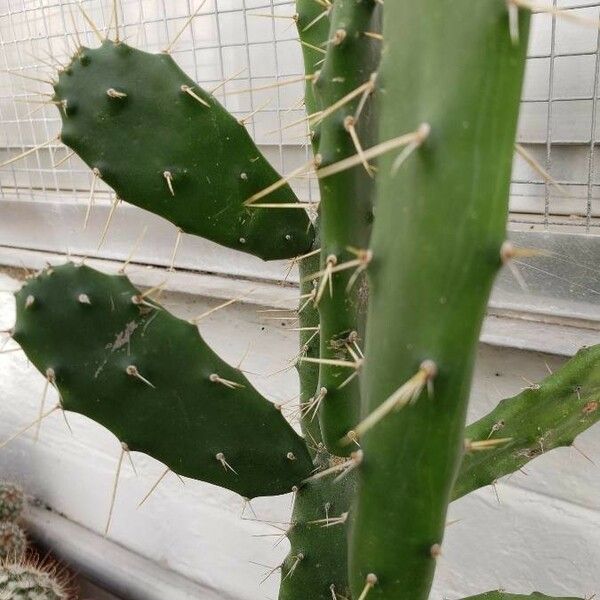
- 🌵 The Pads (Cladodes): Unlike the broad, round pads of common prickly pears, these are elongated, narrow, and slightly flattened. They often hang downward, giving the plant a cascading appearance.
- 🎨 Color & Texture: The skin is a smooth, pale green to gray-green. It lacks the thick waxy "bloom" of some species, appearing more vibrant and lush.
- 🌸 The "Torch" Flowers: It produces bright red or deep pink flowers that are narrow and tubular. The stamens usually protrude far beyond the petals, looking like tiny glowing torches at the tips of the pads.
🏡 In Your Garden
- 🏜️ Drainage is Destiny: This cactus is a champion of dry soils. Because it is adapted to rocky slopes, it hates "wet feet." Plant it in a gritty, sandy mix to prevent the roots from suffocating and rotting.
- ☀️ Sun Seeker: To maintain its structural integrity and encourage those fiery blooms, it requires full, direct sun. In shaded areas, the pads will stretch out and become weak (etiolated), losing their signature weeping shape.
- 🧗 Space & Support: Because of its sprawling nature, it works beautifully on the edge of a raised bed or a large rockery where it can spill over the sides without obstructing pathways.
⚠️ Safety & Toxicity
- 🌵 Status: Physically hazardous. While the plant is not chemically toxic to humans or pets, it is heavily defended by sharp spines.
- 🩹 The Glochid Danger: In addition to long spines, it carries "glochids"—tiny, barbed hairs that are almost invisible. If touched, these lodge into the skin, causing persistent itching and irritation.
- 🐾 Placement: Keep this plant away from walkways or areas where children and pets play. A curious nose or a brushing leg can result in a very painful afternoon of pulling out microscopic needles.
✨ Fun Fact
In its native regions of Mexico and El Salvador, Nopalea dejecta is often used as a "living wall." When planted in a row, the drooping, interlocking prickly pads form a barrier so dense and sharp that it is nicknamed Cuchilla (the knife), effectively keeping livestock and intruders at a distance.

Detailed Care Instructions
Nopalea dejecta, also known as the peniocereus arequipensis or the old man cactus, is a type of cactus that is native to Mexico and is known for its long, spiny stems. Here are some tips on how to grow Nopalea dejecta:
- Light: Nopalea dejecta requires plenty of sunlight to thrive. Place it in a location where it can receive at least 6 hours of direct sunlight each day.
- Soil: Use a well-draining cactus mix for planting your Nopalea dejecta. It is important to make sure that the soil is not too wet, as this can lead to root rot.
- Watering: Water your Nopalea dejecta sparingly, allowing the soil to dry out completely between waterings. In the winter months, reduce watering even further to prevent rot.
- Temperature: Nopalea dejecta prefers warm temperatures and should be kept above 50 degrees Fahrenheit. Protect it from frost and cold drafts.
- Fertilization: Feed your Nopalea dejecta with a balanced cactus fertilizer during the growing season (spring and summer) to promote healthy growth.
- Repotting: Repot your Nopalea dejecta every few years to refresh the soil and provide it with more room to grow. Use caution when repotting, as the spines can be sharp.
- Pest control: Keep an eye out for common cactus pests such as mealybugs and spider mites, and treat them promptly if you notice any infestations.
By following these tips, you can successfully grow Nopalea dejecta and enjoy its unique beauty in your home or garden.
To water this particular plant, you will need to follow a few steps. Firstly, ensure that the soil is dry to the touch before watering. This will prevent overwatering and save the plant from getting root rot. Secondly, fill a watering can or a hose attachment with room temperature water. Avoid using cold water as it can shock the plant. Thirdly, water the soil directly at the base of the plant's stem, avoiding the leaves and stem itself. Overhead watering can cause the leaves to rot or the plant to develop fungal issues. Fourthly, water the soil thoroughly, allowing the water to penetrate deep into the roots. Lastly, wait until the soil is completely dry before watering again, usually once a week, depending on the humidity and temperature of the plant's surroundings.
To fertilize the Nopalea Dejecta plant, you can use a balanced fertilizer with a similar N-P-K ratio (nitrogen, phosphorus, potassium) of 10-10-10. Apply the fertilizer in the spring or early summer to promote growth. Be sure to follow the manufacturer's instructions for the specific type of fertilizer you choose. Water the plant well after fertilizing to help the nutrients penetrate the soil and reach the roots. Avoid over-fertilizing, as this can harm the plant.
For optimal growth, the appropriate type of soil to use with this plant is a well-draining, slightly acidic soil with a pH range of 6.0 to 7.0. It should be nutrient-rich with a good balance of organic matter and minerals. Avoid using heavy clay soils or soils with poor drainage as they can lead to root rot. Additionally, the soil should be able to retain moisture without becoming waterlogged. Mixing in some sand or perlite into the soil can help improve drainage and prevent the soil from becoming compacted.
To propagate Nopalea Dejecta, you can start by collecting seeds from mature plants. The seeds should be planted in well-draining soil and kept lightly moist until they germinate.
Another method of propagation is by taking stem cuttings from healthy, established plants. Select a healthy stem and cut it at a 45-degree angle using a sharp, sterile knife. Allow the cutting to dry and callous for a few days before planting in well-draining soil.
You can also propagate Nopalea Dejecta by division. Carefully remove the plant from its pot and gently separate the roots into smaller sections. Replant each section in its own pot with fresh soil.
Whichever method you choose, it is important to provide the new plants with adequate sunlight, water, and proper care to ensure successful propagation.








