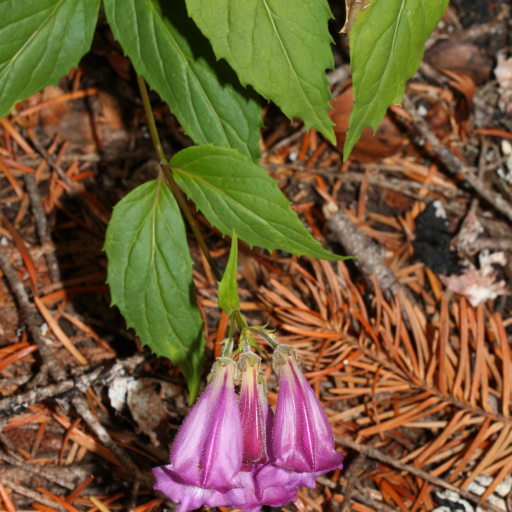
Plant Overview
Often called the Woodland Beardtongue, this elegant perennial is a hidden gem of the Pacific Northwest's misty forests. Its flowers look like tiny, rosy-purple dragon heads peeking out from the cool shadows of the treeline. It acts as a perfect bridge between the showy snapdragons of our gardens and the rugged, wild spirit of the mountain trails.
🔍 How to Identify
- 🌸 Tubular Blooms: Large, rosy-purple to magenta flowers that are shaped like a funnel, often featuring delicate white hairs inside the "throat" to guide pollinators.
- 🍃 Toothed Foliage: Deep green, lance-shaped leaves that grow in opposite pairs along the stem, featuring noticeably serrated (saw-toothed) edges.
- 📏 Upright Habit: Sturdy, mostly unbranched stems that can reach up to 3 feet in height, giving the plant a tall, stately silhouette against the forest floor.
🏡 In Your Garden
- 🌲 Woodland Preference: Unlike its sun-loving Penstemon cousins, the Woodland Beardtongue thrives in the dappled light of a forest canopy. It is an ideal choice for "wildlife corners" or shaded perennial borders.
- 💧 The Moisture Nuance: It demands consistent moisture but cannot tolerate standing water. It performs best in soil rich in leaf mold or organic compost, mimicking the spongy, nutrient-dense floor of an ancient woodland.
- 🐝 Hummingbird Favorite: Because of the deep, tubular shape of the flowers, you can expect frequent visits from hummingbirds and long-tongued bumblebees who are the only ones strong enough to prize open the petals.
⚠️ Safety & Toxicity
- 🟢 Non-Toxic Status: Nothochelone nemorosa is generally considered safe and is not listed on major toxic plant databases for humans, dogs, or cats.
- ✋ Standard Caution: While not poisonous, it is not a culinary herb. As with any wild plant, it is best to keep curious toddlers from snacking on the foliage to avoid any potential stomach upset.
✨ Fun Fact
🐢 The "False" Turtle: Its scientific name Nothochelone literally translates to "False Turtle." This is a nod to its striking resemblance to the Chelone genus (the "True Turtleheads") found in Eastern North America, though the two are separated by thousands of miles!

Detailed Care Instructions
To grow Nothochelone Nemorosa (also known as False Bee Balm or Forest Beardtongue), follow these steps:
- Choose the right location: Nothochelone Nemorosa prefers partial shade to full shade. Look for a spot in your garden that receives filtered sunlight or shade for most of the day.
- Prepare the soil: The plant requires well-draining soil that is rich in organic matter. Add compost or well-rotted manure to improve the soil's fertility and drainage.
- Planting: Dig a hole that is slightly larger than the plant's root ball. Place the plant in the hole, making sure the crown (where the stems meet the roots) is level with the soil surface. Backfill the hole with soil, gently firming it around the roots.
- Watering: Nothochelone Nemorosa prefers consistent moisture but doesn't like to be waterlogged. Water the plant regularly but ensure the soil doesn't stay soggy. During dry spells, water deeply to encourage root growth.
- Mulching: Apply a layer of mulch around the base of the plant to help retain moisture and suppress weed growth. Use organic mulch, such as wood chips or bark.
- Pruning: Nothochelone Nemorosa doesn't require extensive pruning. However, you can trim back any dead or damaged stems in early spring to encourage new growth.
- Fertilization: Nothochelone Nemorosa generally doesn't need much fertilization. However, you can apply a balanced, slow-release fertilizer in early spring if desired.
- Pest and disease control: Nothochelone Nemorosa is generally free from serious pest and disease problems. However, keeping the plants healthy and well-spaced can help prevent issues like aphid infestations.
- Propagation: If you want to propagate more Nothochelone Nemorosa plants, you can do so by collecting and sowing seeds in the fall. Stratify the seeds (expose them to a period of cold and moist conditions) before sowing to improve germination rates. Alternatively, you can divide established plants in early spring or fall.
Remember to check the specific growing requirements of your specific variety of Nothochelone Nemorosa, as some cultivars may have slightly different needs.

Place in a bright room that is sun drenched almost all day. Or directly in a south-facing window.

To properly water this plant, it is essential to first ensure that the soil is dry to touch. Inspect the top layer of soil, and if it feels moist, then do not water it. However, if it is dry, pour a sufficient amount of water into the pot until it starts coming out of the drainage holes at the bottom. Ensure that you do not overwater the plant as it can cause root rot. It is better to keep the soil slightly dry and then water it again rather than keeping it soaked all the time. Additionally, make sure not to water the leaves of the plant as it can cause damage to them.
To fertilize this plant, use a slow-release fertilizer with balanced nutrients. Apply the fertilizer according to the manufacturer's instructions. Avoid over-fertilizing, as it can cause the plant to become leggy and weak. Water the plant thoroughly after fertilizing to help the nutrients absorb into the soil. Fertilize every 4-6 weeks during the growing season, which is spring and summer. During the winter months, reduce fertilizing to once every 2-3 months.
The ideal soil for this plant is loose, well-drained and slightly acidic. It should have good organic matter content to hold moisture and nutrients, while still allowing good airflow to the roots. A soil mix that can provide good drainage and aeration, while retaining moisture is important for the growth of this plant. A mixture of high-quality potting soil, peat moss, and perlite or vermiculite is a suitable blend for this plant. It's recommended to avoid using soil that contains too much clay or sand, as this can lead to poor soil drainage. Additionally, it's important to maintain a consistent soil moisture level, but avoid overwatering as this can cause root rot and other issues.
To propagate this plant, you can take stem cuttings from healthy parent plants during the growing season. The cuttings should be about 4-6 inches long, and should have at least two nodes where leaves attach. Remove the lower leaves from the cutting, leaving only a few at the top. Dip the cut end of the stem into rooting hormone, and then plant it in a small pot filled with a well-draining potting mix. Water the cutting and cover the pot with a plastic bag to increase humidity. Place the pot in a warm, bright location but out of direct sunlight. After a few weeks, check for root growth by gently tugging on the stem. Once roots have formed, you can transplant the new plant into a larger pot or into the garden.








