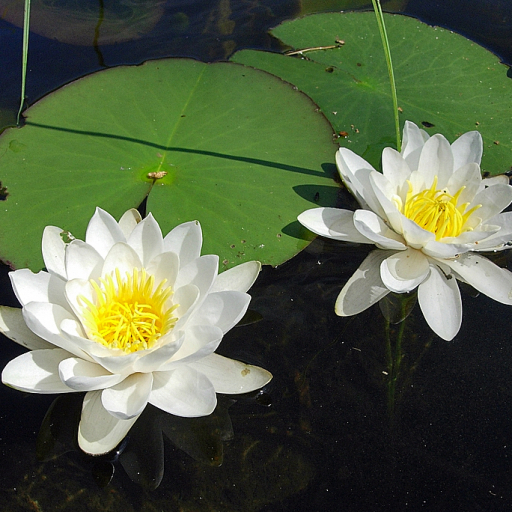
Plant Overview
Often called the "Snow-white Waterlily," Nymphaea candida is the ethereal gem of northern lakes and quiet ponds. In Slavic folklore, waterlilies were often called "Over-grass," believed to have the power to protect travelers from misfortune. This hardy aquatic perennial is a cold-climate specialist, bringing a sense of serene, floating elegance to still waters where other lilies might struggle.
🔍 How to Identify
- ❄️ The Bloom: Features cup-shaped, brilliant white flowers with a golden-yellow center. They are slightly smaller and more delicate than the more common Great White Waterlily.
- 🍃 Floating Foliage: Large, waxy, heart-shaped leaves that rest flat on the water's surface. The undersides often have a subtle reddish or purplish tint.
- 📐 The Base: A key identifier is the "receptacle" (the base of the flower). In this species, it is distinctly four-angled or square-shaped, rather than perfectly round.
🏡 In Your Garden
- 💧 Stillness is Key: This lily detests "moving" water. It thrives in stagnant or very slow-moving environments. Avoid planting it near splashing fountains or heavy aeration, as constant splashing on the leaves can cause them to rot.
- 🧊 Cold Hardiness: Because it originates from Northern Europe and Siberia, it is incredibly frost-tolerant. As long as its rhizomes (roots) are planted below the ice line in a pond, it will reliably return every spring after the thaw.
- ☀️ Sun Seeker: To produce its signature white stars, it needs a minimum of six hours of direct sunlight. In shade, the plant will produce plenty of leaves but very few flowers.
⚠️ Safety & Toxicity
- 🐾 Status: Generally non-toxic to touch, but potentially harmful if ingested.
- 🤢 Details: Like many members of the Nymphaea family, the plant contains alkaloids that can cause digestive upset, nausea, or lethargy in cats, dogs, or small children if eaten in large quantities. It is best enjoyed as a visual centerpiece rather than a culinary one.
✨ Fun Fact
The scientific name candida comes from the Latin word for "shining white"—the same root word for "candidate," referring to the bright white togas worn by those seeking public office in ancient Rome!

Detailed Care Instructions
| Humidity | High |
| Lighting | Shade |
| Difficulty | Easy |
| Hibernation | Cold Period |
| Hardiness Zones | 4A - 9B |
To grow Nymphaea candida, also known as the white water lily, follow these steps:
- Planting: Choose a location for your water lily that receives at least 6 hours of sunlight daily. You can plant it directly in a pond or container with a minimum depth of 18 inches (45 cm). Ensure the water is still or has a very gentle flow to prevent the lily pads from moving too much.
- Soil: Use heavy clay soil or specialized aquatic soil when planting your water lily. This type of soil should be available at garden centers or online. Fill your chosen container or area with the soil, leaving about 2 inches (5 cm) at the top, to prevent overflow.
- Rhizomes: Get a healthy rhizome with one or more growing tips. These are tuber-like structures from which the plant grows. If your water lily came as a bare-root rhizome, soak it in water for a couple of hours before planting.
- Planting the Rhizome: Place the rhizome on top of the soil with the growing tips facing up. Gently push it into the soil, making sure it is secure. Cover the rhizome with more soil, leaving the growing tips exposed.
- Water Depth: Submerge the container or the area where you planted the rhizome, ensuring the water level is around 4-6 inches (10-15 cm) above the rhizome. This will encourage growth but prevent foliage from floating on the water surface.
- Fertilization: Nymphaea candida benefits from a slow-release aquatic fertilizer. Follow the instructions on the fertilizer packaging to determine the correct amount for your container or pond. Apply it once a month during the growing season.
- Maintenance: Regularly remove any dead or decaying foliage to promote healthy growth. Trim any excessive growth to prevent overcrowding and maintain a balanced appearance.
- Winter Care: In colder climates, Nymphaea candida is dormant during winter. Lower the water level to prevent freezing and move the container indoors or cover the pond with a protective cover to shield the plant from extreme cold.
By following these steps, you can successfully grow and maintain Nymphaea candida, the white water lily, adding beauty to your water feature.

Place in a window with dappled sun or a spot in the middle of a room. Or directly in a window facing west or east.

The Nymphaea Candida plant is an aquatic flowering plant that requires specific care when it comes to watering. Here are some details on how to properly water this plant:
1. Maintain a water level: As an aquatic plant, the Nymphaea Candida needs to be constantly submerged in water. It is crucial to maintain a proper water level in the container or pond where it is planted.
2. Ensure adequate depth: This plant prefers to have at least 6-18 inches (15-45 cm) of water covering its crown, where the leaves emerge from the plant. This depth provides stability and promotes healthy growth.
3. Consider the container or pond size: The size of the container or pond should be appropriate for the Nymphaea Candida plant. It should have enough space to allow the plant to spread its leaves and flowers without being crowded. This ensures that the water circulates effectively around the plant.
4. Regularly check water quality: Apart from maintaining the water level, it is essential to ensure the water quality remains suitable for the plant's health. This can be achieved by monitoring pH levels, oxygen content, and preventing excessive algae growth or contamination.
5. Avoid stagnant water: Stagnant water can harbor harmful bacteria and fungi that can cause rot in the roots and other parts of the plant. It is important to maintain water circulation either through the use of a filter or by employing natural aeration methods such as adding a small water fountain or waterfall feature.
6. Avoid overhydration or drought: While the Nymphaea Candida requires a constant water supply, it is crucial to strike a balance between overhydration and drought. Overhydration can lead to root rot, while drought can cause the plant to decline or die. Regularly monitor the soil (if planted in a container) or the water level (if in a pond) to ensure it is consistently moist but not waterlogged.
7. Consider seasonal changes: During warmer seasons, the Nymphaea Candida may require more frequent watering due to increased evaporation. Adjust the water levels accordingly, and if necessary, provide shade to prevent excessive evaporation and maintain a more stable water temperature.
Remember, these guidelines may vary depending on the specific conditions and requirements of your Nymphaea Candida plant. Observing the plant closely and making adjustments accordingly will be key to ensuring its healthy growth and blooming.
- Choose a balanced fertilizer: Select a fertilizer with a balanced ratio of essential nutrients, such as nitrogen (N), phosphorus (P), and potassium (K). Look for a fertilizer labeled specifically for aquatic plants or one with a ratio like 10-10-10.
- Determine the appropriate dosage: Check the specific instructions on the fertilizer package for the recommended dosage based on your water volume or container size. Ensure you calculate the dosage accurately to avoid over- or under-fertilization.
- Apply the fertilizer: Carefully measure out the required amount of fertilizer according to the instructions. Sprinkle the fertilizer evenly over the water surface where the plant is located. Avoid applying the fertilizer directly onto the plant itself.
- Time the applications: Fertilize the Nymphaea Candida plant during active growing seasons, typically from spring to early fall. Aim to fertilize once every two to four weeks depending on the growth rate of your plant. It's crucial not to over-fertilize, as excessive nutrients can harm the plant or lead to algae blooms.
- Monitor water quality: Keep an eye on the water quality and clarity, as excessive fertilization can cause excess nutrients in the water, leading to decreased water quality and unwanted algae growth. If you notice any changes in water conditions, reduce the fertilizer dosage or adjust the frequency of applications accordingly.
- Follow up with regular maintenance: Alongside fertilization, maintain regular water changes, remove any decaying plant matter, and provide adequate sunlight. Proper care and maintenance promote overall plant health and help maximize the benefits of fertilization.
The ideal soil for Nymphaea Candida plants should have specific characteristics to support their growth and development. It is recommended to use a nutrient-rich and well-draining soil medium that retains moisture but does not become waterlogged. A mixture of loam, clay, and organic matter, such as compost or aged manure, can provide the suitable conditions.
The pH level of the soil should be slightly acidic to neutral, ideally ranging between 6.0 and 7.0, to ensure optimal nutrient absorption by the plant. Additionally, the soil should be free from any toxic substances or pollutants that could harm the plant's delicate root system.
Proper soil preparation is essential before planting Nymphaea Candida. It is advisable to remove any weeds, rocks, or debris from the soil and ensure it is loose and crumbly. This allows for better root penetration and nutrient uptake.
Providing the plant with a layer of aquatic planting media or specialized pond soil can further enhance its growth and supports the plant's adaptation to water environments. This medium could consist of clay, loam, aquatic soil, or a mixture of these components.
In summary, Nymphaea Candida plants thrive best in well-draining, nutrient-rich soil with a slightly acidic to neutral pH level. An appropriate soil mixture would ideally include loam, clay, organic matter, and possibly aquatic planting media.
To propagate the Nymphaea Candida plant, you can follow these steps:
- Prepare a suitable planting medium: Nymphaea Candida plants prefer a rich and loamy soil. You can create a planting mixture by combining equal parts of garden soil, compost, and coarse sand to ensure good drainage.
- Obtain a healthy parent plant: Look for a healthy and mature Nymphaea Candida plant from which you can take cuttings or divisions for propagation.
- Taking cuttings: Use a sharp and sterilized knife or shears to cut a healthy stem from the parent plant. Make sure the cutting is about 4-6 inches long and includes at least one or two leaf nodes. Leaf nodes are where new roots will develop.
- Removing leaves: Gently remove the lower half of the leaves from the cutting to reduce water loss and to focus energy on root development. Leave a few leaves at the top to assist with photosynthesis.
- Rooting hormone (optional): Although not necessary, you can dip the cut end of the stem into a rooting hormone powder to promote faster root development. This step can increase the success rate of your cuttings.
- Planting the cutting: Insert the lower end of the cutting into the prepared planting medium, ensuring that at least one or two leaf nodes are covered with soil. Firmly press the soil around the cutting to provide stability.
- Provide suitable conditions: Place the potted cutting in a container with clean water, making sure that the water level is just below the node where it emerged from the parent plant. Position the container in a sunny location to provide ample sunlight for photosynthesis.
- Maintain water conditions: Make sure the water is clean and free from any contaminants. Change the water every few days to prevent the growth of algae or bacteria. Nymphaea Candida plants are aquatic and require their roots to remain submerged.
- Root development: After a few weeks, you should start seeing new roots emerging from the submerged node. Continue to monitor the water level and ensure that the cutting remains submerged to facilitate root growth.
- Transplanting: Once the cutting has developed a sufficient root system, it can be transplanted into a larger container or a pond with suitable water conditions. Ensure that the water depth is appropriate for the specific needs of the Nymphaea Candida plant.
Remember to provide your newly propagated Nymphaea Candida plants with the necessary care, including regular sunlight, water changes, and the appropriate fertilization, to promote their healthy growth and blooming.








