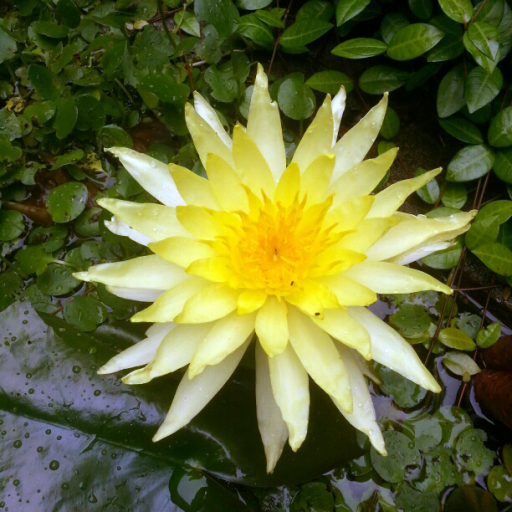
Plant Overview
The Nymphaea mexicana, known affectionately as the "Yellow Water Lily" or "Banana Water Lily," is a radiant aquatic beauty that turns still ponds into shimmering sheets of gold. Native to the southern United States and Mexico, it is a favorite for water gardeners who want a splash of sunshine on the water’s surface. While it looks like a delicate floating gem, it carries a spirited reputation for its ability to spread quickly and colonize new territory.
🔍 How to Identify
- 🌼 Star-Shaped Blooms: The flowers are a striking, bright lemon-yellow with pointed petals that stand 2–4 inches above the water line, opening during the day and tucking away at night.
- 🍃 Marbled Foliage: Its floating pads are nearly circular with a deep notch; they often feature distinct brownish or purple blotches on the top and reddish-purple undersides.
- 🍌 "Banana" Roots: One of its most unique features is the cluster of small, fleshy tubers attached to the roots that look exactly like a tiny hand of miniature bananas.
🏡 In Your Garden
- 🪴 Containment is Key: Because this lily spreads aggressively via long runners (stolons), it is best grown in large, submerged pots rather than planted directly into the pond floor to prevent it from overwhelming other plants.
- ☀️ Sun Seeker: This plant is a sun-worshiper; without at least 6 to 8 hours of direct light, the vibrant yellow flowers will remain closed and the plant will focus only on leaf production.
⚠️ Safety & Toxicity
- 🐾 Non-Toxic: Nymphaea mexicana is generally considered safe and non-toxic for dogs, cats, and humans if accidentally touched or brushed against.
- 🌊 Ecological Warning: While safe for your pets, it is "dangerous" to the environment in certain regions. It is classified as a noxious weed in some areas (like California and parts of Australia) because it can choke out native ecosystems. Never discard aquarium or pond clippings into local lakes or streams.
✨ Fun Fact
The "Banana Water Lily" gets its nickname from those banana-shaped tubers, which are a favorite snack for diving ducks! These tubers can detach and float to new locations, allowing the plant to "sail" across a lake to start a new colony.

Detailed Care Instructions
To grow Nymphaea Mexicana, also known as the Mexican water lily or yellow water lily, follow these steps:
- Obtain rhizomes: Purchase Nymphaea Mexicana rhizomes from a trusted nursery or online plant store. Alternatively, you can collect them from established plants in a natural water body, but ensure you have proper permission and know the laws regarding collecting plants from the wild in your area.
- Choose a suitable location: Look for a sunny spot in your garden that receives at least six hours of direct sunlight daily. Nymphaea Mexicana thrives in warm temperatures, ideally between 70-85°F (21-29°C), and requires a minimum water depth of 12-18 inches (30-45 cm).
- Prepare the planting container: Select a large container, such as a pond basket or tub, with drainage holes. Fill it with a mixture of aquatic potting soil and clay or loamy garden soil. This mixture allows the rhizome to anchor itself while still providing necessary nutrients.
- Plant the rhizome: Gently plant the rhizome in the container, ensuring the growing point (small bud or node) faces up. Cover it with the soil mixture, leaving the top of the rhizome exposed.
- Submerge the container: Lower the planted container into a pond, water garden, or large pot filled with water. Ensure the water level is deep enough to cover the rhizome. If you use a pot, place it in a shallow area of the pond or on bricks to maintain the proper depth. If you do not have a pond, a large container with regular water changes will suffice.
- Maintain optimal conditions: Regularly monitor the water temperature to ensure it stays within the preferred range. Provide sufficient sunlight, as mentioned earlier, and avoid shading the plant with overhanging vegetation. Make sure the water is clean and free from excessive nutrients to prevent algae growth, and consider adding a gentle pond pump or aerator for improved water circulation.
- Fertilize: Once every two to four weeks during the growing season, use aquatic plant fertilizer tablets or granules specifically designed for water lilies. Follow the manufacturer's instructions for the recommended dosage.
- Prune and divide: Remove any wilted or yellowing leaves to maintain a healthy appearance. Every few years, when the plant becomes overcrowded or stops blooming, consider dividing the rhizomes to promote new growth. Carefully remove the plant from the container, separate the rhizomes, and replant them individually in fresh soil.
- Protection in winter: In colder climates, Nymphaea Mexicana may not survive freezing temperatures. Before the first frost, either bring the plant indoors and keep it in a container with water in a cool and brightly lit area, or submerge the container in the pond to prevent it from freezing solid.
By following these steps, you can successfully grow Nymphaea Mexicana and enjoy its beautiful yellow flowers in your garden or water feature.

Place in a bright room that is sun drenched almost all day. Or directly in a south-facing window.

To provide the necessary moisture to your plant in a way that does not interfere with its growth or health, you should consider several factors. Begin by choosing an appropriate soil for planting, as this will affect how often you need to water. Always use a well-draining medium, as this will allow for excess moisture to escape.
Next, take into account the plant's preferred light and temperature conditions. Nymphaea Mexicana plants tend to prefer warmer temperatures and full sunlight, so you may need to water more frequently during hot and dry periods.
When you do water your plant, always make sure the soil is dry to the touch. This means that you should wait until the top inch of soil is completely dry before watering again. Using a watering can or hose, pour water directly onto the soil instead of soaking the foliage - this can cause damage, disease, and waste water.
Finally, avoid over-watering your plant as it can lead to root rot and other issues. Start with a small amount of water and add more as needed depending on the environmental conditions and care routine of your plant. Regular watering is essential for a healthy Nymphaea Mexicana plant.
To fertilize this plant, use a balanced fertilizer with a lower nitrogen content and higher proportions of phosphorus and potassium. Apply the fertilizer weekly during the growing season, ensuring that it is distributed evenly around the plant's base. Avoid over-fertilization, as this can cause algae growth and harm the plant. Additionally, consider supplementing with micronutrients that can enhance the plant's growth and overall health.
The ideal soil for Nymphaea Mexicana plant should be well-draining and nutrient-rich. It should be composed of a mixture of organic matter such as compost, peat moss, and perlite or vermiculite to ensure good aeration and water retention. The pH level of the soil should be slightly acidic, ranging between 6.0 to 7.5.
It is important to note that this plant thrives in shallow water, so it is recommended to use a pond planting basket or container filled with the appropriate soil mix and placed in a shallow pond or water feature. It is also important to avoid using soil that contains high levels of fertilizers or other chemicals as this can harm the plant's growth and overall health.
Overall, a well-draining, nutrient-rich, slightly acidic soil mix is essential for the successful growth and development of Nymphaea Mexicana plant.
Nymphaea Mexicana plants can be propagated through several methods, including division and seeds. To propagate through division, gently remove the plant from the pot or pond and separate the roots and rhizomes into two or more sections. Each section should have a healthy root system and a few leaves. Replant each section into its own pot or pond, making sure the roots are covered with soil or substrate and the leaves are above the water surface.
To propagate through seeds, collect the mature seeds from the plant and sow them in a pot filled with aquatic soil or substrate. Sow the seeds thinly and cover them with a layer of soil. Place the pot in a container filled with water and keep it in a warm, sunny location. Within a few weeks, the seeds will germinate, and you can thin the seedlings by removing the weaker ones. Once the seedlings have developed several leaves, you can transplant them into a larger pot or pond.








