Plant Overview
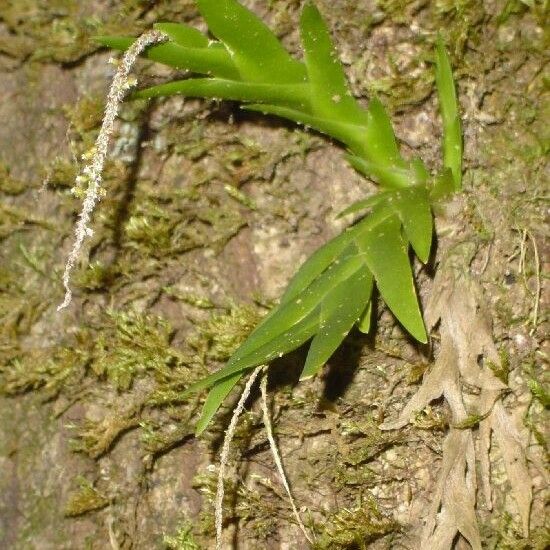
Often referred to as the Horse-rider Orchid or the Fan Orchid, Oberonia equitans is a miniature masterpiece of the botanical world. Native to the mossy forests of the Philippines and Southeast Asia, this orchid is prized not for large, showy petals, but for its architectural, fan-shaped leaves. Its name comes from the way its leaves overlap at the base, resembling a rider sitting astride a horse—a style botanists call "equitant."
🔍 How to Identify
- 🍃 Architectural Foliage: The plant features succulent, sword-shaped leaves that are flattened and overlap in a perfect, two-dimensional fan shape.
- 🌾 Microscopic Flowers: It sends out a long, arching flower spike (raceme) covered in hundreds of pinhead-sized, orange-brown or yellowish blossoms that look like tiny insects.
- 🤏 Compact Stature: This is a true "micro-orchid"; the entire plant often stays under 6 inches in height, making it a favorite for small-space enthusiasts.
🏡 In Your Garden
- 🌳 The Epiphytic Lifestyle: In nature, this orchid grows on the branches of trees rather than in the ground. Because it has evolved to "breathe" through its roots, it will quickly rot if planted in standard potting soil; use a loose orchid bark or mount it directly onto cork.
- 🌫️ Humidity is Key: Because it has very small roots, it cannot store much water. It relies on high atmospheric humidity. If your home is dry, this orchid will thrive best inside a glass terrarium or Wardian case where moisture is trapped.
⚠️ Safety & Toxicity
- 🟢 Non-Toxic Status: Oberonia equitans is generally considered non-toxic to humans, cats, and dogs. It is a "safe" choice for households with curious pets.
- 🍼 Physical Fragility: While not poisonous, the plant is extremely delicate. Its small size and brittle leaves make it a potential choking hazard for small children or pets if they decide to take a nibble.
✨ Fun Fact
- 🧚 Royal Roots: The genus name Oberonia was named after Oberon, the King of the Fairies in Shakespeare’s A Midsummer Night's Dream, because the plants are so small and delicate they look like they belong in a fairytale.

Detailed Care Instructions








