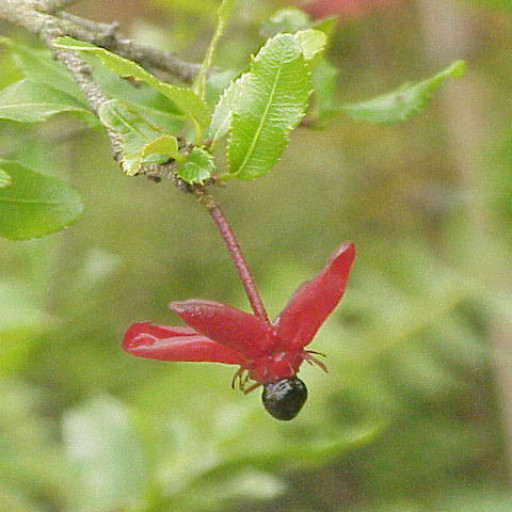
Plant Overview
Often called the Mickey Mouse Plant or Bird's-eye Bush, Ochna serrulata is a whimsical evergreen shrub native to South Africa. It is famous for its dramatic visual transformation: it begins with delicate yellow flowers and ends with a striking display of bright red sepals and jet-black berries that bear an uncanny resemblance to the face of a certain famous cartoon mouse.
🔍 How to Identify
- 🍃 Saw-Toothed Leaves: The foliage is dark green, glossy, and narrow. If you look closely at the edges, they are finely serrated (like a saw), which gives the plant its species name, serrulata.
- 🌼 Fragrant Blooms: In spring, the bush is covered in fragrant, butter-yellow flowers. These petals are fragile and usually drop quickly, making way for the star of the show.
- 🐭 The "Mouse" Display: Once the yellow petals fall, the calyx (the base of the flower) turns a vivid, fleshy red. Attached to this red base are several oval fruits that turn from green to a shiny, jet black.
🏡 In Your Garden
- ☀️ Sun and Resilience: This is a remarkably hardy shrub. While it loves full sun to produce the best "Mickey Mouse" colors, it is "tough as nails" and can survive in poor soil or coastal conditions once established.
- 🐦 Wildlife Hub: If you are a bird watcher, this plant is a must-have. Birds are highly attracted to the oily black berries; however, be mindful that they will spread the seeds far and wide, often leading to "volunteer" plants popping up in unexpected places.
- ✂️ Slow Growth Nuance: It is a slow-growing plant that takes well to pruning. Because of its steady pace and interesting trunk texture, it is a popular choice for enthusiasts practicing the art of Bonsai.
⚠️ Safety & Toxicity
- ✅ Low Toxicity: Ochna serrulata is not considered highly toxic to humans or common household pets like cats and dogs.
- 👶 Choking Hazard: While not poisonous, the small, hard black berries can be a choking hazard for curious toddlers. It is always best to supervise small children around berrying shrubs.
- 🌿 Invasive Potential: In certain climates (like parts of Australia and New Zealand), it is considered an invasive weed because it outcompetes local flora. Always check your local environmental guidelines before planting.
✨ Fun Fact
The genus name Ochna is derived from the Greek word ochne, which means "wild pear." This is because the leaves of this bush look remarkably similar to the leaves of a pear tree, even though the two plants are not related!

Detailed Care Instructions
| Humidity | Normal |
| Lighting | Part Sun |
| Difficulty | Medium |
| Hibernation | Cold Period |
| Hardiness Zones | 9 - 11 |
To grow Ochna Serrulata (also known as the Mickey Mouse plant or bird's eye bush), you can follow these steps:
- Choose a suitable location: Ochna Serrulata prefers full sun to partial shade. Ensure that the chosen spot has well-draining soil.
- Propagation: There are two common methods of propagation – from seeds or stem cuttings.
- Seeds: Collect ripe seeds from mature fruits and remove the pulp. Soak the seeds in warm water for 24 hours to help with germination. Sow the seeds in seed trays or pots filled with well-draining potting mix. Cover the seeds lightly with the mix and keep the trays/pots in a warm and bright location. Water the seeds regularly to keep the growing medium moist. Germination may take several weeks to occur.
- Stem cuttings: Take stem cuttings, around 6-8 inches long, from a healthy Ochna Serrulata plant. Ensure the cuttings have at least two or three sets of leaves. Dip the cut ends in rooting hormone powder to encourage root development. Plant the cuttings in a well-draining potting mix or directly in the ground, at least 2-3 inches deep. Mist the cuttings with water and keep them in a warm and brightly lit area. Regularly check the moisture level of the growing medium and kee≠p it consistently moist.
- Seeds: Collect ripe seeds from mature fruits and remove the pulp. Soak the seeds in warm water for 24 hours to help with germination. Sow the seeds in seed trays or pots filled with well-draining potting mix. Cover the seeds lightly with the mix and keep the trays/pots in a warm and bright location. Water the seeds regularly to keep the growing medium moist. Germination may take several weeks to occur.
- Watering: Ochna Serrulata prefers slightly moist soil but can tolerate short periods of drought once established. Water the plant deeply but infrequently, allowing the top inch of soil to dry out between watering sessions.
- Fertilizing: Apply a balanced, slow-release fertilizer in spring and summer to promote healthy growth. Follow the product instructions for the appropriate dosage.
- Pruning: Prune the plant regularly to maintain its shape and remove any dead or diseased branches. You can also pinch back young growth to encourage bushier growth.
- Pests and diseases: Watch out for common pests like aphids, mealybugs, and spider mites. Treat them with appropriate insecticides or by spraying a mixture of water and mild soap. Ochna Serrulata is generally disease-resistant.
- Mulching: Apply a layer of organic mulch around the base of the plant to help conserve moisture, control weed growth, and provide nutrients over time. Avoid piling up the mulch against the plant's stem.
Remember, Ochna Serrulata can be invasive in some regions, so be conscious of its spreading tendencies and monitor its growth.

Place in a window with dappled sun or a spot in the middle of a room. Or directly in a window facing west or east.

The watering requirements of this plant can vary depending on the climate and soil conditions, but in general it prefers to be kept consistently moist. The soil should never be allowed to completely dry out, as this can cause the plant to wilt and potentially die off. However, over-watering should also be avoided, as this can lead to root rot and other issues.
When watering this plant, it's important to water deeply, allowing the water to penetrate the root zone fully. This can help encourage healthy growth and development, as well as prevent issues like wilt and leaf drop. You may need to adjust your watering schedule based on the weather, the season, and other factors, so be sure to monitor the plant's moisture levels regularly.
Some tips for watering this plant include:
- Water deeply, allowing the water to soak into the soil rather than just running off the surface.
- Check the soil moisture regularly by sticking your finger into the soil or using a moisture meter.
- Water more frequently during hot, dry weather and less often during cooler, more humid weather.
- Avoid getting water on the leaves or flowers of the plant, as this can increase the risk of fungal diseases.
- Use a well-draining soil mix that allows excess water to drain away from the roots.
- Consider using a soil additive like perlite or vermiculite to increase drainage and prevent waterlogging.
For best results, fertilize the Ochna Serrulata plant with a balanced, slow-release fertilizer in early spring or late summer. Be sure to follow the instructions on the package for the appropriate amount to use. Do not over-fertilize, as this can damage the plant's roots. Alternatively, you can use a liquid fertilizer every other week during the growing season. Always water the plant before fertilizing to prevent fertilizers from burning the roots.
Ochna Serrulata plant belongs to a specific soil type that favors its growth and development. It requires a soil that is well-drained, porous, and rich in organic matter. The ideal pH level for the soil must be slightly acidic, ranging from 5.5 to 6.5.
The soil should be able to hold enough moisture to keep the root system hydrated, but it should not be waterlogged. If the soil is heavy and clay-like, it should be amended with sand and organic matter to improve its drainage.
It is recommended to use a nutrient-rich potting mix that also contains perlite or vermiculite to improve soil porosity. This will allow ample oxygen to reach the roots and prevent the soil from getting too compacted.
Additionally, using compost or well-rotted manure can provide beneficial nutrients to the soil. However, it is important not to over-fertilize the plant as it can lead to burnt leaves and root damage.
Overall, Ochna Serrulata plant thrives in fertile, well-drained soil with plenty of organic matter and a slightly acidic pH level.
The propagation of this plant can be done through the use of stem cuttings. The first step is to select a healthy stem that is at least 15cm in length and has several leaves. Next, remove the bottom 2-3 leaves from the stem and make a clean cut just below a node (the point where a leaf attaches to the stem).
Once the stem has been prepared, it can be planted in a well-draining soil mix. The soil should be moist, but not waterlogged. Place the cutting in an area where it receives bright, indirect light and maintain a temperature of around 20-25°C.
After a few weeks, roots should begin to develop and new growth should appear. At this point, the plant can be transplanted into a larger pot or planted directly into the ground if the weather is warm enough.
It is important to keep the soil moist during the early stages of growth and to continue providing bright, indirect light. With proper care, the propagated plant should grow into a healthy and mature specimen.








