Plant Overview
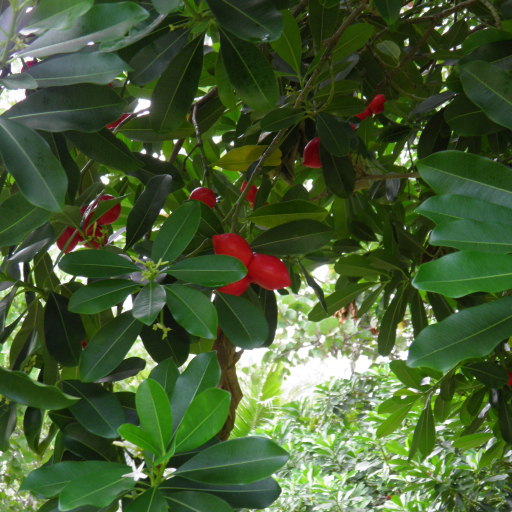
Known as the Bloodhorn or Kopsia, Ochrosia elliptica is a coastal champion that looks like it belongs in a tropical botanical illustration. Native to the shores of Australia and the Pacific Islands, this hardy evergreen is famous for its architectural foliage and striking, twin-paired red fruits that look almost too perfect to be real. It is a favorite for seaside gardeners who need a plant that can stand up to salt spray and harsh winds while still looking lush.
🔍 How to Identify
- 🍃 Whorled Leaves: The leathery, glossy dark green leaves are oval-shaped and grow in tidy "whorls" (circles) of three or four around the stem, giving the branches a very symmetrical, organized look.
- 🌼 Creamy Blooms: It produces small, star-shaped flowers that are white to pale yellow. While tiny, they release a delicate, sweet fragrance that is most noticeable on warm evenings.
- 🍒 Twin Fruits: The most iconic feature is the fruit—paired, elliptical drupes that turn a brilliant, waxy red when ripe. These fruits often grow in sets of two, resembling a pair of horns or a split heart.
🏡 In Your Garden
- 🌊 Salt Tolerance: This is one of the best choices for "front-line" coastal planting. It shrugs off salt mist and sandy soil that would wither most other ornamental shrubs.
- ✂️ Low Maintenance: Because it grows slowly and maintains a naturally rounded, compact shape, it requires very little pruning. It’s an "install and enjoy" plant, provided it has well-draining soil and plenty of sunlight.
⚠️ Safety & Toxicity
- 🚫 Non-Edible: Despite the enticing, berry-like appearance of the "Bloodhorns," the fruit is toxic and should never be eaten.
- 🧪 Irritating Sap: Like many plants in the Dogbane family, it contains a milky white latex (sap). This sap can cause skin irritation or rashes upon contact and is harmful if it gets into the eyes or is ingested by curious pets or children.
✨ Fun Fact
The name "Bloodhorn" comes directly from the fruit's vivid crimson color and its tendency to grow in curved, horn-like pairs. In its native habitats, these fruits are often dispersed by the ocean, as they are buoyant enough to float to new islands!

Detailed Care Instructions
To grow Ochrosia Elliptica, commonly known as Madagascar Ochrosia, follow these steps:
- Climate and Soil Requirements: Ochrosia Elliptica thrives in tropical and subtropical climates. It prefers well-drained soil that is rich in organic matter. Ensure the soil has a pH level of 6 to 7.
- Propagation: The most common method of propagation is through seeds. Soak the seeds in water for 24 hours before planting to improve germination.
- Planting: Plant the seeds in small pots filled with well-draining potting soil. Sow the seeds at a depth of 1 to 2 cm. Water the pots lightly after sowing.
- Light Requirements: Ochrosia Elliptica requires bright, indirect sunlight. Place the pots in a location where they receive partial shade. Avoid direct sunlight, as it can scorch the delicate leaves.
- Watering: Keep the soil consistently moist but not waterlogged. Water the plant whenever the top inch of soil feels dry. Using a well-draining soil mix and proper watering techniques will help prevent root rot.
- Fertilization: Feed the plant with a balanced fertilizer every two to three months during the growing season (spring and summer). Follow the manufacturer's instructions regarding dosage and application method.
- Pruning: Prune the plant to remove dead, damaged, or overcrowded branches. This helps maintain a healthy and attractive shape.
- Pest and Disease Control: Monitor the plant regularly for signs of pests like aphids, mealybugs, or scale insects. If detected, treat them with appropriate insecticides or insecticidal soap. Keep an eye out for common diseases like leaf spot and powdery mildew, and take necessary measures to control them.
- Transplantation: If the plant outgrows its pot or if you wish to move it to a larger location, carefully transplant it during the springtime. Handle the roots with care to avoid damage.
- Protect from Cold Temperatures: Ochrosia is susceptible to cold temperatures, so if you live in an area with cold winters, consider planting it in a pot that can be moved indoors during colder months or provide a protective covering if the plant is in the ground.
Remember to research specific care requirements for the Ochrosia Elliptica variety you are growing, as conditions may vary slightly.

Place in a bright room that is sun drenched almost all day. Or directly in a south-facing window.

Ochrosia Elliptica requires moderate watering. The soil around the plant should be kept moist but not soggy. Water the plant deeply, so the moisture reaches the roots. The frequency of watering depends on various factors such as temperature, humidity, and soil type. It is essential to check the soil before watering the plant. Stick your finger 1-2 inches into the soil; if it feels dry, it's time to water. It is better to water the plant in the morning or evening when the sun is less intense. Avoid wetting the leaves to prevent fungal diseases. Ensure that the water drains well, and the plant never sits in a pool of water. Overwatering can lead to root rot and kill the plant.
For optimal growth, fertilize the plant with a balanced fertilizer every 3 to 4 weeks during the growing season. Use a slow-release fertilizer or a liquid fertilizer diluted to half strength. Avoid over-fertilizing and always follow the manufacturer's instructions. Apply the fertilizer in the soil around the base of the plant, being careful not to get it on the leaves. Water the plant thoroughly after fertilizing.
The ideal soil for a certain plant (Ochrosia Elliptica) would be a well-draining, fertile soil with a pH level between 6.0 and 7.5. The soil should also be rich in organic matter, and able to retain moisture without becoming waterlogged. A mixture of topsoil, compost, and perlite, sand, or vermiculite can also be used to improve soil drainage and aeration. Additionally, it is recommended to add slow-release fertilizer to the soil at planting time, and to supplement with additional fertilizer throughout the growing season as needed.
Ochrosia Elliptica can be propagated through stem cuttings or seed germination. For stem cuttings, select a healthy, firm stem and cut it at a length of 6-8 inches. Remove the leaves from the bottom 2 inches of the stem and dip the cut end in rooting hormone. Plant the stem cutting in a pot filled with well-draining soil and keep it in a bright, warm location with indirect sunlight. Water the cutting regularly and mist it occasionally to maintain humidity. Within a few weeks, roots should begin to form and new growth will emerge.
For seed germination, collect the seeds from a mature Ochrosia Elliptica plant and remove any debris or pulp. Soak the seeds in water for 24 hours and then plant them in a pot filled with well-draining soil. Cover the seeds with a thin layer of soil and water lightly. Place the pot in a warm, bright location with indirect sunlight and keep the soil moist but not waterlogged. Within a few weeks, seedlings should emerge.








