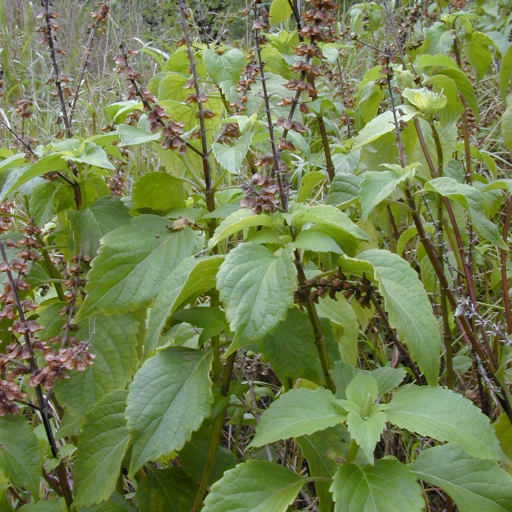
Plant Overview
Known affectionately as "Clove Basil" or "Scent Leaf," Ocimum gratissimum is a powerhouse of the aromatic world. Originating from Africa and Southern Asia, this isn't your average grocery store basil; it is a perennial shrub that commands attention with its intense, spicy fragrance. In many cultures, it is celebrated as a "miracle leaf" used in everything from spicy pepper soups to traditional healing rituals.
🔍 How to Identify
- 🍃 The Foliage: The leaves are broad, oval, and slightly fuzzy to the touch, featuring distinctively serrated (toothed) edges that set it apart from the smooth leaves of Sweet Basil.
- 🌿 Woody Structure: Unlike its delicate cousins, this plant becomes quite "leggy" and develops a woody base as it matures, growing into a tall, hardy shrub.
- 👃 The Scent Test: Crush a leaf between your fingers; you will immediately smell a heavy, warm aroma of cloves and thyme, thanks to its high eugenol content.
🏡 In Your Garden
- ☀️ Tropical Ambition: This plant is a true sun-worshipper. It thrives in high humidity and heat but is very sensitive to cold; it will drop its leaves and sulk if temperatures dip below 50°F (10°C).
- ✂️ Pinching for Bushiness: Because it naturally wants to grow tall and thin, you should regularly pinch off the tips of the stems. This forces the plant to branch out, giving you a much fuller, leafier harvest.
⚠️ Safety & Toxicity
- ✅ Status: Generally safe for human consumption and topical use.
- 🐱 Pet Safety: While traditional basil is non-toxic, the high concentration of essential oils (like eugenol) in Clove Basil can cause mild stomach upset or skin irritation in cats and dogs if consumed in large quantities.
- 👶 Child Safety: Safe to have in the garden, but the flavor is very intense and "hot," which might be unpleasant for small children if they try to snack on it.
✨ Fun Fact
In West Africa, Scent Leaf is often planted around houses as a "bio-repellent." The strong clove-like oils naturally released by the leaves are thought to help keep mosquitoes and other pesky insects at bay!

Detailed Care Instructions
| Humidity | Normal |
| Lighting | Part Sun |
| Difficulty | Medium |
To grow an Ocimum gratissimum (also known as African basil or clove basil) plant, you will need to follow these steps:
- Choose a suitable location: Ocimum gratissimum prefers full sunlight, so find a spot in your garden or balcony where it can receive at least six hours of direct sunlight every day.
- Prepare the soil: African basil thrives in well-drained soil with a slightly acidic pH (around 6.5 to 7). Amend the soil with organic matter, such as compost or aged manure, to improve its fertility and drainage.
- Sow the seeds: Start by sowing the seeds in small containers filled with seed-starting or potting mix. Plant the seeds about ¼ inch deep in the soil and keep them moist, but not waterlogged. Germination usually takes around 1-2 weeks.
- Transplanting: Once the seedlings have grown to a suitable size (around 3-4 inches tall), they can be transplanted into their permanent location. Space the plants around 12-18 inches apart to allow for proper growth.
- Watering: Ocimum gratissimum requires regular watering to keep the soil moist. However, make sure not to overwater, as this can lead to root rot. Water the plants when the top inch of soil feels dry to the touch.
- Fertilizing: Feed the plants with a balanced organic fertilizer once every 4-6 weeks during the growing season to provide the necessary nutrients for healthy growth.
- Pruning and maintenance: Regularly pinch back the growing tips and flower buds to encourage bushier growth and prevent the plant from becoming leggy. Also, remove any damaged or yellowing leaves to maintain overall plant health.
- Pest and disease control: African basil is generally resistant to many pests and diseases. However, keep an eye out for common issues like aphids, whiteflies, or fungal diseases. If necessary, use organic insecticides or fungicides to control any infestations.
- Harvesting: You can start harvesting the leaves of Ocimum gratissimum once the plant has reached a reasonable size. Harvest the leaves from the top of each stem, leaving a few sets of leaves intact to promote continued growth. The freshly harvested leaves can be used in cooking, teas, or for their medicinal properties.
By following these steps, you should be able to successfully grow an Ocimum gratissimum plant and enjoy its aromatic leaves.

Place in a bright room that is sun drenched almost all day. Or directly in a south-facing window.

Ocimum Gratissimum is a tropical plant that requires regular watering to thrive. When watering the plant, it is important to avoid over-watering as this can lead to root rot.
To water the plant, check the soil moisture level by sticking your finger into the soil up to your second knuckle. If the soil feels dry, it is time to water the plant. Water the plant slowly and deeply, allowing the water to soak into the soil.
To avoid waterlogging, water the plant until you see water begin to drain out of the bottom of the pot. This will ensure that the water reaches the bottom of the roots, promoting healthy growth.
During hot and dry periods or in direct sunlight, you may need to water the plant more frequently. If you notice the leaves of the plant beginning to wilt, it may be an indication that the plant needs more water.
It is also important to avoid getting water on the leaves of the plant as this can promote fungal growth. Water the plant at the base, aiming for the soil, and avoid getting the leaves wet.
To fertilize the Ocimum Gratissimum plant, use a balanced NPK fertilizer at half-strength every two weeks during the growing season. Avoid over-fertilization, as it can lead to burnt leaves and reduce plant health. Additionally, ensure adequate watering to prevent root burn caused by excess salts, which can accumulate with over-fertilization. Alternatively, amend the soil with organic compost to provide essential nutrients gradually and enhance soil health for optimal plant growth.
For the Ocimum Gratissimum plant, it is recommended to use soil that is well-draining and has a pH level between 6 and 7. The soil should be rich in nutrients such as nitrogen, phosphorus, and potassium. It is also important to avoid soil that is too compact or clay-like, as this may hinder the growth of the plant's roots. Additionally, adding organic matter to the soil can help improve its overall quality and fertility.
To propagate this plant, take a healthy stem cutting approximately 4-6 inches long. Make sure the cutting has at least 3-4 nodes on it. Remove the bottom 1-2 leaves and dip the cut end of the stem into a rooting hormone powder. Plant the stem in a small pot filled with well-draining soil and cover it with a plastic bag to create a humid environment. Keep the pot in a well-lit area, but avoid direct sunlight. Water the cutting sparingly to prevent rotting. In about 2-4 weeks, roots will begin to form, and the plant can be gradually acclimated to normal growing conditions.








