Plant Overview
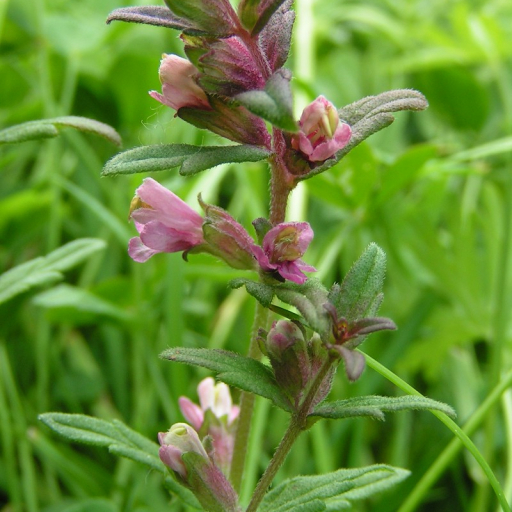
Known as "Red Bartsia," Odontites vernus is a rugged wildflower that holds a secret beneath the soil. While it looks like a typical meadow plant with its dusty-pink spikes, it is actually a "hemi-parasite," meaning it steals a portion of its nutrients from the roots of neighboring grasses. Often found lining countryside roads and sunny pastures, it is a resilient survivor that thrives where other plants might struggle.
🔍 How to Identify
- 🌸 The Flowers: Small, tubular blossoms that are typically pinkish-red or purplish. They grow in dense, one-sided spikes, meaning all the flowers face the same direction.
- 🍃 The Foliage: Narrow, lance-shaped leaves with coarsely toothed edges. In bright sunlight, the green leaves often take on a bronze or purplish hue to protect themselves.
- 🌱 The Stem: The plant grows upright and stiff, featuring fine, downward-pointing hairs that give it a slightly rough texture when touched.
🏡 In Your Garden
- 🌾 The Secret Host: Because this plant is semi-parasitic, it rarely thrives in a "clean" garden bed. It prefers to grow alongside grasses or clover, using its specialized roots (haustoria) to tap into their water and mineral supplies.
- 🚜 Disturbed Soil Lover: Red Bartsia is a pioneer species. It loves "tired" or compacted soil, often appearing in areas where the ground has been recently moved or grazed, making it a great choice for a wild, low-maintenance meadow.
⚠️ Safety & Toxicity
- ✅ Status: Generally considered non-toxic.
- 🐾 Details: There are no known records of Red Bartsia being poisonous to humans, cats, or dogs. However, because it grows in wild pastures, it is always best to ensure it hasn't been treated with roadside herbicides before letting pets near it.
✨ Fun Fact
The name Odontites is derived from the Greek word "odous," which means tooth. In ancient folk medicine, this plant was believed to be a potent remedy for toothaches, though modern dentists would likely suggest a different approach!

Detailed Care Instructions
Here are some tips on how to grow Odontites Vernus plant:
- Soil: Odontites Vernus prefers well-draining, sandy or loamy soil with a slightly acidic to neutral pH level. Add some organic matter, such as compost, to the soil before planting to improve its fertility and drainage.
- Sunlight: Plant Odontites Vernus in a sunny location where it can receive at least 6-8 hours of sunlight per day. This plant thrives in full sun conditions.
- Watering: Water the plant regularly to keep the soil consistently moist but not waterlogged. Avoid overwatering, as this can cause root rot. Watering in the morning is best to prevent diseases.
- Fertilization: Odontites Vernus does not require heavy fertilization. A light application of balanced fertilizer once a month during the growing season should be sufficient.
- Pruning: Prune the plant regularly to promote bushy growth and encourage more flowers. Deadhead spent flowers to prolong the blooming period.
- Propagation: Odontites Vernus can be propagated from seeds or by division. Sow seeds in early spring in a seed tray or directly in the garden. Transplant seedlings once they are large enough to handle. Divide mature plants in early spring or fall.
- Pests and diseases: Keep an eye out for aphids, spider mites, and powdery mildew, which can affect Odontites Vernus. Treat any infestations promptly with insecticidal soap or neem oil.
By following these tips, you can successfully grow Odontites Vernus plant in your garden or landscape.

Place in a bright room that is sun drenched almost all day. Or directly in a south-facing window.

1. Identify the plant: The first step is to correctly identify the plant, Odontites Vernus, which will help you understand its watering needs.
2. Soil type: Odontites Vernus prefers well-draining soil, which means you need to ensure the soil provides adequate drainage.
3. Frequency: The watering frequency will depend on a variety of factors such as the plant's age, local climate, and the type of soil. In general, young plants require more frequent watering than mature plants.
4. Watering method: It's best to water at the base of the plant and avoid getting water on the leaves and flowers. Using a watering can or a drip irrigation system can help you water the plant precisely.
5. Water amount: The amount of water will depend on the plant's watering needs, but it's best to water the plant until the soil is moist to touch. Avoid overwatering the plant, as it can lead to root rot.
6. Time of day: Watering in the early morning or late afternoon is ideal as it allows the plant to absorb moisture before the sun is highest and avoids evaporation.
7. Monitor: Keep an eye on the plant for signs of under or overwatering, including wilted or yellow leaves and drying soil. Adjusting watering frequency and amounts as needed will help you maintain a healthy plant.
To fertilize Odontites Vernus, apply a balanced, water-soluble fertilizer once a month during the growing season. Dilute the fertilizer according to the manufacturer's instructions and water the plant thoroughly after application. Avoid over-fertilizing as it can damage the plant.
Odontites Vernus plant is a species that can grow in a wide variety of soil types. It prefers well-draining soil that is somewhat loamy but also has some sand mixed in. The pH level of the soil should be slightly acidic, with a range of around 5.0 to 6.5. It is important to ensure that the soil is not too compacted and has good aeration. Organic matter such as compost or aged manure can be added to the soil to improve its fertility and overall health. It is also important to ensure that the soil has adequate moisture levels, especially during hot weather or long dry spells. Overall, the ideal soil type for Odontites Vernus plant is one that is well-draining, slightly acidic, and rich in organic matter.
Odontites Vernus plant can be propagated through several methods, including division, stem cuttings, and seed propagation.
To propagate Odontites Vernus plant through division, carefully dig up the plant and separate the root ball into smaller sections, ensuring each section has roots attached. Replant the divided sections in well-draining soil and water thoroughly.
To propagate Odontites Vernus plant through stem cuttings, take a cutting from a healthy stem, making sure it is at least a few inches long and has several leaves attached. Remove the lower leaves from the cutting and place it in a container filled with moist potting soil. Keep the soil consistently moist and place the cutting in a warm, bright location until roots develop.
To propagate Odontites Vernus plant through seeds, collect the seeds from mature plants and sow them in a seed-starting tray filled with a moist seed-starting mix. Cover the seeds lightly with soil and keep them consistently moist until they germinate. Once the seedlings have developed true leaves, they can be transplanted into individual pots or directly into the garden.
Regardless of the propagation method chosen, it is important to provide the newly propagated plants with adequate sunlight, water, and nutrients to ensure their successful growth and establishment.








