Plant Overview
Known as the Costa Rican Vine Fern, this elegant beauty is a true rainforest traveler. Unlike many common ferns that grow in static clumps, Oleandra costaricensis uses its wiry, scale-covered stems to "scramble" up tropical tree trunks or across the damp forest floor. It is a prized choice for terrarium enthusiasts and indoor gardeners who want to capture a prehistoric, lush jungle aesthetic in their homes.
🔍 How to Identify
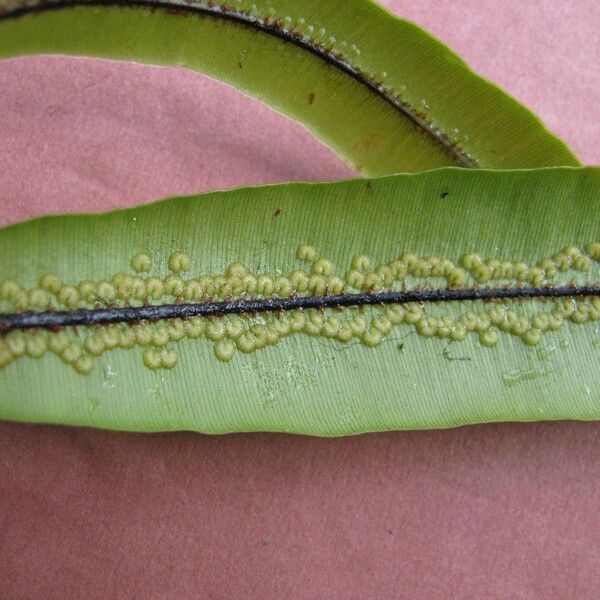
- 🌿 Frond Shape: The leaves are simple, undivided, and lance-shaped with a glossy finish and slightly wavy margins that catch the light.
- 🐍 Creeping Rhizomes: It features long, stiff, vine-like stems covered in reddish-brown scales that look remarkably like dragon skin.
- 📍 Distinct Articulation: Look for a unique "joint" or swelling where the leaf stalk (petiole) attaches to the main creeping stem, a hallmark of the Oleandra family.
🏡 In Your Garden
- ☁️ Humidity is Essential: As a native of Central American cloud forests, this fern craves high atmospheric moisture and will show its displeasure through crispy leaf edges if the air is too dry.
- 🧗 A Natural Climber: Because of its "wandering" nature, it hates being confined to a traditional deep pot; it thrives best in wide, shallow bowls or when allowed to mount a moss pole or piece of driftwood.
⚠️ Safety & Toxicity
- 🟢 Generally Safe: This fern is not known to be toxic to humans or common household pets like cats and dogs.
- 👐 Mechanical Irritation: While not chemically toxic, the stiff scales on the creeping rhizomes can be slightly abrasive to very sensitive skin if handled roughly.
✨ Fun Fact
✨ Living Fossils: The Oleandra genus belongs to an ancient lineage of ferns. Their unique growth habit—looking more like a leafy vine than a typical feathery fern—has remained largely unchanged for millions of years, surviving through eras when dinosaurs still roamed the earth!

Detailed Care Instructions








