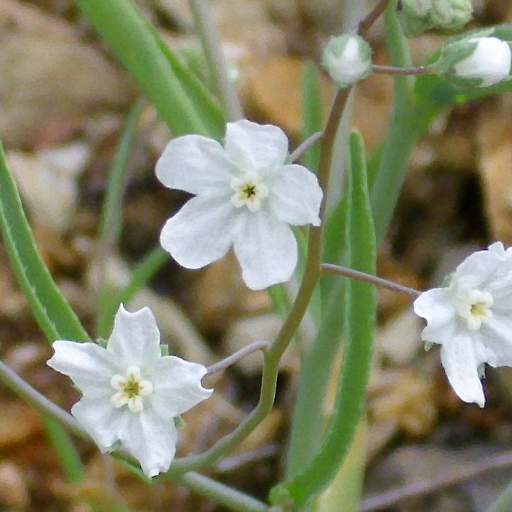
Plant Overview
Often referred to as Venus’s Looking Glass or Flax-leaved Navelwort, this Mediterranean annual is a hidden gem of the cottage garden. It is beloved for its "cool" color palette, featuring frosty, blue-gray foliage topped with sprays of tiny, star-like white flowers. While it looks delicate, it is a hardy self-seeder that brings a whimsical, airy feel to rocky borders and moon gardens.
🔍 How to Identify
- ❄️ Foliage Color: The leaves are a distinct glaucous (blue-gray or silvery) color, narrow and smooth, resembling the leaves of the flax plant.
- 🌸 Petal Structure: It produces small, five-petaled flowers that are usually pure white, though they can sometimes have a very faint tint of sky blue.
- 🌀 The "Navel" Seed: After the flowers fade, they produce unique, cup-shaped seeds with a central depression that looks remarkably like a human navel.
🏡 In Your Garden
- 🌱 Naturalizing Habit: Because this is a short-lived annual, it relies on "self-sowing." It prefers to drop its seeds in the cracks of pavers or gravel paths, popping up in unexpected but charming places the following spring.
- ☀️ Cool Temperament: While it enjoys the sun, it actually prefers "cool" sunlight. In very hot climates, it may fizzle out by mid-summer, so planting it near taller perennials that provide light afternoon shade can extend its blooming season.
⚠️ Safety & Toxicity
- ✅ Status: Generally considered non-toxic.
- 🐾 Details: There are no widespread reports of toxicity to dogs, cats, or horses. However, as with any ornamental plant, it is best to discourage pets from munching on it to avoid minor stomach upset.
✨ Fun Fact
The name Omphalodes is derived from the Greek word omphalos, which means "navel." This refers to the peculiar shape of the seeds, which early botanists thought looked exactly like a belly button!

Detailed Care Instructions
To grow Omphalodes Linifolia, also known as Venus's Navelwort, follow these steps:
- Choose the right location: Venus's Navelwort prefers a partially shaded area, preferably with morning sun and afternoon shade. It is a versatile plant and can also tolerate full shade.
- Soil preparation: This plant prefers well-draining soil with plenty of organic matter. Prepare the soil by adding compost or well-rotted manure to improve fertility and drainage.
- Sowing seeds: You can start Omphalodes Linifolia from seeds. Sow the seeds in early spring or early autumn. Make sure the seeds are buried at a depth of around 1/8 of an inch (3mm) and spaced at least 6-8 inches (15-20 cm) apart.
- Watering: Keep the soil moderately moist but not waterlogged. Water the plant regularly, especially during dry spells. Avoid overwatering, as it can lead to root rot.
- Mulching: Apply a layer of organic mulch around the plant to conserve moisture and suppress weeds. This will also help maintain a stable soil temperature.
- Pruning: Omphalodes Linifolia is a low-growing perennial plant that requires minimal pruning. However, you can remove any faded or dead flowers to encourage continuous blooming.
- Fertilizing: Apply a balanced, slow-release fertilizer in early spring to promote healthy growth. Avoid over-fertilizing as it can lead to excessive foliage growth at the expense of flower production.
- Pests and diseases: Venus's Navelwort is generally resistant to pests and diseases. However, keep an eye out for slug and snail damage, particularly when the plant is still young. You can manually remove these pests or use organic slug control methods if necessary.
- Division: Over time, Omphalodes Linifolia can clump and spread. To control its growth or propagate new plants, you can divide the clumps in early spring or early autumn. Dig up the clump and gently separate the roots, then replant them in desired locations.
- Winter care: Venus's Navelwort is generally hardy and can tolerate cold temperatures. However, in extremely cold regions, you can protect the plant by applying a layer of mulch or straw around the base in late autumn.
By following these guidelines, you should be able to grow Omphalodes Linifolia successfully and enjoy its beautiful blue flowers in your garden.
Omphalodes Linifolia plant needs to be watered regularly to ensure its healthy growth. The best way to water this plant is to keep the soil evenly moist. To achieve this, the soil should be checked regularly to see whether it is dry or not. The plant should be watered when the soil feels dry to the touch. When watering, make sure to water the soil thoroughly, ensuring water drains through the pot's holes. Avoid overwatering, as this can lead to root rot. During the summer months, when the plant's growth is at its peak, it may require more frequent watering. In contrast, during the winter months, when the plant's growth slows down, it can be watered less frequently. Overall, it's essential to monitor the plant's soil moisture levels regularly to ensure it stays healthy.
To properly fertilize this plant, start by first analyzing the soil type and pH levels. Use a slow-release fertilizer with a balanced mix of nitrogen, phosphorus, and potassium. Apply the fertilizer at the base of the plant, making sure not to touch the stem or leaves. Water the plant thoroughly after fertilization. Repeat the process once every three months during the growing season. Avoid over-fertilizing, as this could lead to burnout or damage to the plant.
When planting the Omphalodes Linifolia plant, it is important to choose the appropriate type of soil to ensure optimal growth and health. The ideal soil for this plant is one that is well-draining and rich in organic matter. It is best to use a soil mix that contains a combination of sand, perlite, and peat moss or compost.
The pH level of the soil should be slightly acidic, with a range between 5.5 and 6.5. This can be achieved by adding organic matter such as pine needles or sphagnum peat moss to the soil mix. The soil should also be kept moist but not waterlogged, as excessive moisture can lead to root rot.
It is recommended to amend the soil with a slow-release fertilizer before planting, as this will provide the necessary nutrients for the plant to thrive. Additionally, adding a layer of mulch around the base of the plant can help to retain moisture and suppress weeds.
Overall, choosing the right soil for the Omphalodes Linifolia plant is essential for ensuring healthy growth and a bountiful display of delicate blue flowers.
To propagate this plant, you will need to collect seeds or take stem cuttings. If collecting seeds, wait until the plant has finished flowering and the seed pods have turned brown and dry. Harvest the pods and carefully extract the seeds. You can then sow the seeds directly into soil or start them in a germination tray.
To take stem cuttings, select a healthy stem that is free of disease or damage. Cut a section of the stem that is about 4-6 inches long and remove any leaves from the bottom half of the stem. Dip the cut end of the stem into rooting hormone powder and plant it in moist potting soil. Keep the soil moist and place the pot in a sunny area.
Roots should start to form in a few weeks, at which point you can transplant the new plant into a larger container or outdoor garden bed. With proper care and maintenance, your propagated Omphalodes Linifolia plant should thrive and continue to grow.








