Plant Overview
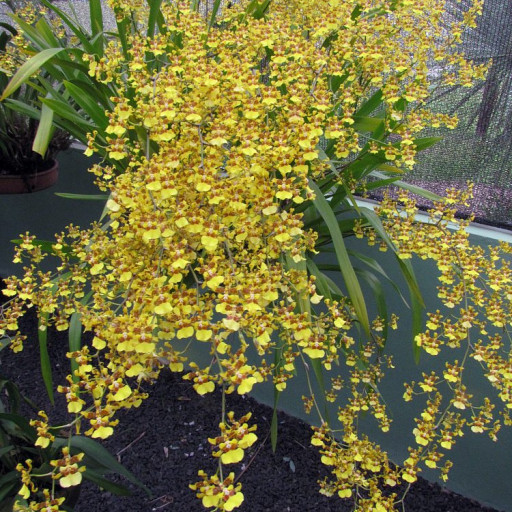
Often called the "Kandyan Dancer Orchid" or the "Golden Shower Orchid," this species is a true showstopper in any collection. Native to the tropical forests of Mexico and Central America, it produces towering, branched sprays that can hold hundreds of tiny, vibrant yellow flowers at once. It’s a favorite for its sheer vigor and the way its floral displays seem to "dance" with the slightest breeze.
🔍 How to Identify
- 🌸 Floral Shower: It produces massive, arching flower spikes that can reach up to 5 or 6 feet in length, covered in dozens of 1-inch blossoms.
- 👗 The Dancer’s Skirt: Each flower features a large, bright yellow "lip" that resembles a flared skirt, accented by intricate reddish-brown tiger stripes on the upper petals.
- 🧅 Compressed Pseudobulbs: The plant grows from large, flattened, egg-shaped bulbs that store water. These are topped with two or three long, strap-like, leathery green leaves.
🏡 In Your Garden
- ☀️ Light Craver: This orchid is a sun-lover compared to its cousins. It thrives in very bright, filtered light. If the leaves are a healthy "apple green," the light is perfect; dark green leaves suggest it needs more sun to bloom.
- 🌬️ Airflow Enthusiast: As an epiphyte (a plant that grows on trees), its roots are designed to breathe. It hates "wet feet" and should be grown in a coarse bark mix or mounted on wood to ensure the roots dry out quickly after watering.
⚠️ Safety & Toxicity
- ✅ Non-Toxic: Oncidium sphacelatum is generally considered safe and non-toxic for both cats and dogs, making it a "pet-friendly" choice for indoor gardeners.
- 👶 Keep Out of Reach: While not poisonous, the small, delicate flowers can be a choking hazard for curious toddlers, and the sap may occasionally cause mild skin irritation for those with sensitive skin.
✨ Fun Fact
The name "Kandyan Dancer" comes from Sri Lanka, where the flower’s unique shape—a broad yellow "skirt" and outstretched "arms"—perfectly mimics the traditional costume and energetic movements of the famous Kandyan dancers.

Detailed Care Instructions
| Humidity | High |
| Lighting | Full Sun |
| Difficulty | Medium |
| Temperature | 21°C - 27°C |
| Hardiness Zones | 11 - 11 |
To grow an Oncidium Sphacelatum plant, you can follow these steps:
- Choose the right location: Oncidium Sphacelatum plants thrive in bright but indirect light. Place them near a window where they can receive bright but filtered sunlight. Avoid direct sunlight, as it can scorch the leaves.
- Provide the right temperature: This orchid variety prefers temperatures between 55 to 80°F (13 to 27°C) during the day and slightly cooler temperatures at night. Avoid extreme temperature fluctuations.
- Use an appropriate potting mix: Plant your Oncidium Sphacelatum in a well-draining potting mix. A mix of orchid bark, perlite, and sphagnum moss works well. Avoid using regular potting soil, as it retains too much moisture.
- Watering routine: These plants prefer to be kept evenly moist but not wet. Avoid overwatering, as it can lead to root rot. Water the plant thoroughly when the top inch of soil feels dry, and allow excess water to drain away.
- Humidity: Oncidium Sphacelatum plants appreciate higher humidity levels. You can increase humidity by placing a tray of water near the plant or using a humidifier.
- Fertilization: Use a balanced orchid fertilizer diluted to half strength, and apply it every two weeks during the growing season (spring and summer). Reduce fertilization in fall and winter.
- Repotting: Repot your Oncidium Sphacelatum plant every 1-2 years, or when the pot becomes crowded. Use a slightly larger pot and fresh potting mix during repotting.
- Provide proper airflow: Enough air movement is essential to prevent fungal or bacterial diseases. Ensure good ventilation around the plant, but avoid placing it in drafty areas.
- Regular maintenance: Keep an eye out for pests like aphids, mealybugs, or spider mites. Inspect the plant regularly and treat any infestations promptly.
By following these steps, you should be able to successfully grow an Oncidium Sphacelatum plant. Remember, each plant has its own specific needs, so observing your plant's growth and making any necessary adjustments is crucial for its well-being.

Place in a window with dappled sun or a spot in the middle of a room. Or directly in a window facing west or east.

To water this plant, first ensure that the soil is completely dry before watering. Then, fill the pot with water to the point that it reaches just below the top of the soil. Allow the water to soak into the soil completely, then drain any excess water from the bottom of the pot. Repeat this process only when the soil has become completely dry again. Avoid getting water on the leaves or flowers of the plant as this could lead to rot or disease.
Fertilize the plant regularly with a balanced orchid fertilizer, following the manufacturer's instructions. During the growing season, feed every two weeks and reduce to once a month during the dormant season. Avoid using fertilizer on dry soil, and always water the plant before fertilizing.
Oncidium Sphacelatum plant is a type of orchid that requires a specific type of soil. It is recommended to use a well-draining and airy soil mixture that consists of materials such as bark chips, sphagnum moss, perlite, and charcoal. This type of soil allows for proper air circulation, which is essential for the plant's root system to thrive. Additionally, the composition of the soil mixture should be coarse in texture, allowing water to drain quickly to avoid the roots from becoming waterlogged. A balanced fertilizer can also be added to the soil mixture to provide nutrients for the plant. Overall, the soil used for Oncidium Sphacelatum plant should provide ample aeration, drainage, and nutrient availability to promote healthy growth.
The propagation of this plant can be done through different methods such as division, bulb offsets, and stem cuttings. The most commonly used method is division, which involves separating the plant into several smaller sections, each with a healthy root system. This should be done during the plant's dormancy period, which is usually in the fall or early winter.
To propagate this plant through division, carefully remove it from its pot and gently shake off any excess soil. Inspect the plant for any damaged or dead roots, and trim them off with sharp, sterile scissors. Next, use a clean, sharp knife to carefully slice the plant into several sections, making sure each section has at least one healthy new growth and several strong roots.
After dividing the plant, repot each section into a clean, well-draining potting mix. Water the newly potted divisions well, and then keep them in a warm, humid location with bright, indirect light. Be sure to keep the soil moist, but not waterlogged, until new growth and roots have been established.
Propagation through bulb offsets is also an option. Simply remove the small, new bulbs that form around the base of the plant and replant them into their own pots. Finally, propagation through stem cuttings can be done by carefully cutting a healthy stem with at least one node and several leaves, dipping the cut end in rooting hormone, and planting it in a moist, well-draining potting mix. Keep the cutting out of direct sunlight until it has rooted.
Common pests of the kandyan dancer orchid include Scale insect, mealybugs, spider mites, thrips. Make a habit of checking your kandyan dancer orchid frequently for pests so that any infestations can be caught and managed early.








