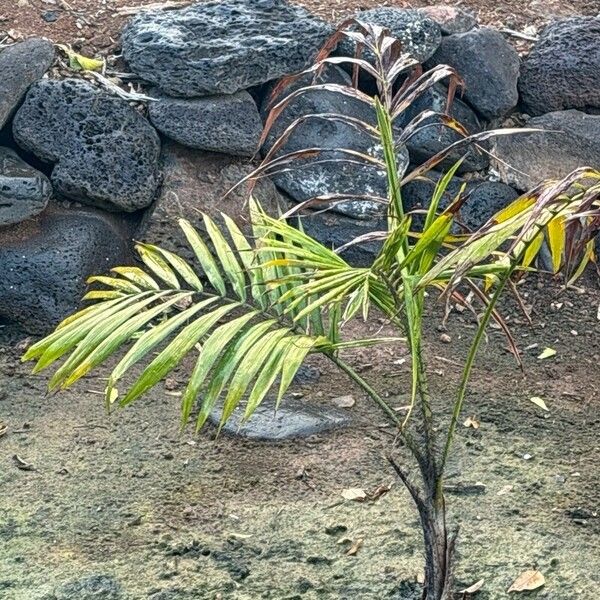
Plant Overview
Known as the Nibung palm across Southeast Asia, this dramatic clumping palm looks like a sentinel from a prehistoric era. Its slender, towering trunks are famously armored with a dense coat of needle-sharp, jet-black spines that give it a "don't touch" reputation. In its native habitat, it is a symbol of resilience and unity, often found standing tall in coastal swamps where other trees might falter.
🔍 How to Identify
- 🖤 The Spines: The most striking feature is the trunk, which is covered in long, flat, downward-pointing black spines. These can grow several inches long and are incredibly sharp.
- 🌴 Clumping Habit: Unlike many solitary palms, the Nibung grows in clusters (cespitose), with multiple thin trunks emerging from a single base to create a dense, vertical thicket.
- 🍃 Drooping Fronds: The leaves are large, feathery (pinnate), and have a distinct weeping or drooping appearance at the tips, giving the crown a soft, graceful silhouette that contrasts with the spiky trunk.
🏡 In Your Garden
- 🌊 Salt & Water Specialist: This palm is one of the few that thrives with "wet feet." In nature, it grows on the landward side of mangroves, meaning it loves high humidity and can tolerate brackish (salty) water and heavy, clay-like soils.
- 🏗️ Spatial Planning: Because it forms a large, thorny clump, this is not a plant for narrow walkways or small patios. It needs a dedicated corner where its defensive spines won't snag passing clothes or skin. It’s best used as a dramatic focal point or a "living security fence."
⚠️ Safety & Toxicity
- ⚔️ Physical Hazard: The primary danger is mechanical. The spines are brittle and can easily break off in the skin, leading to painful irritation or infection if not removed carefully.
- 🐕 Pets & Children: This plant is generally considered non-toxic if nibbled, but the spines pose a significant risk of eye or skin injury. It is highly recommended to plant it well out of reach of curious toddlers or energetic pets.
✨ Fun Fact
The wood of the Nibung is incredibly hard and resistant to saltwater rot and termites. For centuries, traditional coastal builders have used these spiny trunks as the primary stilts for houses built over the ocean (kelongs) because the wood can last decades submerged in the sea!

Detailed Care Instructions







