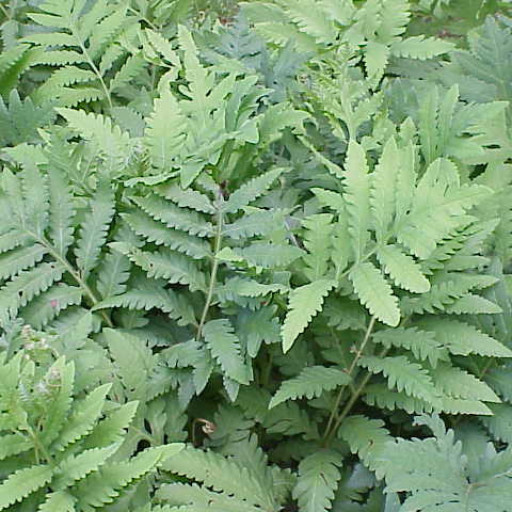
Plant Overview
Often called the Sensitive Fern or the Bead Fern, Onoclea sensibilis is a prehistoric-looking beauty that acts as nature’s early-warning system. It earned its primary nickname because its lush green fronds are incredibly sensitive to the first whisper of autumn frost, turning brown and curling up almost overnight while the rest of the forest remains green.
🔍 How to Identify
- 🌿 The Sterile Fronds: These are the large, leathery, "leafy" parts. They are a bright, almost yellowish-green with deeply lobed, wavy edges that look like a simplified, hand-drawn oak leaf.
- 📿 The Fertile Fronds: These look completely different from the leaves. They appear as stiff, upright, brownish stalks topped with tiny, bead-like clusters that protect the spores.
- 🪵 The Growth Habit: It grows in distinct clumps but spreads via creeping underground stems (rhizomes), often creating a lush, prehistoric carpet across damp ground.
🏡 In Your Garden
- 💧 The Mud Lover: This fern doesn't just like water; it thrives in "wet feet" conditions. It is the perfect candidate for those soggy, low spots in your yard or the edges of a backyard pond where other plants might drown.
- 🌳 Sun and Shade: While it loves deep shade, it is surprisingly sun-tolerant as long as the soil stays consistently wet. If the soil dries out, however, the plant will quickly wilt and enter dormancy.
- 🧤 The Spreader: Give it room to roam. Because of its aggressive rhizomes, it is excellent for ground cover in large areas but might outcompete delicate neighbors in a small, tidy flower bed.
⚠️ Safety & Toxicity
- 🟢 General Safety: This fern is non-toxic to humans and common household pets like cats and dogs. It is safe to handle and plant in areas where children play.
- 🐴 Equine Warning: It is specifically toxic to horses if consumed in large quantities (usually when dried and mixed into hay). It contains an enzyme called thiaminase which can lead to Vitamin B1 deficiency in grazing livestock.
✨ Fun Fact
- 🦖 A Living Fossil: Onoclea sensibilis is a true survivor. Fossil records show that this exact species has remained virtually unchanged for over 60 million years, meaning it looked exactly the same when the last dinosaurs were roaming the earth!

Detailed Care Instructions
| Humidity | High |
| Lighting | Part Sun |
| Difficulty | Medium |
| Temperature | 5°C - 25°C |
| Hardiness Zones | 4A - 9B |
To grow Onoclea Sensibilis (sensitive fern) plants, follow these steps:
- Choose the right location: Sensitive ferns prefer growing in partially shaded areas or in dappled sunlight. They thrive in moist and acidic soils with good drainage.
- Prepare the soil: Loosen the soil and remove any weeds or debris. Add organic matter, such as compost or well-rotted manure, to improve soil fertility and moisture retention.
- Plant the ferns: Dig a hole that accommodates the root ball of the fern. Place the plant in the hole and make sure the top of the root ball is level with or slightly above the soil surface. Backfill the hole with soil and gently firm it around the plant.
- Water the ferns: Sensitive ferns require consistent moisture. Water the plants thoroughly after planting and keep the soil consistently moist but not waterlogged. Mulching around the plants can help retain moisture.
- Fertilize sparingly: Sensitive ferns typically do not require regular fertilization if planted in nutrient-rich soil. However, you can apply a balanced, slow-release fertilizer in early spring to promote healthy growth.
- Prune as needed: Remove any dead or damaged fronds (leaves) as they appear. This will help maintain the plant's appearance and health.
- Protect from extreme temperatures: Sensitive ferns are hardy in USDA zones 3-8. In colder climates, provide a layer of mulch around the plants in the fall to protect the roots from freezing.
- Propagation: If you want to propagate more sensitive ferns, you can divide mature plants in spring or early fall. Carefully dig up the plant and cut the root ball into smaller sections, ensuring each division has some healthy roots attached. Replant the divisions and water well.
By following these steps and providing the sensitive fern with the right conditions, you can successfully grow and enjoy this beautiful ornamental plant.

Place in a window with dappled sun or a spot in the middle of a room. Or directly in a window facing west or east.

Onoclea Sensibilis plant requires a consistent schedule for watering to thrive. It is important to keep the soil moist but not waterlogged, as this may lead to root rot. The amount of water needed will vary depending on environmental conditions such as temperature, humidity, and sunlight.
The best way to water this plant is to use a watering can or hose with a spray nozzle to avoid damaging its delicate foliage. Water directly at the base of the plant, making sure to saturate the soil evenly. It is recommended to water deeply once a week, but this may need to be adjusted based on the plant’s individual needs.
It is also important to avoid watering the leaves as this can lead to fungal growth. Instead, focus on watering the soil around the plant. In addition, using room-temperature water rather than cold water can help prevent shock to the plant’s root system.
Overall, keeping a consistent watering schedule and paying attention to the plant’s individual needs will help ensure the Onoclea Sensibilis plant remains healthy and beautiful.
The Onoclea Sensibilis plant should be fertilized with a balanced fertilizer in the early spring before new growth appears. Use the recommended amount of fertilizer according to the package instructions. During the growing season, the plant should be fertilized every two to three weeks with a water-soluble fertilizer. Be careful not to over-fertilize as this can damage the plant.
Onoclea Sensibilis plant prefers moist and rich soil that is well-draining and slightly acidic. It grows well in soil that is rich in organic matter such as compost or peat moss. The soil should also be able to hold moisture without becoming waterlogged. It is important to avoid heavy clay soils or soils that dry out quickly. Adding a layer of mulch around the base of the plant can help to retain moisture in the soil and protect the roots from temperature fluctuations. Overall, a soil that is balanced and provides the plant with adequate nutrients will help to ensure healthy growth.
Onoclea Sensibilis plant can be propagated through spores or by division.
To propagate through spores, the sporangia should be allowed to mature until they turn brown or black. They can then be collected, separated from the plant, and sown on a suitable substrate, such as peat moss or a mixture of peat moss and sand. Keep the substrate moist and cover it with a plastic bag or lid to maintain humidity. Spore germination can take a few weeks to a few months, depending on temperature and humidity.
To propagate through division, the plant should be lifted from the soil and the root ball carefully separated into smaller sections, each with a few fronds and healthy roots. Replant each section in a suitable pot or location with well-draining soil and keep it well-watered until it establishes.
Both propagation methods may require patience and attention to detail, but they can yield healthy new plants that are genetically identical to the parent plant.
Common pests of the sensitive fern include Aphids. Make a habit of checking your sensitive fern frequently for pests so that any infestations can be caught and managed early.








