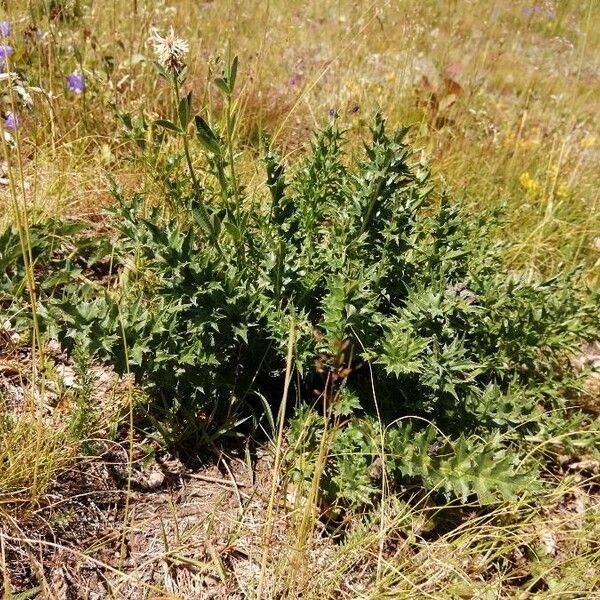
Plant Overview
Known as the "Horrid Thistle," Onopordum horridum is the dramatic, silver-armored giant of the Mediterranean landscape. Despite its intimidating name—which refers to its formidable, needle-like spines—it is a masterpiece of architectural beauty. Often used in xeriscaping to create a "living fence," this plant stands like a silver sentry, guarding the garden with a crown of vibrant purple flowers.
🔍 How to Identify
- ⚔️ Spiny Foliage: The leaves are large, deeply lobed, and covered in a silvery-white "felt" that protects them from the sun. Every leaf tip ends in a sharp, yellowish spine.
- 🌸 Architectural Blooms: In its second year, it produces massive, globe-shaped flower heads of electric purple or magenta, surrounded by a "nest" of spiky, recurved bracts.
- 📏 Winged Stems: The tall, sturdy stalks are uniquely "winged"—meaning the leaf tissue continues down the stem, creating a jagged, ruffled appearance all the way to the ground.
🏡 In Your Garden
- 🏜️ Thrives on Neglect: This thistle is a specialist in poor, rocky soil. It actually prefers "lean" ground; if the soil is too rich or over-fertilized, the plant may grow too fast and collapse under its own weight.
- ☀️ The Taproot Factor: Like many of its cousins, it develops a deep, sturdy taproot to find water in droughts. This means it is nearly impossible to transplant once established, so choose its permanent "forever home" carefully.
- 🐝 Pollinator Sanctuary: While it may look hostile to humans, it is a paradise for wildlife. It is one of the highest-rated nectar producers for bumblebees and butterflies in arid climates.
⚠️ Safety & Toxicity
- 🌵 Mechanical Danger: While the plant is not known to be chemically toxic to humans or pets, it is physically hazardous. The spines are incredibly sharp and can easily pierce through standard gardening gloves.
- 🛡️ Pet & Child Safety: It is best planted at the back of a border or in restricted areas where children and pets won't accidentally run into it. Handling the plant requires heavy-duty leather gauntlets.
✨ Fun Fact
The genus name Onopordum has a hilarious origin: it translates from Ancient Greek as "donkey fart." It was a common belief in antiquity that donkeys who grazed on these prickly plants would suffer from intense flatulence!

Detailed Care Instructions








