Plant Overview
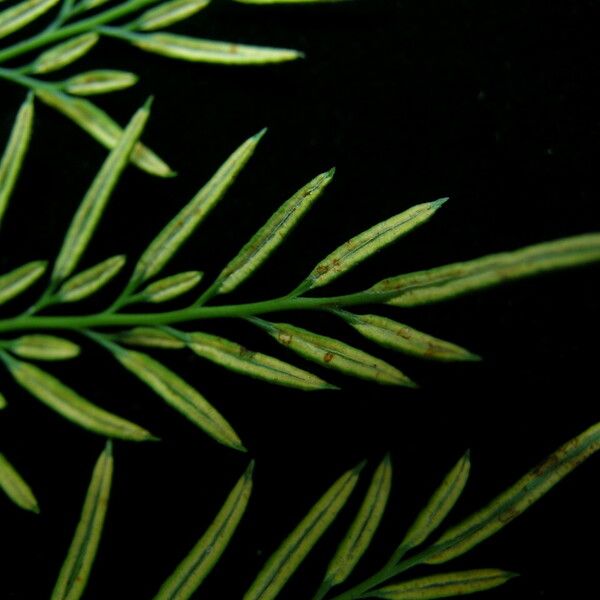
Often called the Golden Claw Fern, this delicate species looks like a piece of intricate Victorian lace dropped onto a forest floor. Native to the rocky slopes and sunny edges of tropical Asia, it is a favorite among fern enthusiasts for its unusually bright "glow." While most ferns stay strictly green, the Onychium siliculosum hides a shimmering secret of gold and yellow beneath its airy foliage.
🔍 How to Identify
- 🌿 Finely Divided Fronds: The leaves are "multi-pinnate," meaning they are divided into tiny, narrow segments that give the plant a feathery, cloud-like appearance.
- ✨ Golden Sori: On the underside of the fertile fronds, you will find striking yellow-to-orange spore cases (sori) arranged along the margins, giving the plant its "Golden" nickname.
- 📐 Upright Habit: Unlike weeping ferns, this species grows in elegant, upright clumps, usually reaching about 12 to 24 inches in height.
🏡 In Your Garden
- 🪨 The "Rock Star": In the wild, this fern often clings to limestone cliffs and rocky banks. In your home, it prefers a well-draining "gritty" mix rather than heavy, soggy potting soil. It hates "wet feet" and will suffer if the roots cannot breathe.
- ☀️ Light Seekers: While most ferns hide in the deep dark, the Golden Claw Fern enjoys brighter indirect light than its cousins. This extra light helps the golden spores develop their vibrant, sunny color.
⚠️ Safety & Toxicity
- 🐾 Pet Safe: Good news for pet parents! This fern is generally considered non-toxic to cats and dogs, making it a beautiful, worry-free addition to a low shelf or plant stand.
- 👶 Gentle Foliage: It lacks thorns, prickles, or irritating saps, so it is safe to handle for gardeners of all ages. However, like all ornamental plants, it should not be ingested.
✨ Fun Fact
The genus name Onychium is derived from the Greek word onyx, meaning "claw." This refers to the tiny, claw-like appearance of the fertile leaf segments that curl inward to protect the developing golden spores!

Detailed Care Instructions








