Plant Overview
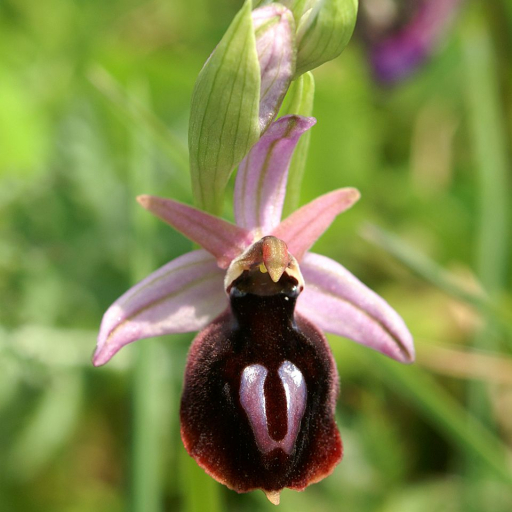
Often called the Horseshoe Bee Orchid, this Mediterranean marvel is one of nature’s most clever tricksters. Found clinging to rocky hillsides and sunny grasslands from Greece to Turkey, it gets its name from the distinct, iridescent marking on its central petal. It is famous in the botanical world for its "femme fatale" strategy—mimicking the scent and appearance of female bees to lure in unsuspecting males for pollination.
🔍 How to Identify
- 🧲 The Horseshoe Mark: The most striking feature is a silvery-blue or lead-gray pattern on the dark, velvety lip (labellum) that looks exactly like a shining horseshoe or the letter "U."
- 🌸 Colorful Sepals: The three outer sepals are typically a vibrant pink or deep purple, though they can occasionally appear white, providing a bright contrast to the dark center.
- 🐝 The Mimic Lip: The central petal is wide, rounded, and covered in fine, brownish hairs, perfectly imitating the abdomen of a pollinating insect.
🏡 In Your Garden & Habitat
- ⛰️ Wild at Heart: In nature, these orchids thrive in "garrigue" and "phrygana"—open, scrubby Mediterranean landscapes with thin, lime-rich (calcareous) soils and plenty of winter rain.
- 🍄 Fungal Friendships: Like most wild orchids, this plant survives through a complex partnership with underground fungi. Because it relies on these specific soil microbes for nutrients, it is notoriously difficult to grow in a standard garden and almost never survives being transplanted.
- ☀️ Sun Seeker: It prefers full sun to light dappled shade, popping up in early spring before the intense heat of the Mediterranean summer turns the landscape brown.
⚠️ Safety & Toxicity
- 🛡️ Safe but Sensitive: Ophrys ferrum-equinum is not known to be toxic to humans, dogs, or cats. It possesses no thorns or stinging hairs.
- 🚫 Look, Don't Touch: While safe to touch, these orchids are legally protected in many regions. Digging them up is often a crime and a death sentence for the plant, as their root systems are fragile and highly specialized to their native soil.
✨ Fun Fact
The genus name Ophrys is derived from the Greek word for "eyebrow." It is said that in ancient times, these plants were used to create a natural dye for darkening eyebrows, though today we value them much more for their incredible "pseudocopulation" pollination tactics!

Detailed Care Instructions








