Plant Overview
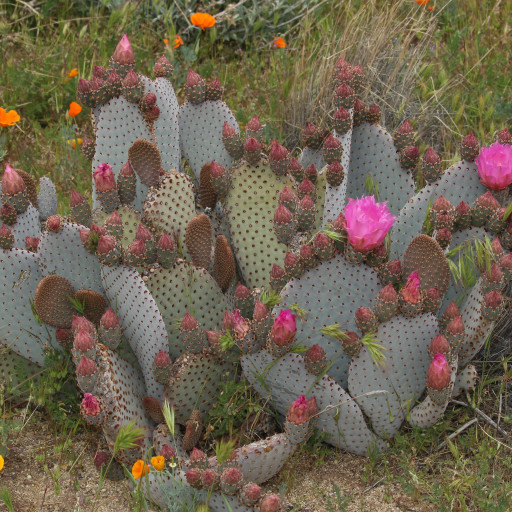
Often called the Beavertail Cactus, this desert gem looks as if it were painted with a dusty, pastel palette. Native to the arid landscapes of the Southwest United States and Northwest Mexico, it is a favorite for rock gardens because it stays relatively low to the ground and produces some of the most electric-pink flowers in the botanical world. Its velvety, blue-gray pads give it a deceptively soft appearance that hides a very clever defense mechanism.
🔍 How to Identify
- 🦫 The Pads: Flat, fleshy, and shaped exactly like a beaver's tail. They are typically a grayish-blue or sage green but can blush a deep, striking purple during cold winters or periods of drought.
- 🌸 The Bloom: Large, brilliant magenta or rose-pink flowers emerge from the upper edges of the pads in late spring, followed by small, spineless brownish fruits.
- 🚫 Spine-Free Look: Unlike most prickly pears, the Beavertail lacks the long, intimidating needles we usually associate with cacti, giving it a smooth, "naked" look from a distance.
🏡 In Your Garden
- ☀️ Sun Worshiper: This cactus craves intense, direct light. If grown indoors or in shade, the pads will "stretch" and become thin and weak, losing their signature beaver-tail shape.
- 🏜️ Drainage is Vital: In the wild, it thrives in rocky washes. In a garden or pot, it "hates wet feet" and will rot quickly in heavy clay soil. Always use a gritty, sandy cactus mix and a pot with plenty of drainage holes.
- 🌬️ Cold Hardy: It is surprisingly tough and can handle much colder temperatures than many tropical succulents, provided the soil stays bone-dry during the winter months.
⚠️ Safety & Toxicity
- 🧤 The Glochid Warning: Do not be fooled by the lack of long spines! The "spots" on the pads are packed with glochids—thousands of microscopic, barbed hairs. If touched, these lodge into the skin, causing persistent itching and irritation.
- 🐾 Pets & Kids: While not chemically toxic if nibbled, the glochids are a major hazard for curious noses, paws, and fingers. It is best planted in a "look but don't touch" area away from walkways.
✨ Fun Fact
Native American tribes, such as the Cahuilla, used the Beavertail as a versatile resource. They would carefully singe off the irritating bristles and then boil or fry the pads to be eaten like green beans, while the seeds were often ground into a nutritious meal or mush.

Detailed Care Instructions
To grow Opuntia basilaris, also known as beavertail cactus, you should consider the following steps:
- Choose a suitable location: Opuntia basilaris prefers full sun but can tolerate partial shade. It is native to desert regions, so it thrives in well-draining soil with low to moderate fertility.
- Soil preparation: Before planting, make sure the soil is sandy or loamy and has good drainage. If the soil is heavy or compacted, amend it with sand, perlite, or other organic matter to improve drainage.
- Planting: Dig a hole that is slightly wider and deeper than the cactus pad or cutting. Handle the pads or cuttings carefully, as they can have sharp spines. Place the pad or cutting in the hole and backfill with soil, gently pressing it down to ensure good contact. Do not water the cactus immediately after planting.
- Watering: Opuntia basilaris is a drought-tolerant plant and should be watered sparingly. Allow the soil to dry out between waterings, as overwatering can lead to root rot.
- Mulching: Apply a layer of organic mulch around the base of the cactus to help conserve moisture, suppress weeds, and protect the roots from extreme temperatures. Avoid placing mulch directly against the stems or pads to prevent rotting.
- Fertilization: Opuntia basilaris generally does not require fertilization, as it can obtain nutrients from the soil. However, if you want to promote growth or flowering, you can apply a balanced, low-nitrogen fertilizer once or twice a year in spring and/or late summer.
- Pruning: Prune Opuntia basilaris sparingly, removing damaged or diseased pads with clean and sterilized tools. Be cautious of the spines, and wear protective gloves. Pruning can be done in early spring before new growth emerges.
- Propagation: Opuntia basilaris can be propagated from cuttings. Allow the cuttings to dry out for a few days before planting them in well-draining soil. Water very sparingly until roots develop.
- Winter care: Opuntia basilaris is cold-hardy and can tolerate temperatures as low as -10°F (-23°C). However, in colder regions, protecting the cactus from excessive moisture during winter is essential. Cover the plant with a frost cloth or move it indoors if temperatures are expected to drop below its tolerance level.
Remember to always handle Opuntia basilaris with care due to its spines. It is also beneficial to research specific guidelines for cacti care in your region or consult with local horticultural experts for customized advice.

Place in a bright room that is sun drenched almost all day. Or directly in a south-facing window.

Here are some instructions on how to water a specific plant without using its common name:
1. Determine the watering needs of the plant: Opuntia Basilaris thrives in arid to semi-arid climates and prefers well-draining soil.
2. Check the soil moisture level: Before watering, stick a finger into the soil (up to your second knuckle). If the soil feels dry, it's time to water.
3. Water sparingly: Opuntia Basilaris is drought-tolerant, so it doesn't need frequent watering. Water deeply once every few weeks, or whenever the soil feels dry. Avoid over-watering, which can lead to root rot.
4. Use the right watering technique: Water the soil around the base of the plant, rather than directly onto the plant itself. This prevents water from becoming trapped in the nooks and crannies of the plant's spines and causing damage.
5. Adjust watering based on the season: During the winter months, when the plant is dormant, it will need less water. Increase watering in the spring and summer, when the plant is actively growing.
6. Monitor the plant's condition: Watch for signs of over-watering, such as yellowing leaves or a mushy stem. If this occurs, reduce watering or re-pot the plant into a better-draining soil mix.
To properly fertilize this species of plant, use a well-balanced fertilizer with equal parts nitrogen, phosphorus, and potassium. Apply the fertilizer in the early spring and again in the late summer, using a slow-release fertilizer that will be gentle on the plant. Be sure to water the plant well before and after applying the fertilizer, and avoid over-fertilizing, which can cause damage. Additionally, avoid using fertilizer on the leaves or stems of the plant, as this can cause burns or damage.
The best type of soil to use for this plant is a well-draining soil that has a pH level between 6.0 and 7.5. It should be a sandy soil that has good drainage, as this species of plant does not do well in soils that are constantly wet. The soil should be nutrient-rich, and should be amended with a mix of organic matter and perlite or sand to ensure it has good drainage. It is important to avoid overwatering the plant, as this can lead to root rot and other issues. During the growing season, the plants should be watered deeply once a week, and the soil should be allowed to dry out between waterings. During the dormant season, the plant should be watered sparingly.
To propagate this plant, take a cutting from the mature plant by carefully removing a section of stem with a sharp, sterile knife. Allow the cutting to callus over for a few days to prevent rotting, then plant it in well-draining soil. Water the cutting lightly and place it in bright, indirect sunlight. Keep the soil moist but not soggy, and avoid overwatering. With proper care, the cutting will develop roots and begin to grow into a new plant.
Common pests of the beavertail cactus include Scale insect, mealybugs, spider mites. Make a habit of checking your beavertail cactus frequently for pests so that any infestations can be caught and managed early.








