Plant Overview
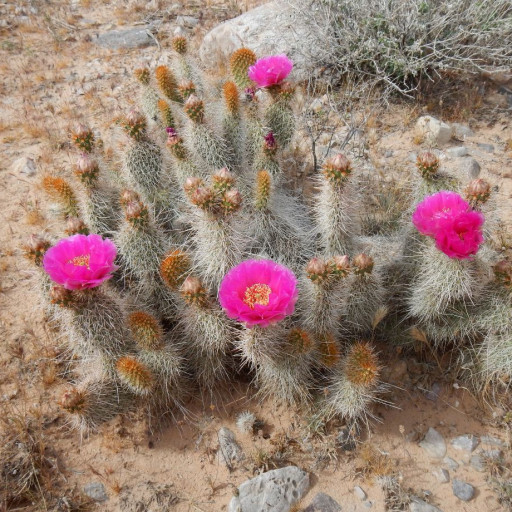
Known affectionately as the "Grizzly Bear Prickly Pear," Opuntia erinacea is a desert survivor that looks surprisingly cuddly from a distance. Native to the high deserts of the Mojave and the Great Basin, this cactus is famous for its shaggy, "hairy" appearance. It is a master of adaptation, wearing a thick coat of spines to survive some of the harshest temperature swings on Earth.
🔍 How to Identify
- 🌵 The Pads: Fleshy, flattened, oval segments that grow in spreading clumps. In cold weather, these pads often take on a beautiful reddish or purple tint.
- 🧔 The "Hair": Long, flexible, white-to-grey spines that can reach up to 4 inches in length. These drape over the plant, giving it a fuzzy, "old man" aesthetic.
- 🌸 Desert Blooms: Large, multi-petaled flowers typically appear in late spring. They range in color from brilliant lemon yellow to a deep, sunset apricot or rose-pink.
🏡 In Your Garden
- 🏜️ Drainage is Vital: This cactus is highly susceptible to root rot. If you are planting it in a pot or a garden bed, use a gritty, mineral-heavy soil mix (mostly sand and perlite) to ensure water never sits around the roots.
- ❄️ Cold Hardiness: Unlike many tropical succulents, the Mojave Prickly Pear is exceptionally frost-tolerant. It can handle freezing temperatures and even light snow, making it an excellent choice for outdoor rock gardens in temperate climates.
⚠️ Safety & Toxicity
- 🚫 The Hidden Danger: While the long, hair-like spines look soft, they hide thousands of glochids—tiny, barbed bristles that detach at the slightest touch. They are incredibly difficult to remove from skin or clothing.
- 🐾 Pet & Child Safety: Due to the irritating nature of the glochids and the sharp spines, this plant should be kept out of reach of curious pets and children. Ingestion or contact with the mouth can cause severe irritation and swelling.
✨ Fun Fact
Those long, white spines aren't just for defense; they act as a built-in "sunscreen." By reflecting harsh UV rays and creating a thin layer of still air around the pad, the spines help the cactus stay cool in the summer heat and provide a layer of insulation against freezing desert nights.

Detailed Care Instructions
To grow Opuntia Erinacea (also known as hedgehog cactus), follow these steps:
- Location: Choose a sunny spot with well-draining soil for planting the Opuntia Erinacea. It prefers full sun but can tolerate partial shade.
- Soil Preparation: Before planting, prepare the soil by mixing organic matter like compost or well-rotted manure to enhance drainage and fertility. The Opuntia Erinacea thrives in sandy or loamy soil.
- Planting: Dig a hole slightly larger than the size of the cactus root ball. Gently place the plant in the hole, ensuring the roots are spread out. Fill the hole with soil, firming it gently around the base of the cactus.
- Watering: Initially, water the Opuntia Erinacea regularly to establish roots. However, once established, it is a drought-tolerant plant that only requires occasional watering during extended dry periods. Do not overwater, as it can lead to root rot.
- Mulching: Apply a layer of organic mulch, like wood chips or straw, around the base of the plant to help retain moisture, suppress weed growth, and regulate soil temperature.
- Fertilization: Opuntia Erinacea plants are generally low-maintenance and do not require regular fertilization. However, you can apply a balanced, slow-release fertilizer in early spring to promote growth.
- Pruning: Prune the Opuntia Erinacea plant sparingly, only to remove dead or damaged parts. Be cautious while handling the cactus due to its spines.
- Protection: If you are growing Opuntia Erinacea in a colder region, provide winter protection by covering the plant with burlap or moving potted cacti indoors.
- Propagation: Propagate Opuntia Erinacea through cuttings. Allow the cutting to dry for a few days before planting it in well-drained soil. Water sparingly until roots are established.
Remember, Opuntia Erinacea is native to arid regions, so be mindful of its water and sunlight requirements.

Place in a bright room that is sun drenched almost all day. Or directly in a south-facing window.

Opuntia Erinacea is a type of cactus that requires minimal watering, as it is adapted to dry environments. However, when watering this plant, it is important to ensure that the soil is completely dry before adding water. This can be accomplished by sticking a finger into the soil and feeling for moisture. If the soil feels dry, it is time to water the plant.
When watering, it is best to use a drip irrigation system or a watering can with a narrow spout to avoid getting water on the plant's pads or leaves. Slowly water the soil around the base of the plant, taking care not to overwater.
During the winter months, Opuntia Erinacea may not require any watering at all, as it goes into a period of dormancy. In general, it is best to err on the side of underwatering rather than overwatering this plant, as too much water can lead to root rot and other issues.
To fertilize the prickly pear cactus, apply a balanced fertilizer with an N-P-K ratio of 10-10-10 or 14-14-14 during the active growing season from late spring to early fall. Use a granular fertilizer, apply it to the soil around the base of the cactus, and water it in well. Avoid fertilizing during the winter months when the plant is dormant.
Opuntia Erinacea plants prefer a well-draining soil that is composed of a mixture of sand, perlite, and coarse potting soil. A pH level of 6.0 to 7.0 is best for these plants. It is important to avoid using soil that is too heavy or retains too much moisture as this can cause root rot. A mixture of 50% sand, 25% perlite, and 25% coarse potting soil is optimal for Opuntia Erinacea plants. Additionally, adding some organic matter such as leaf mold or compost can help improve the soil quality.
Propagation of this particular plant can be done by collecting its pads after they have become mature. The pads should be removed from the parent plant by making a clean cut tangentially, with a sharp clean knife. The cut pads should be allowed to callus for several days before placing them in well-drained soil.
Next, the prepared potting soil must be moistened, and the cut pads should be planted in the soil. It is best to keep the soil moist but not overly wet. The cut pads should be placed in a bright location where sunlight could reach them but not directly.
Propagation via seeds is also possible. The seeds must be collected from the plant after its flowers have been pollinated and have dried up. These seeds should be planted in the soil and kept moist. These seeds will germinate within a few weeks.
It is crucial to ensure that the newly propagated plants are protected from frost as frost can damage or kill the young plant.
Common pests of the mojave pricklypear include Scale insect, mealybugs, spider mites. Make a habit of checking your mojave pricklypear frequently for pests so that any infestations can be caught and managed early.








